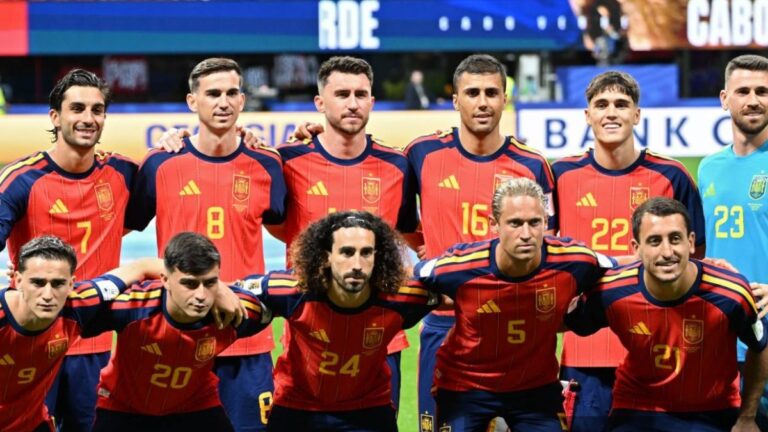

Spain is clashing with Cape Verde (officially Cabo Verde) now. Have you heard of this country? Most readers may wonder where it is.
For many, this fixture might appear to be a routine World Cup clash, a European powerhouse against an unfamiliar name. But beneath the surface lies one of the most compelling stories of the 2026 FIFA World Cup: the rise of a tiny island nation that has defied geography, population limits, and footballing hierarchies to reach the biggest stage of them all.
Small Nation With Big Beliefs
Cape Verde is an island nation located in the central Atlantic Ocean, roughly 570 kilometres off the west coast of Africa. An archipelago of ten volcanic islands, it sits south of Spain’s Canary Islands, with Senegal, Mauritania, and The Gambia as its closest mainland neighbours.
With a population of just over half a million, Cape Verde is one of the smallest countries to ever compete at a FIFA World Cup. That makes their presence here not just historic, but extraordinary. While Spain arrives as reigning European champions and a perennial global contender, Cape Verde steps onto the pitch as debutants – and proud ones at that.
FIFA World Cup Journey Of Blue Sharks
Cape Verde’s journey to the World Cup is nothing short of a fairytale. Drawn in a tough CAF qualifying group alongside African heavyweights Cameroon, few expected them to emerge as winners. An early 4-1 defeat to Cameroon seemed to confirm those doubts.
But what followed was a remarkable turnaround. The “Blue Sharks” regrouped, quietly building momentum with crucial wins against the rest of the group. The defining moment came in September 2025, when they stunned Cameroon with a 1-0 victory at home in Praia, a result that flipped the group standings.
They would go on to finish top of Group D with 23 points from 10 matches, securing seven wins, two draws, and just one defeat. By the time qualification was sealed with a convincing 3-0 win over Eswatini, Cape Verde had not only made history but had done so with authority.
Team Built Across Continents
Cape Verde’s success is deeply rooted in its unique player pool. With a limited domestic base, head coach Bubista has tapped into the country’s vast diaspora, assembling a squad largely developed in European football systems.
Players born or trained in Portugal, France, and the Netherlands bring technical quality and tactical discipline to the team. Defender Logan Costa, who plays in La Liga, anchors the backline, while winger Jovane Cabral adds attacking flair from the flanks. The squad also features talent from North America, including MLS-based players, highlighting its truly global identity.
Yet, at its core remain homegrown figures who embody the nation’s spirit. Veteran goalkeeper Vozinha and experienced forward Ryan Mendes provide leadership and emotional grounding, ensuring the team retains its cultural heartbeat despite its international composition.
Interestingly, unlike many underdog teams that rely purely on defensive resilience, Cape Verde plays a modern, structured brand of football. Bubista’s side typically sets up in a compact 4-5-1 or 4-3-3 formation, maintaining discipline without sacrificing attacking intent.
Out of possession, they form a tight zonal block, limiting space between lines and forcing opponents into wide areas. In transition, however, they are sharp and direct. Midfielders such as Kevin Pina and Laros Duarte excel at winning the ball and launching quick counter-attacks.
The team’s attacking strategy revolves around width and pace. Ryan Mendes often cuts inside from the wings, while younger forwards like Dailon Livramento bring energy and pressing intensity to unsettle defenders. This blend of structure and speed makes them far more than just a defensive unit.
The Ultimate Test Against Spain
Facing Spain in their opening Group H match represents the ultimate challenge. Spain, with their possession-based dominance and technical superiority, are favourites not just for the match but for the tournament itself.
Yet, for Cape Verde, this is not merely about the result. It is about showcasing their identity on the global stage. Their journey from overlooked qualifiers to World Cup participants has already captured attention, and a strong performance against Spain could elevate their story even further.
The contrast could not be sharper: a footballing giant with decades of pedigree versus a debutant nation writing its first chapter. But that is precisely what makes the World Cup special.
More Than Just a Match
As the two teams take the field, this fixture transcends sport. It is a story of belief, resilience, and the power of opportunity. Cape Verde’s presence is a reminder that football’s global reach continues to expand, bringing new voices and narratives into the spotlight.
For many watching, Spain versus Cape Verde may begin as a mismatch on paper. But by the final whistle, it may well be remembered as a defining moment for a nation that dared to dream and made the world take notice.
Story first published: Monday, June 15, 2026, 22:17 [IST]
About the Author