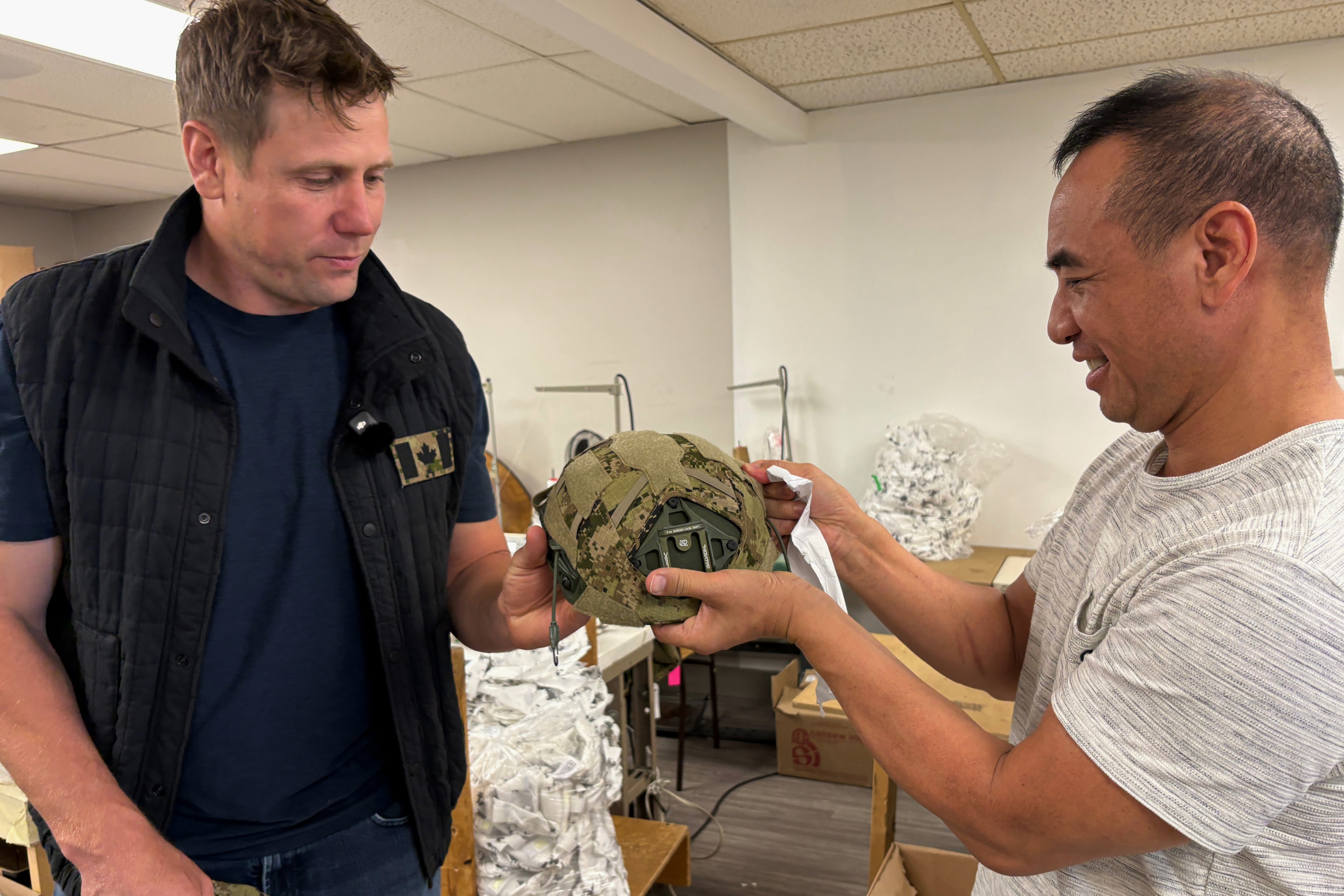
Inside a Toronto garment factory, the physical reality of Canada’s drive to diminish its reliance on American military suppliers is on clear display.
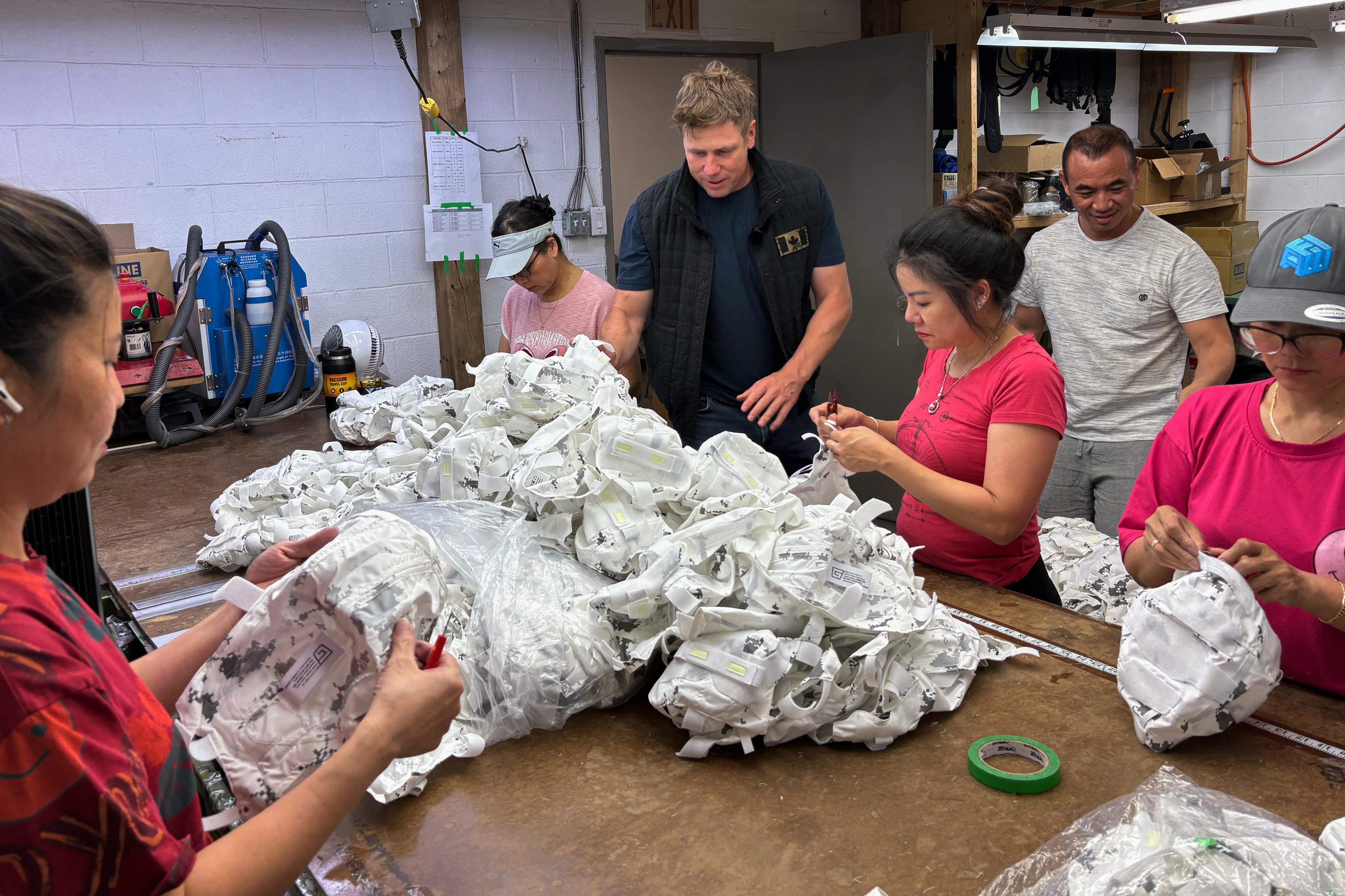
Hunched over sewing machines, workers rapidly stitch together pieces of camouflage-patterned fabric and Velcro strips. In an adjoining room, staff trim loose threads and inspect finished helmet covers destined for the Canadian armed forces.
The factory is producing equipment for Wuxly, a luxury parka maker that forms part of a flurry of Canadian companies expanding into defense contracting. As military spending surges, other firms are developing remote sensors for the vast Arctic region, constructing resupply drones, and building autonomous robots.
This expansion across the defense sector reflects Canadian Prime Minister Mark Carney’s pledge to strengthen economic self-sufficiency amid strained relations with Washington, including a fresh escalation this week marked by new rounds of tariffs.
Canadian startups and established firms, alongside companies in Europe, stand to benefit from tens of billions of dollars in extra defense funding. This spending is driven partly by pressure from U.S. President Donald Trump to contribute more to NATO. Although Canada’s investment remains small compared with the Pentagon’s budget, the strategy aims to boost domestic defense capabilities rather than rely solely on American contractors.
A country known for peacekeeping ramps up military spending
A defense industrial strategy released earlier this year by Carney represents a generational shift for Canada, a country that invented modern peacekeeping and had long been content to remain in the shadow of its southern neighbor on defense matters.
The plan earmarks an additional $60 billion in funding over the next five years, with the government promising support for domestic businesses trying to enter defense and security supply chains. Currently, Canada spends about $36 billion to $43 billion annually on national defense.
“The scale of investment that is involved is quite significant by Canadian standards, certainly in peacetime,” said Philippe Lagassé, a professor at Carleton University specializing in defense policy.
The defense surge is “quite evident at all the events we’re at. Every defense show (is) sold out. Lots of new companies and (other) industries coming into the (defense) industry, getting involved,” said Wuxly founder and CEO James Yurichuk.
Wuxly’s helmet covers allow soldiers to attach call sign patches or gear such as lights, cameras and beacons. The company also produces tank covers and military parkas, and has supplied Ukrainian forces with equipment, including 40,000 female uniforms — one of its specialisms.
Carney has called for upgrading the military’s Arctic capabilities, increasing expenditure by tens of billions of dollars to assert sovereignty over the vast, sparsely populated and increasingly contested northern region.
“There’s a lot of innovation that can create advantage in the North, and with the Arctic region being so important, we’ve got to clothe our soldiers properly,” Yurichuk said.
A major element of the strategy is diversifying away from US defense contractors, focussing on tapping a broader global pool of military hardware suppliers and fostering domestic supply chains.
The plan foresees investments exceeding half a trillion dollars over the next decade, creating 125,000 jobs and tripling the size of the country’s defense industry by directing contracts to Canadian firms. It calls for accelerated research and development while prioritizing sovereign capabilities in aerospace, robotics and unmanned systems.
As Ottawa seeks partnerships with allies beyond the United States, it has announced deals this year to buy radar planes from Sweden’s Saab over American rivals, alongside submarines from Germany’s ThyssenKrupp.
Canadian companies and European allies find new opportunities
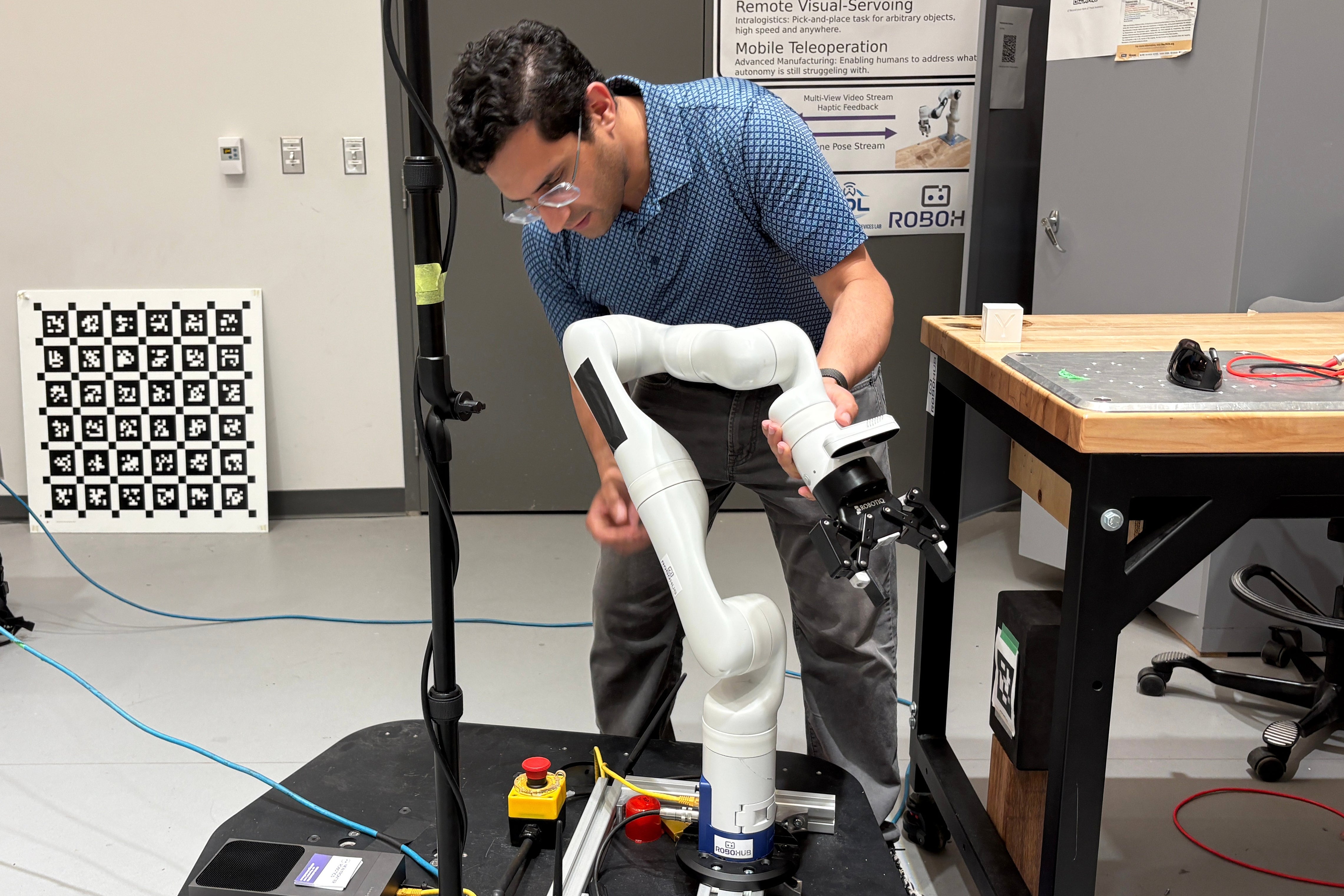
Canadian startups such as New Frontier Robotics are also positioning themselves to take part.
“There definitely is money in play,” said Nikhil Malhotra, co-founder of the two-person company. “We see it. Obviously, we are going for it.”
The company is developing a mobile manipulator robot — essentially an artificial intelligence-powered robotic arm on a mobile platform — with potential military and civilian applications in dual-use technology.
While the initial plan targeted commercial manufacturing, potential clients noted growing demand from defense, where robots could perform support roles at military bases, Malhotra said.
“If you have infrastructure up in the Arctic that needs maintenance, obviously the climate is very dangerous. Are you really willing to risk an operator’s life? The answer is no. It’s better to put this thing on,” said Malhotra, whose firm is temporarily based at a robotics lab at the University of Waterloo, roughly 60 miles (100 kilometres) west of Toronto.
Startups focus on products with versatility
Canada’s efforts to modernize its military machine still face potential hurdles, including the risk that opposition parties target Carney’s spending plans in future elections.
Tech firms could also be drawn to the substantially larger US defense market. Competing against American counterparts with far bigger research and development budgets means those firms are “always going to be a bit more at the edge of the technological capability,” Lagassé said.
Still, the strategy creates new possibilities for companies like drone manufacturer Volatus Aerospace, based near Montreal.
“Defense was not a popular topic for a small-cap Canadian public company in the past,” CEO Glen Lynch said, adding that Canada has historically had limited manufacturing capacity generally, not just for drones.
Like New Frontier, Volatus relies on dual-use technology. Because Canada is not at war, firms cannot depend exclusively on military sales.
Volatus builds drones for commercial uses such as air-dropping medicine to isolated communities, but also maintains a defense unit producing first-person-view drones designed to destroy targets on impact.
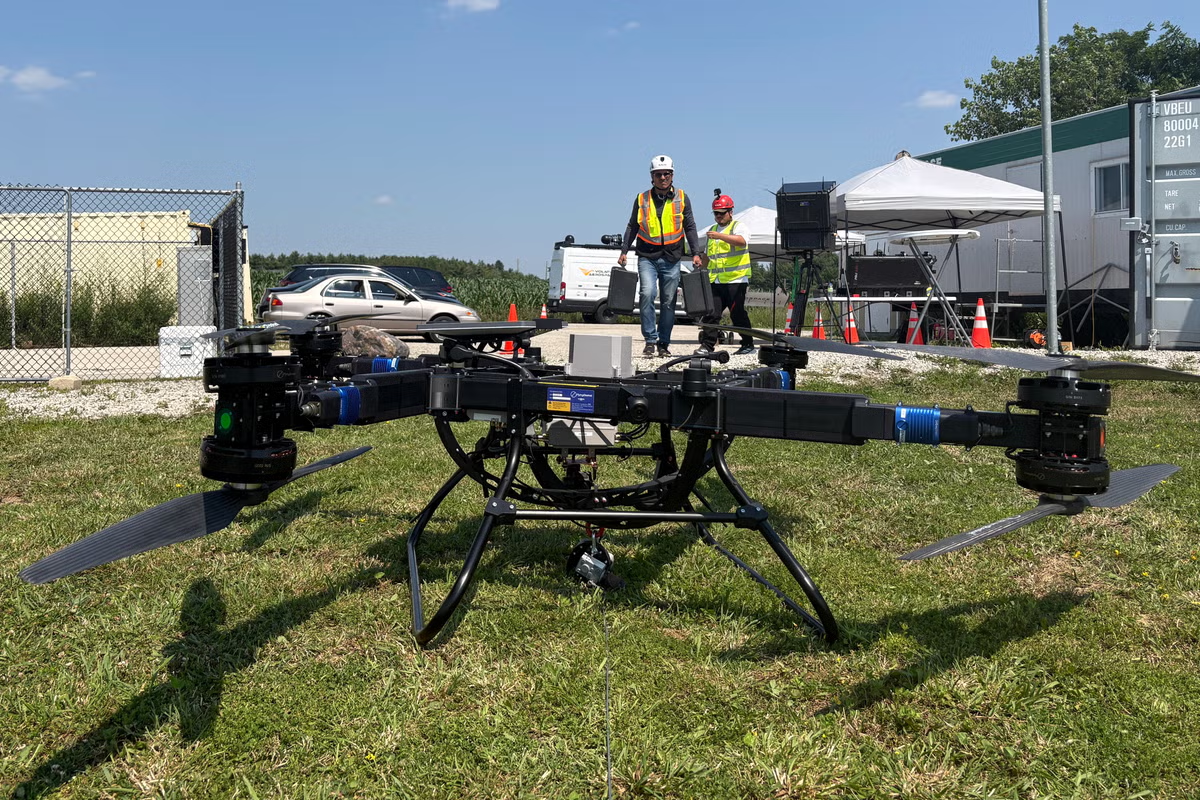
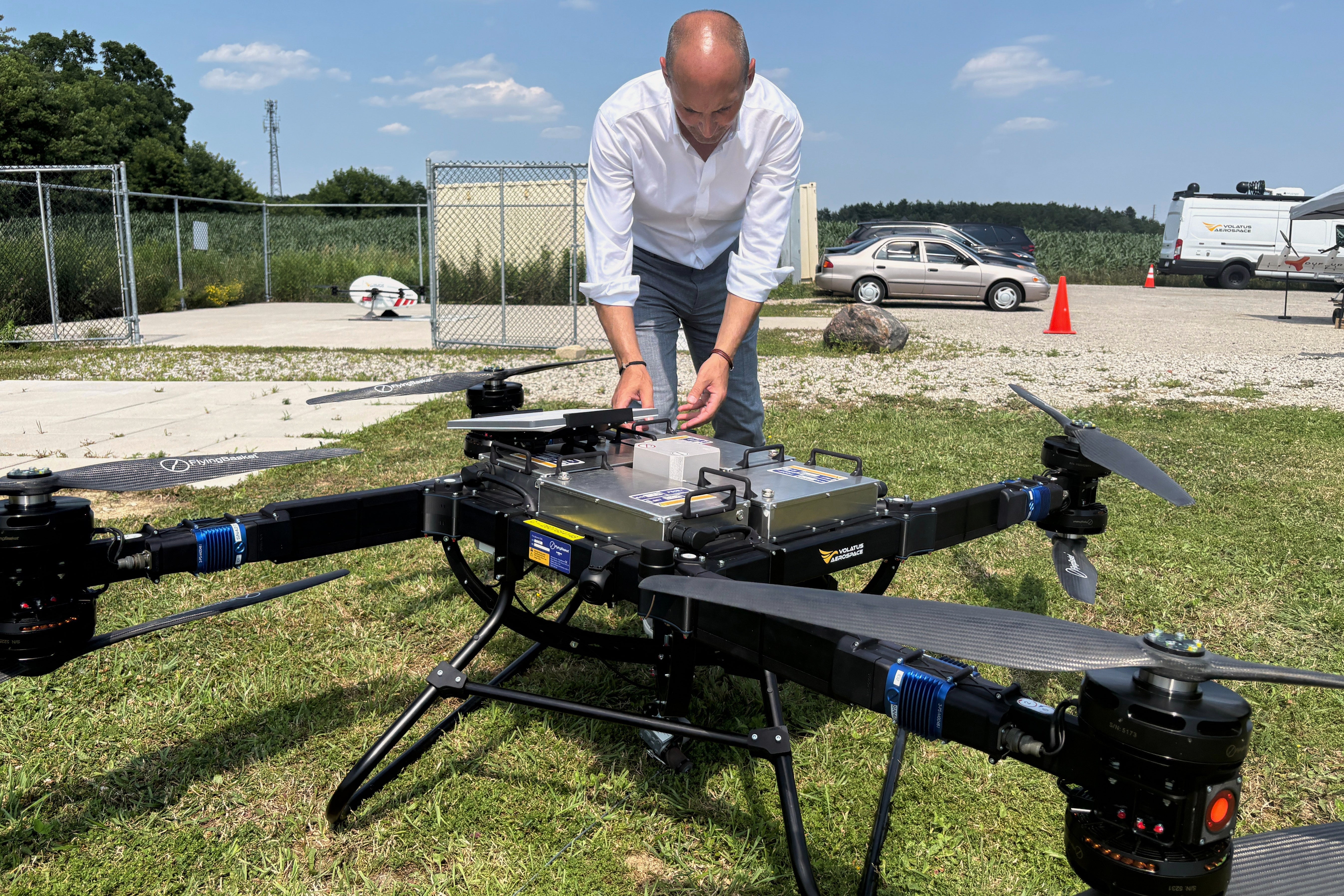
The firm tests aircraft at a 100-acre site north of Toronto, accessed via an unmarked gravel road amid cornfields.
During a recent demonstration, the company displayed a drone carrying a 60-kilogram payload by cable, alongside a scaled-down tilt-wing drone designed for long-distance cargo transport. Both operated autonomously before landing.
Another drone, the Canary, features payload bay doors to deliver medical supplies to remote First Nations communities in Alberta.
It could also be deployed to send “resupply packages for soldiers” or drop munitions, said chief operations officer Greg Colacitti.
About the Author