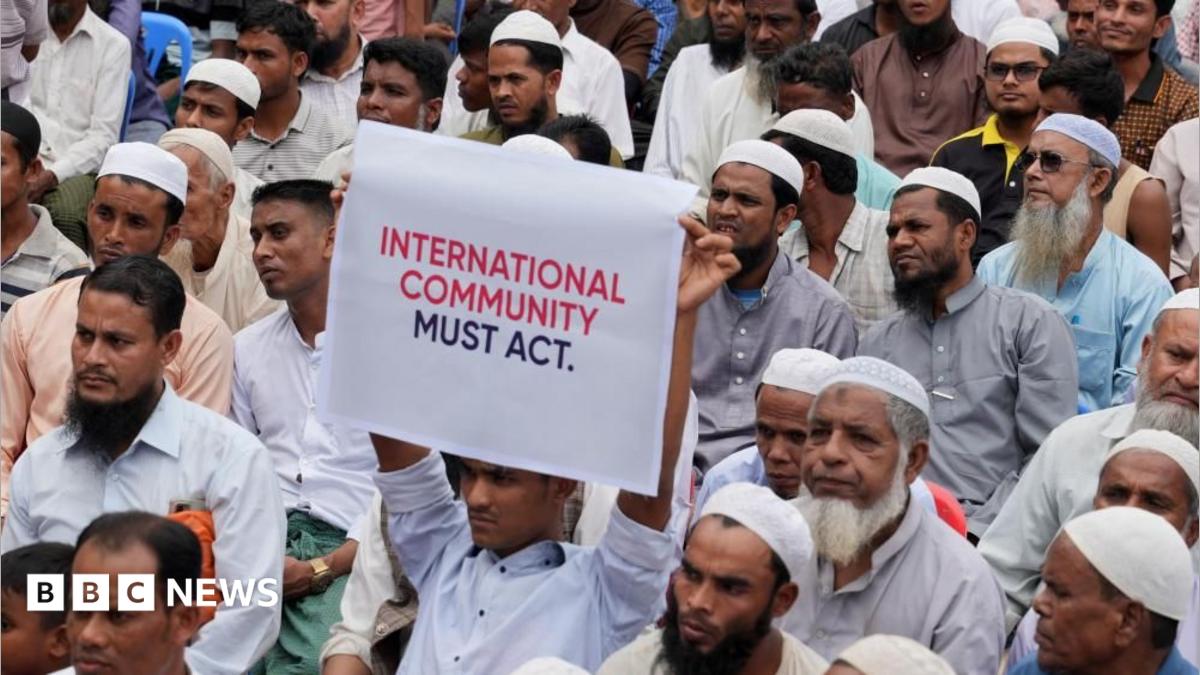
Iwasawa said Myanmar’s military engaged in “indiscriminate” killings, the execution of men, “widespread” sexual violence, “extreme violence” against children and the deliberate burning of Rohingya homes.
He said the military had also attacked Rohingya as they were fleeing to Bangladesh.
Myanmar, he added, had engaged in “extensive destruction of evidence” by burning or disposing of bodies, burned and bulldozed sites that were cleared and failed to prosecute those who had perpetrated the acts of violence.
While the ICJ recognised the role Arsa played, it found there was “overlap” between an “anti-Rohingya hate speech campaign” – which portrayed the Rohingya as “sub-human” and “a violent threat” – and the clearance operations that made violence against the population more likely.
Myanmar consistently denied genocide against the Rohingya, saying its operations had targeted militant or insurgent threats in response to the Arsa attacks.
In January, government representative Ko Ko Hlaing told the ICJ that the country “was not obliged to remain idle and allow terrorists to have free reign”. He said he had “no comment” following Thursday’s verdict.
The ICJ also looked at the wider treatment of Rohingya leading up to the clearance operation and found that policies like limiting married couples to two children were discriminatory and aimed to erode their rights.
It said Myanmar had an obligation to pay proportionate reparations, but said an exact figure could be determined at a later date.
About the Author