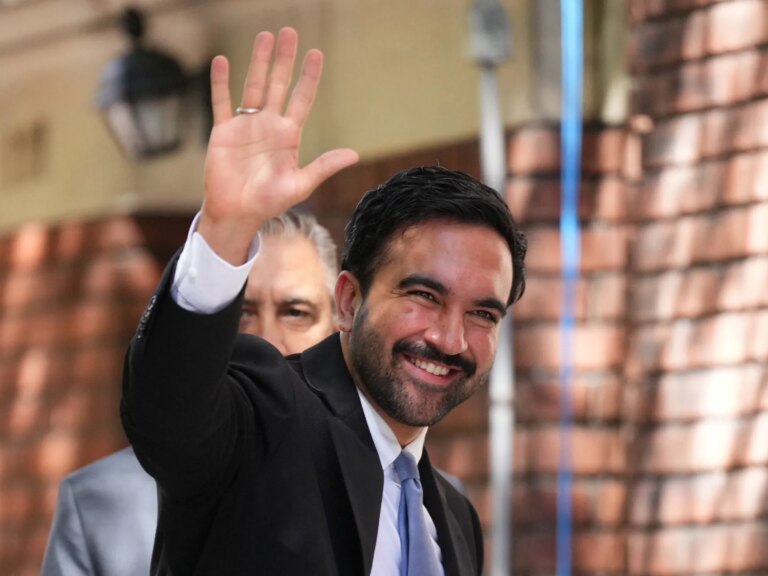
Andy Burnham’s government is “urgently” identifying any grooming gang perpetrators who may still be eligible for early prison release after concerns were raised about a potential loophole in the system.
The prime minister has “personally intervened” after men convicted of assaulting children in Bradford were expected to be freed from prison early despite a promise earlier this week that they would remain behind bars.
In a statement, No 10 said it would ensure that “everything possible is being done so that vile groomers are dealt with in the way their victims deserve”.
About 5,000 people are expected to be released early under sentencing changes in England and Wales, down from 6,000 after ministers excluded grooming gang members, rapists and “serious” child sex offenders from the scheme designed to tackle overcrowding in jails.
But critics have questioned the scope of exemptions after reports that some men convicted in relation to historical grooming gang cases could be among those freed under the plans.
Some of the offending took place before sexual abuse laws were changed in 2003 and the perpetrators were charged with crimes including indecent assault, which does not fall within the exclusions to the scheme starting in October.
A spokesperson for Burnham said: “As part of the review of sentences, the prime minister asked the Ministry of Justice to conduct an in-depth review of cases to ensure that grooming cases were identified.
“This work is happening urgently. This is extremely important to the PM and he has personally intervened to ensure everything possible is being done so that vile groomers are dealt with in the way their victims deserve.”
Burnham suspended the scheme in his second week as PM after coming under intense pressure from MPs, victims, campaigners and frontline prison officers to halt the early release of serious sexual and violent offenders.
Prisons have become a major point of political contention, with Labour blaming the Conservatives for creating the overcrowding crisis between 2010 and 2024 by increasing sentences while failing to build enough jails.
The Conservative leader, Kemi Badenoch, wrote to Burnham earlier on Thursday demanding answers over which offences would be eligible for early release and accusing the government of “yet another betrayal of the victims”.
As first disclosed by The Times, there are a number of cases where men who were convicted of assaulting children in Bradford as part of historical investigations into Asian grooming gangs were not excluded from the early release scheme.
As many of the cases took place before anti-grooming laws were introduced in 2003, the men were charged with indecent assault, which does not fall within the exemptions to the scheme announced by the prime minister this week.
Photograph: Thames Valley police/PA
The government has also resisted pressure to exempt two of PC Andrew Harper’s killers from early release as the boss of his former force considers joining a potential legal challenge over the plans.
The scheme could see Jessie Cole and Albert Bowers freed halfway through their 13-year sentences for manslaughter after the officer’s death in 2019.
Harper sustained fatal injuries after getting caught in a strap attached to the back of a car and being dragged down a country road as the killers fled the scene of a quad bike theft in Sulhamstead, Berkshire. The driver of the vehicle, Henry Long, received a 16-year sentence and will not be eligible for release under the scheme.
The Thames Valley police chief constable, Jason Hogg, said he was receiving legal advice on whether the force could join a legal challenge mooted by the local Police Federation chief, Aileen O’Connor, to prevent Cole and Bowers being freed.
The prime minister has said he wanted to “go further” with the exemptions after ordering a review of the scheme, but this was “not possible without the prison system reaching capacity and collapsing”.
Those released will face tougher probation conditions, including electronic monitoring, random drug testing and possible bans from driving, pubs and events such as football matches.
The changes were part of the Sentencing Act passed earlier this year which cut the minimum amount of time many offenders would have to spend in prison.
About the Author