Want to bookmark your favourite articles and stories to read or reference later? Start your Independent Membership today.
Already a member?
Log in
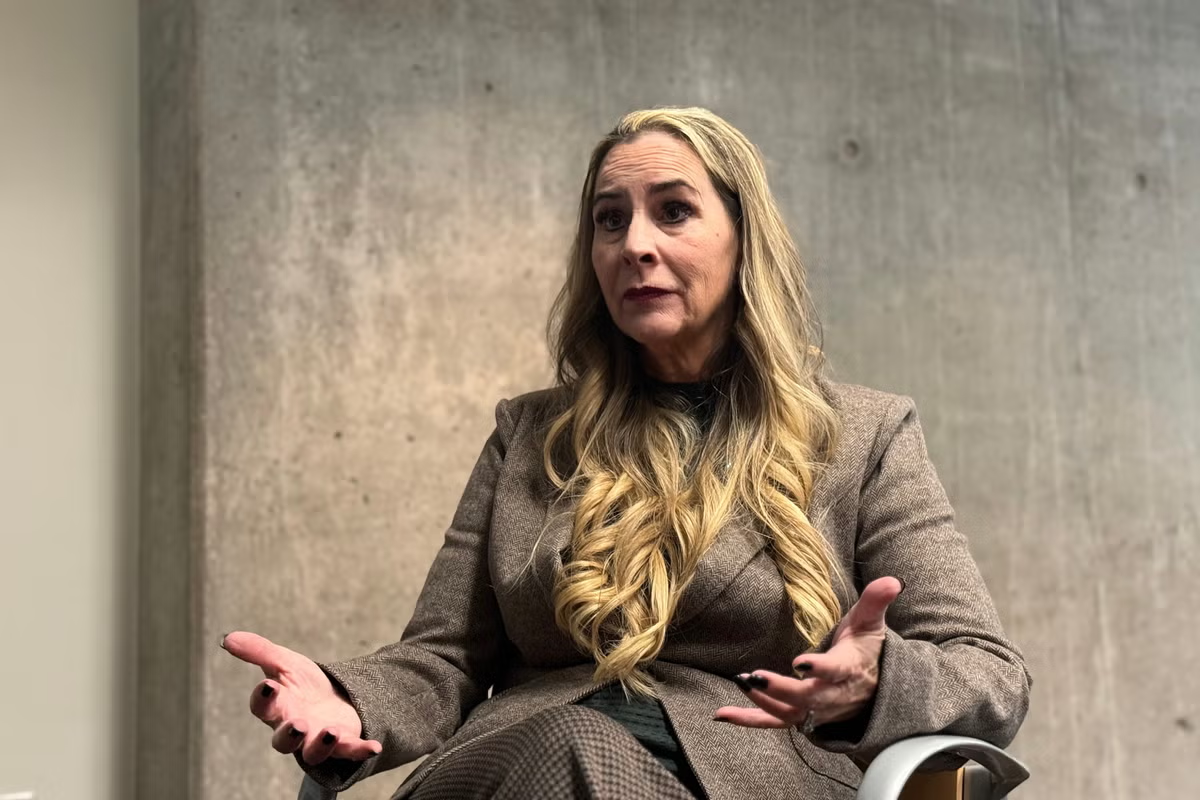
Arizona Congressional candidate Bernadette Greene-Placentia does not believe she was targeted by political enemies when she was sexually assaulted while repairing campaign signs this summer. She is certain, though, that her attackers realized who she was.
“My thought is that it was more a crime of opportunity,” Greene-Placentia told The Independent in an interview on Thursday. “I didn’t think that, ‘Oh my gosh, I was followed.’ But I definitely felt like I was recognized.”
Greene-Placentia, a Democrat challenging Republican Representative Abe Hamadeh in Arizona’s 8th Congressional District, publicly disclosed this week that she was attacked while fixing campaign signs in the Sun City area.
Initial news reports emphasized a derogatory political slur Greene-Placentia remembered hearing during the assault — an incomplete phrase she recalled as “-ic b****,” which she understood to mean “Democratic b****.”
“My mind filled in the blank, Democratic, but I could not swear to that,” Greene-Placentia said. “Although, you know, I was repairing my sign, which has my picture on it. So I definitely felt like I was recognized.”
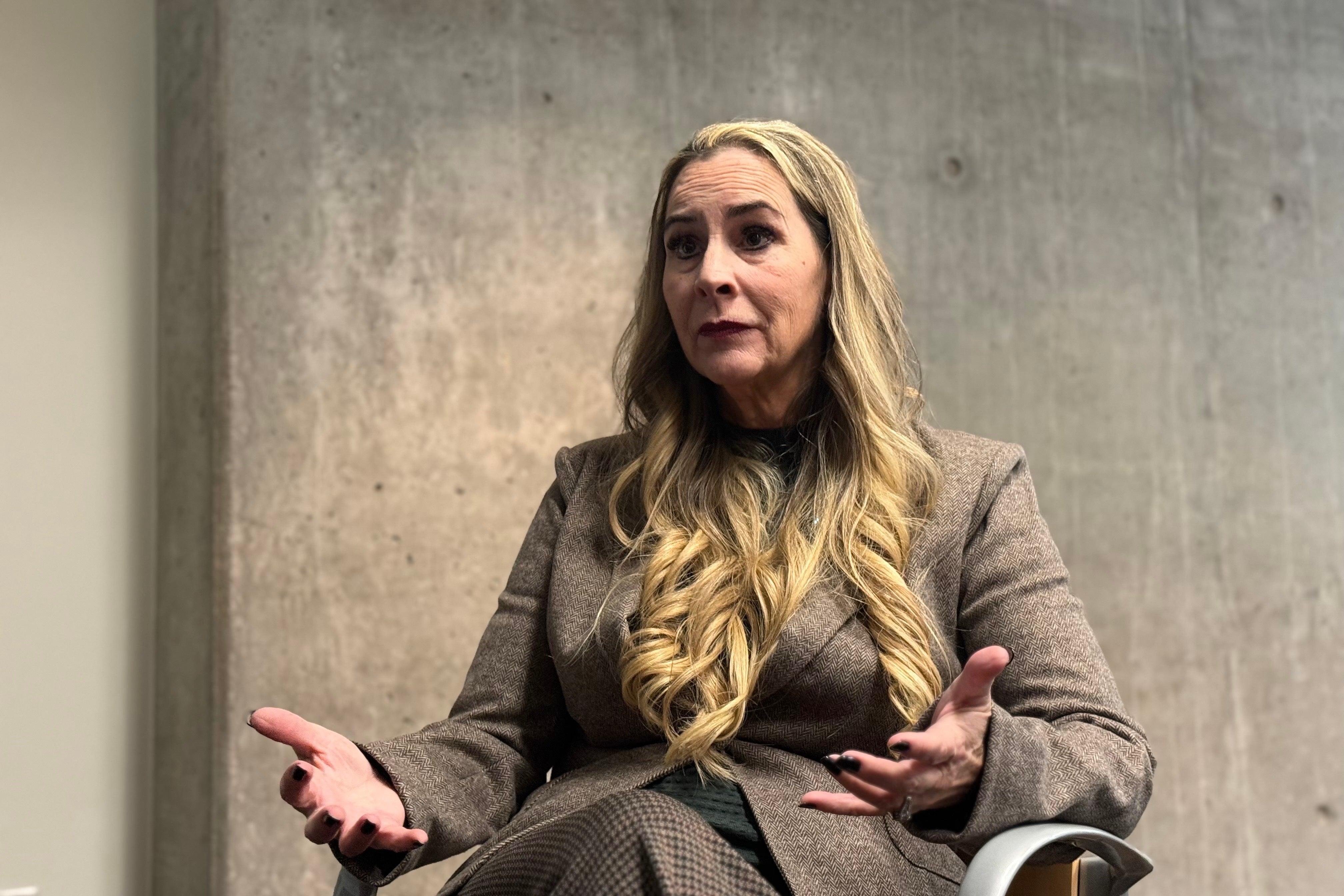
According to Maricopa County Sheriff’s Office reports, Greene-Placentia reported the incident on August 31, roughly two weeks after it occurred.
The incident took place in the early morning hours of Friday, August 14, in a parking lot near 99th Avenue and Bell Road. Sheriff’s deputies noted that Greene-Placentia was struck from behind, knocked unconscious and sexually assaulted by two unknown men before fighting back and kicking at her attackers until they fled.
Because Greene-Placentia did not seek immediate medical care, undergo a forensic exam or take photos of her injuries, physical evidence remains limited. She also informed deputies that she had washed the clothing she wore that night. In police reports, she described her attackers as two white men, noting one wore black boots.
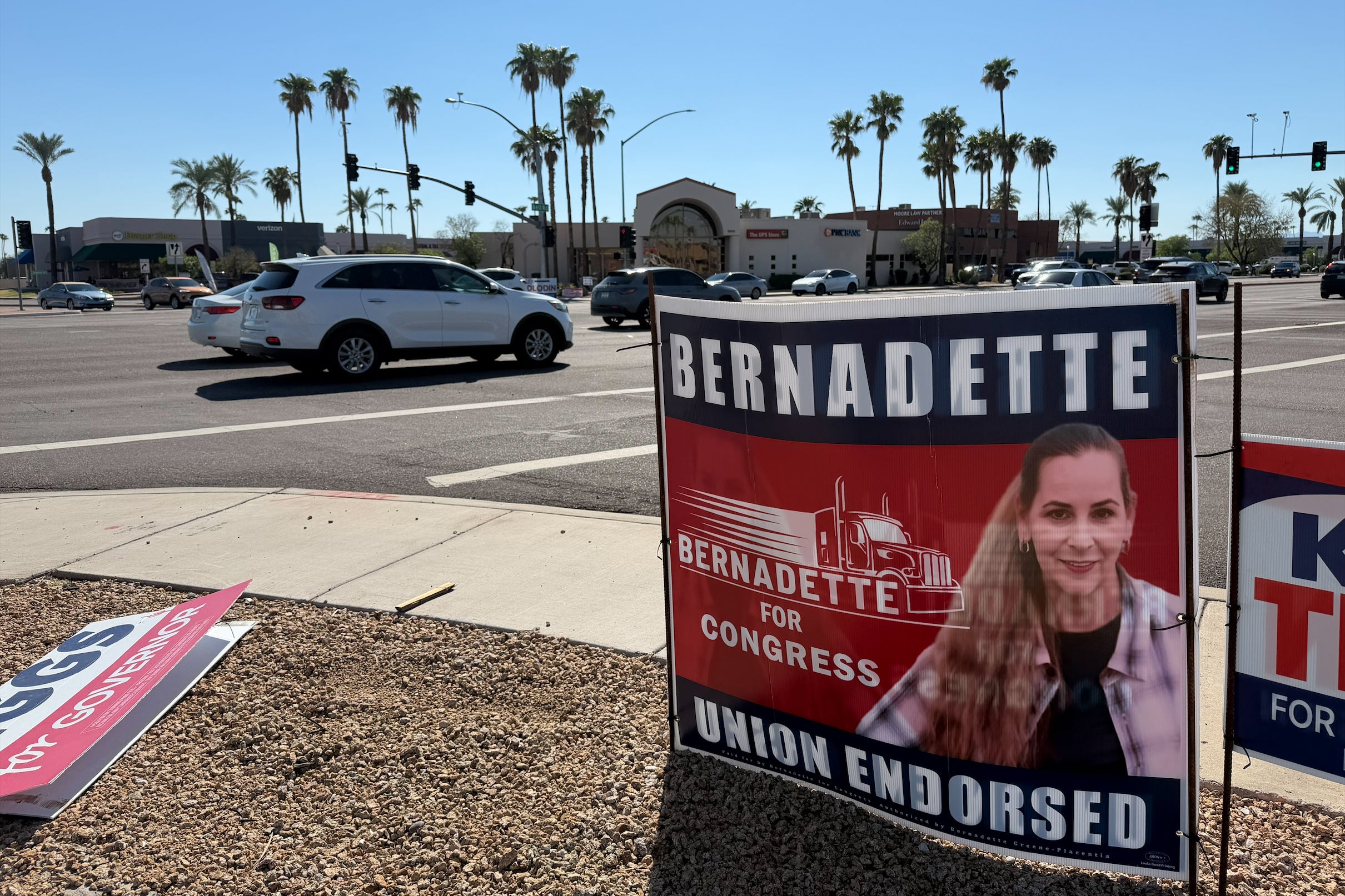
Greene-Placentia said her phone lacked active geolocation settings for campaign privacy reasons, though landlord security footage established an 85-minute window for the night of the attack — showing her leaving her residence around 12:15 a.m. and returning battered around 1:40 a.m.
“The hope would be that maybe they can get a hold of businesses in that area and see if they have any footage,” she said.
In a statement, Hamadeh, Greene-Placentia’s opponent, urged police to pursue every available lead, as reported by The New York Times.
“No American should become a victim of a crime in their own community,” Hamadeh said, adding that authorities should “investigate these serious allegations thoroughly, including finding all possible camera footage of the time and place, in order to prosecute the crime to the fullest extent of the law.”
Pushing back against online criticism for working alone late at night, Greene-Placentia explained that underfunded campaigns in Arizona often rely on midnight sign runs to beat the summer heat. The vast majority of feedback she has received, though, has been supportive.
“When you’re not a wealthy campaign, you know, you do everything that you can,” she said. “When it’s 115 degrees outside, it’s a lot easier to do it at 1 a.m. when the sun’s not beating down on you, and you’re not fighting traffic. … It is hard enough to come forward, and then to have people who just want to judge and be hateful.”
Greene-Placentia also raised broader concerns regarding campaign safety and security funding for non-wealthy candidates, recounting a separate incident over the weekend in which a person with outstanding warrants approached her staff.
“I wish we had the money to afford to hire security, but it’s horrible that that’s what it comes down to,” she said. “Long term, this is a behavior that unfortunately kind of starts at the top. When we have an administration that basically promotes or encourages violence against their opponents or against an entire city because they vote differently, then people take that as an okay thing.”
Though Greene-Placentia does not believe her attack was premeditated, it comes amid the largest rise in U.S. political violence since the 1970s. Data from Reuters and the Center for Strategic and International Studies show that partisan-driven attacks nearly tripled after 2016, with incidents affecting political figures across the spectrum.
Extremism experts point to deep partisanship, online conspiracy theories, and inflamed political rhetoric as key drivers behind the rise in violence. They warn that reduced social media moderation and violent political rhetoric have created a climate where attacks consistently provoke further violence.
A long-haul trucker for 27 years who logged more than 4 million miles before entering public service, Greene-Placentia said that the ordeal would not lead her to suspend her campaign or step down from the race.
“My folks didn’t raise a quitter, and it’s important for me to continue that fight and to get up and get past this,” Greene-Placentia said. “When you’re assaulted, that’s somebody temporarily taking power from you. Speaking up, finding your voice, is you taking that power back.”
About the Author