Australian authorities have launched a “comprehensive investigation” into three near-misses at Sydney airport that put aircraft and flyers at risk.
The Australian Transport Safety Bureau confirmed that they were investigating whether the incidents, which occurred within a space of two weeks, were isolated mistakes or evidence of a systemic problem with air traffic control.
In the most serious incident, a Virgin Australia plane and a Qantas flight avoided a collision on Sunday.
The Virgin Australia Boeing 737 had been cleared to take off and the Qantas plane approved to taxi on the same runway.
The Virgin crew saw the Qantas jet, also a Boeing 737, crossing ahead and aborted take-off, stopping about 1km from it.
The transport safety bureau said the Virgin crew had already applied take-off thrust when they spotted the Qantas plane crossing the runway ahead of them on taxiway Lima. They reduced thrust and brought the aircraft to a stop on the runway.
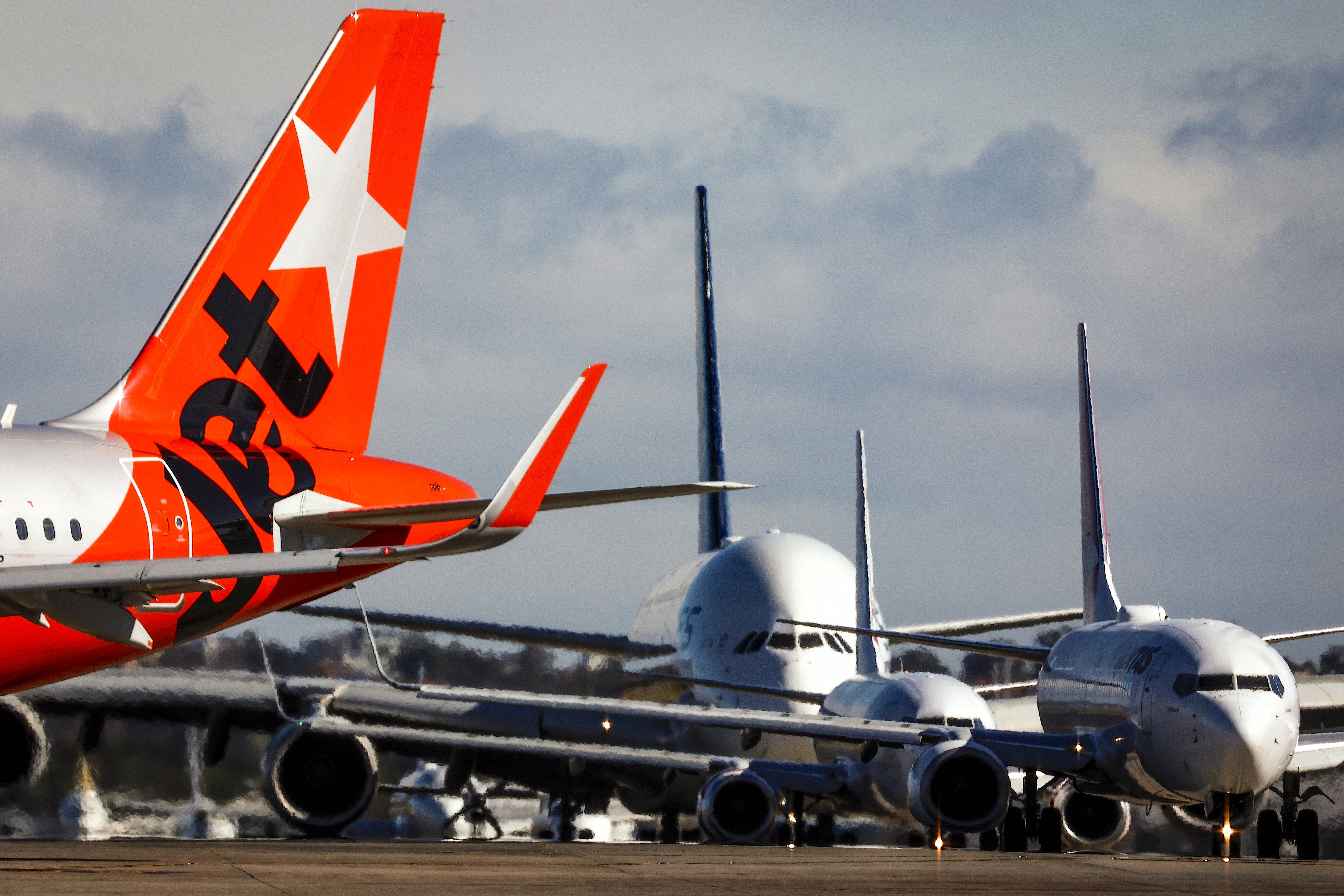
Earlier the same day, a Jetstar flight was preparing to take off when a Qatar Airways aircraft moved across the runway. The Jetstar pilot had to brake suddenly after finding the other aircraft, narrowly avoiding a collision.
On 27 July, two Qantas planes had similarly come close to disaster. Air traffic control cleared a Qantas Boeing 737 to cross the runway even as a QantasLink Q400 flight was actively rolling during its landing, prompting a late halt after a coordination breakdown.
“I can reassure the travelling public that we will consider any organisational or systemic issues that may have contributed to these occurrences, and will do so in a comprehensive and timely manner,” transport safety bureau chief commissioner Angus Mitchell said.
“We look at all the evidence, how busy the airport was, what was the manning in the tower at the time.”
Questions have been raised about why Sunday’s incidents were referred to the bureau only four days later. But the agency managing Australian skies, Airservices Australia, defended the decision saying “it didn’t meet the mandatory reporting requirements from our perspective”.
CEO Rob Sharp said the decision to not immediately report a fresh safety incident did not meet the reporting threshold.
“However, we’re quite open to reviewing the data that surrounds it. If there are improvements to be made, we will make them.”
Mr Mitchell said on Friday that he was seeking reasons for the delay in reporting of the latest incident.
“This type of runway incursion and loss of separation is a transport safety concern and we immediately commenced an investigation upon being notified of this yesterday afternoon,” he said.
“We do know, as I’ve mentioned before, that this is a significant, I guess, ramping up period for air services in terms of recruiting, training, and qualifying air traffic controllers,” he added.
“What we do know is three incidents occurred that shouldn’t have occurred. We need to understand why.”
Prime minister Anthony Albanese has also called for an investigation.
The Australian aviation sector has been grappling with staffing shortages since the Covid pandemic, when 140 experienced controllers left during a redundancy programme, according to the air traffic controllers’ union, Civil Air.
There aren’t enough controllers in Australia and the air traffic control system at the Sydney airport relies on workers doing excessive overtime, with some potentially doing more than 20 extra hours a week, according to Civil Air president Scott Nugent.
“Civil Air has been saying to Airservices over the past four or five years you don’t have enough air traffic controllers in Sydney airport tower,” he told ABC News.
About the Author