Archaeologists at Italy’s Pompeii have for the first time used artificial intelligence to reconstruct a victim’s appearance from the eruption that destroyed the Roman city nearly 2,000 years ago.
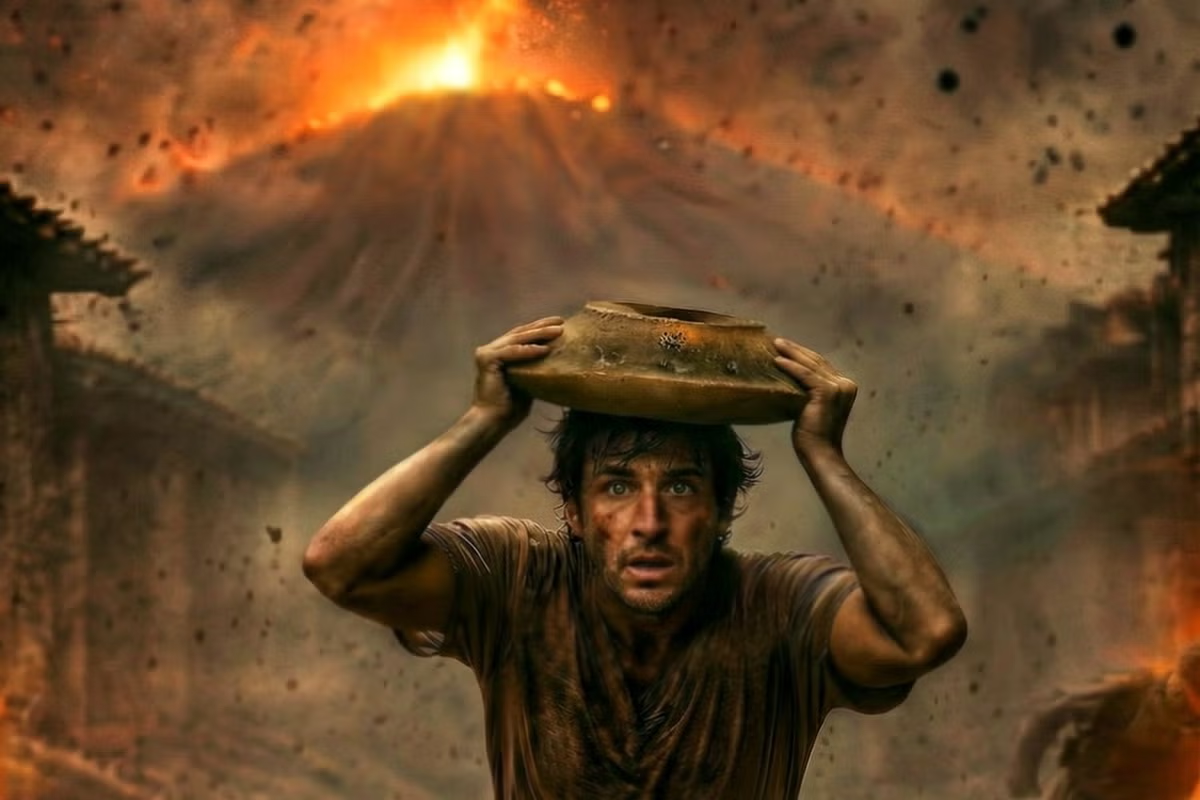
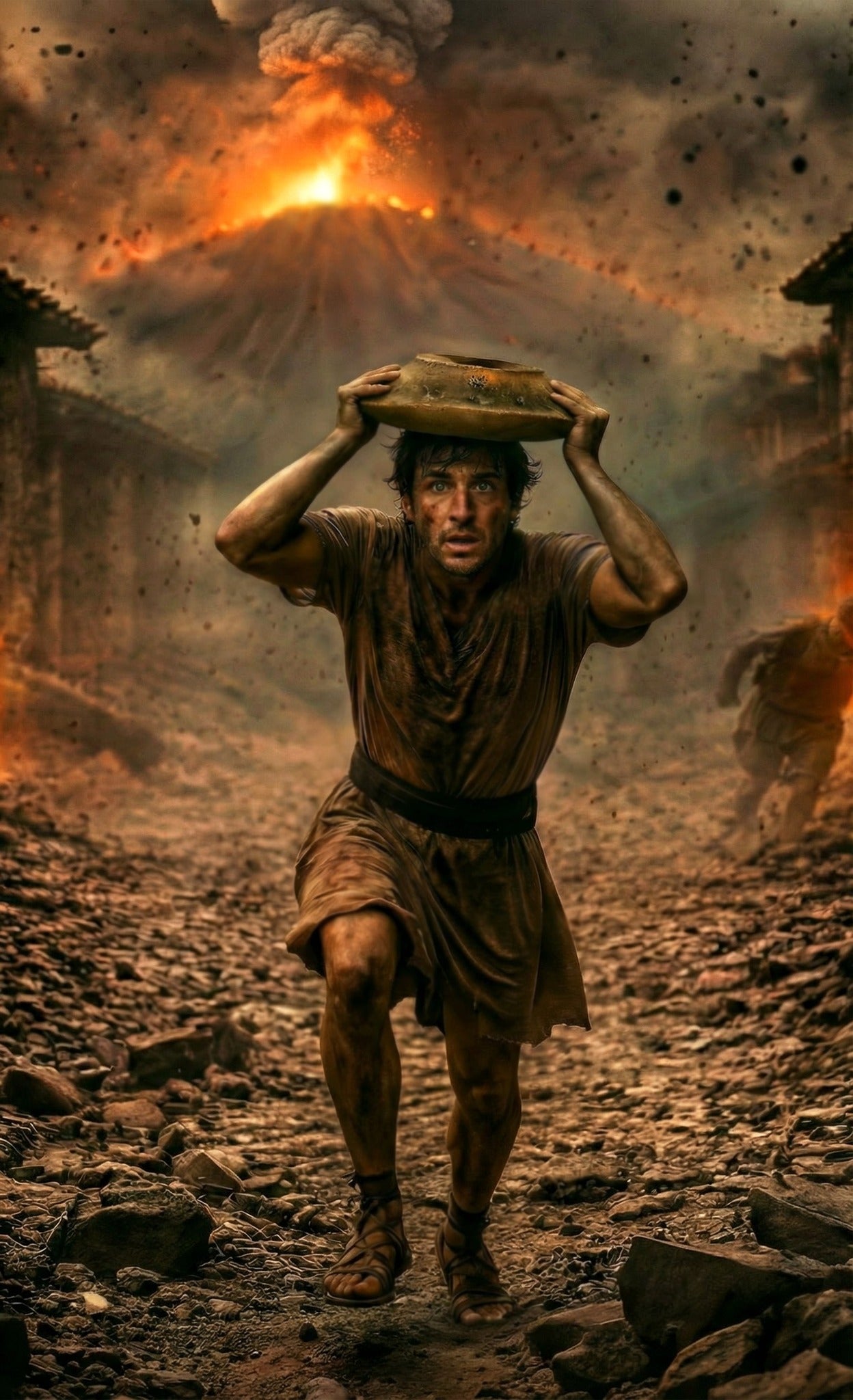
The AI-generated image, released Monday by the Pompeii Archaeological Park, shows a man ducking, a large bowl over his head, against a flaming Mount Vesuvius.
It is based on recently discovered adult male remains outside the city’s southern gates, found beside a terracotta mortar, his likely protection.
Archaeologists believe the man was killed by volcanic rocks during the eruption’s second day, fleeing towards the sea.
He was also carrying a lamp and 10 bronze coins, the park noted.
“If used well, artificial intelligence can contribute to a renewal of classical studies, illustrating the classical world in a more immersive way,” said Gabriel Zuchtriegel, head of the archaeological park.
Pompeii, 25 kilometres south-east of Naples, was buried in the AD 79 eruption of Mount Vesuvius, preserving buildings, objects, graffiti under metres of ash.
Rediscovered in the 18th century, it is now a significant archaeological site and popular Italian destination, attracting 4.3 million visitors in 2024.
About the Author