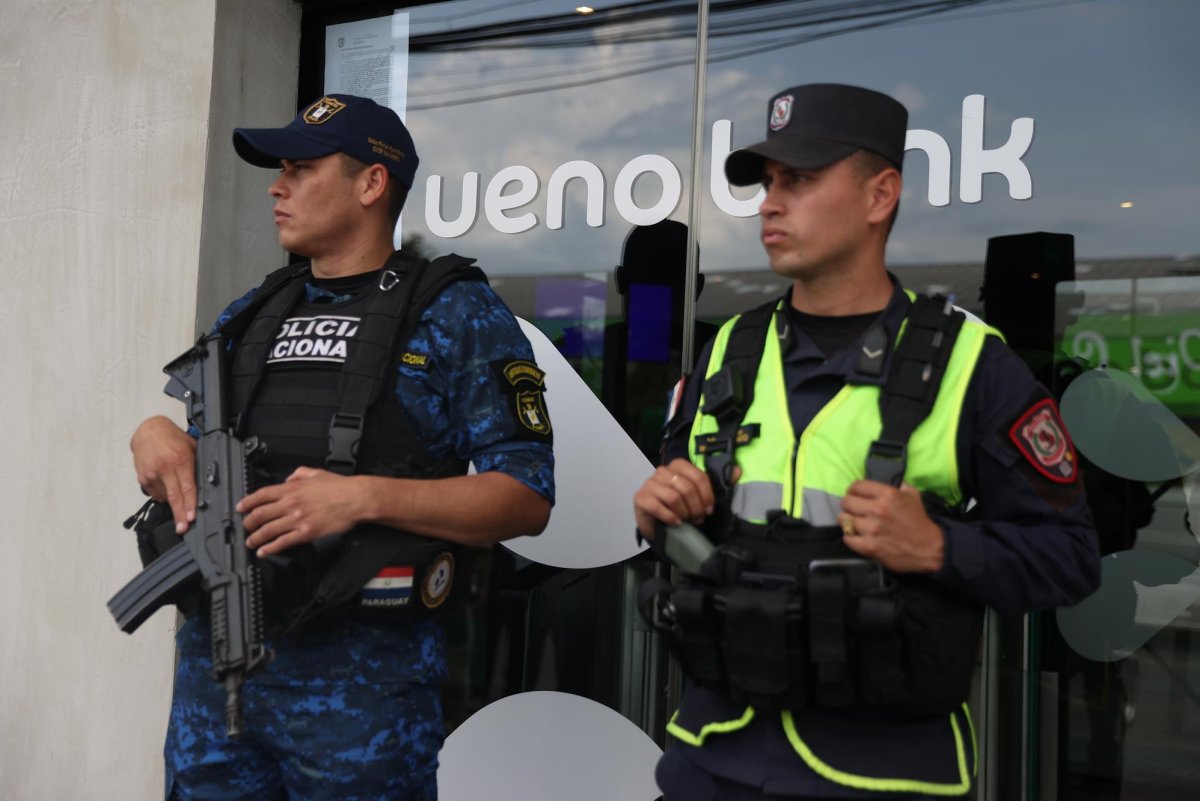
Paraguay shut down Ueno Bank following months of scrutiny over loans to affiliated companies and accounting adjustments that exposed a capital shortfall. Photo by Juan Pablo Pino/EPA
Nov. 3 (UPI) — Paraguay shut down Ueno Bank following months of scrutiny over loans to affiliated companies and accounting adjustments that exposed a capital shortfall, leaving customers unable to access their accounts and about $380 million in public social security investments awaiting recovery.
The Central Bank of Paraguay, the country’s financial regulator, announced Tuesday a decision adopted on Monday. Ueno’s capital adequacy ratio, which measures its capital against the risks it carries, had fallen below half the regulatory minimum.
Central bank President Carlos Carvallo told a news conference that supervisors initially identified loans to companies connected to the bank’s controlling group.
On June 5, supervisors ordered the bank to bring those loans within legal limits. Because corporate records did not directly establish those connections, investigators had to examine the transactions and follow “the money trail,” according to his remarks, reported by La Nación.
Paraguayan banking law caps such lending at 20% of regulatory capital. In October, the central bank acknowledged that Ueno had exceeded the limit but said it corrected the excess within the statutory deadline. The sale of loans used to address the breach remained under investigation for potentially prohibited indirect financing, according to La Nación.
Carvallo said liquidity, the funds available to meet payment obligations, subsequently deteriorated, requiring additional provisions for potential losses. Those provisions reflected deficiencies in loan documentation and IT services recorded as assets without sufficient supporting documentation.
The resolution process places the bank under regulatory control to review its assets and liabilities and arrange the repayment or transfer of deposits.
Its banking app, cards and other services were deactivated, central bank board member Liana Caballero confirmed, according to ABC Color.
The social security funds belong to the Instituto de Previsión Social, or IPS, a public agency that provides pensions and healthcare funded by employee and employer contributions. The money is invested in Ueno bonds and term deposits, ABC Color reported.
About 32,000 retirees and pension beneficiaries will receive their payments through other banks, IPS finance manager Gladys Vera announced. Both Vera and Carvallo said benefit payments would continue, funded by ongoing contributions.
Deposit insurance covers approximately $37,500 per depositor, per institution. The law requires covered deposits to be repaid within 15 calendar days, with a possible 15-day extension. Recovery of amounts above that limit will depend on the resolution measures implemented.
In March 2026, Ueno completed its first international bond offering, raising $350 million through notes carrying a 6.7% annual coupon and maturing in 2031. BofA Securities, part of Bank of America, and J.P. Morgan Securities, part of JPMorgan Chase, served as initial purchasers and joint bookrunners. The transaction closed March 6, according to Ferrere, the law firm that advised the bank.
On Monday evening, Ueno said in a statement that it was “operating normally” and had received no notification concerning the activation of the deposit guarantee fund. A September advertising campaign claimed that “two out of three Paraguayans” chose its services.
The case also involves past ties to two senior officials. Carvallo chaired Financiera Ueno from June 2021 to July 2023, before its conversion into a bank.
President Santiago Peña was a shareholder in Ueno Holding and announced his departure in April 2025, when he denied holding a stake in the bank.
Carvallo confirmed that he had signed his resignation as central bank president but would remain temporarily to oversee the resolution process. The regulator announced investigations into potential responsibility and said Ueno’s situation did not reflect broader conditions in the financial system.
The crisis also prompted opposition efforts to impeach Peña. Sen. Rafael Filizzola confirmed that a draft impeachment motion was being prepared, while Sen. Yolanda Paredes also called for criminal proceedings and restrictions on leaving the country.
About the Author