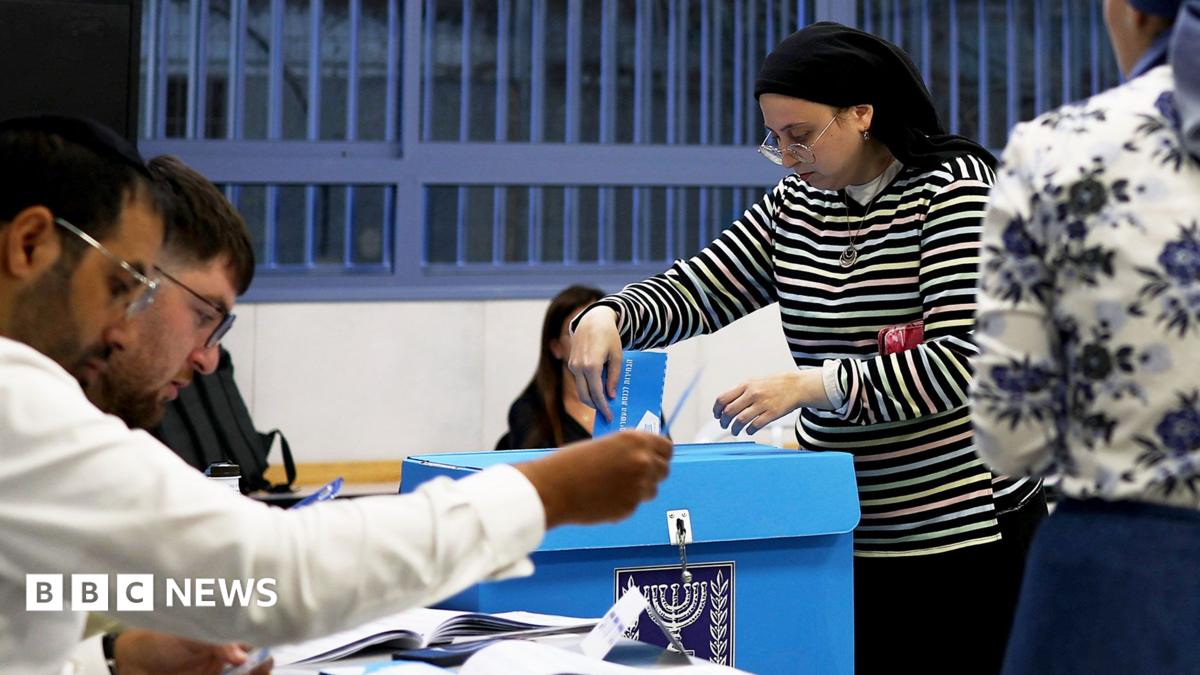
Turnout so far is the highest on record, as Israelis vote in what many view as one of the most pivotal elections in the country’s history.
Polling published on Friday suggests incumbent Benjamin Netanyahu is almost neck-and-neck with former military chief Gadi Eisenkot in the race to become prime minister.
But neither of their political blocs is projected to win the 61 seats needed to form a government – and weeks or months of political wrangling may lie ahead.
The campaign has been shaped by the issues of democracy and security, and the election is widely being seen as a referendum on Netanyahu’s rule.
Throughout polling day, Netanyahu has posted on social media about a reportedly high turnout among Arab voters. He has labelled it an “emergency” and a “matter of life or death” for the Israeli right, and called on his supporters to get out and vote.
His Likud party has said it has asked for voting to be extended beyond 22:00 (20:00 GMT). But Eisenkot’s camp has called it an attempt to “lay the groundwork for allegations challenging the integrity of the election”.
Many leading parties complained on Tuesday morning of alleged irregularities at polling stations across the country – but Israel’s Central Election Committee (CEC) said there is no evidence of systematic tampering with ballot slips.
Israel’s proportional representation system means governments have always been coalitions – and the race to power can, and has, produced unexpected alliances. But this election looks especially tight – and lines in the sand have already been drawn.
Eisenkot, who leads the newly formed Yashar Party, is the main figure in the so-called “change bloc”, a collection of parties which have ideological differences but share the goal of ousting Netanyahu.
Other leaders in the bloc include former Prime Minister Naftali Bennett and Avigdor Lieberman – both right-wingers who take hardline positions on security – and Yair Golan, a left-leaning former general.
For Netanyahu, a titan of Israeli politics who first served as prime minister in 1996, a new term will hinge on another alliance with the far-right and ultra-Orthodox parties that make up his current governing coalition – the most right-wing in Israel’s history.
About the Author