RIYADH, Saudi Arabia — Fears of intensifying conflict were growing in Saudi Arabia on Monday after Yemen’s Iran-backed Houthis launched multiple strikes on Riyadh’s airport over the weekend, killing 13 people and wounding hundreds.
“What is clear is we remain on a strong escalation ladder,” said Adam Baron, a fellow at New America, a Washington, D.C.-based think tank, who follows Yemen and the wider Gulf region.
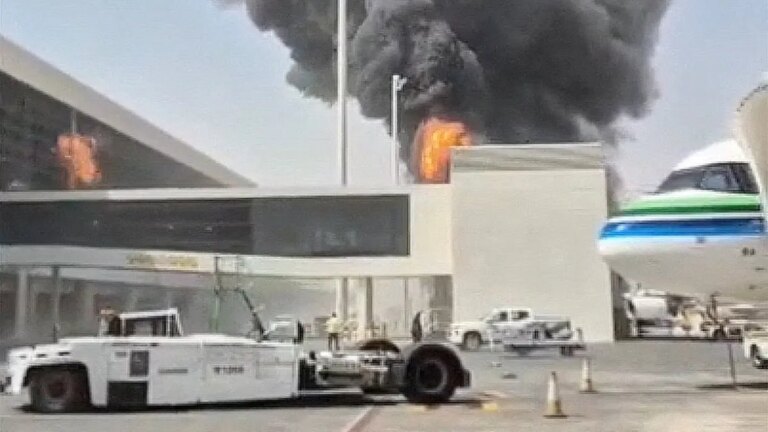
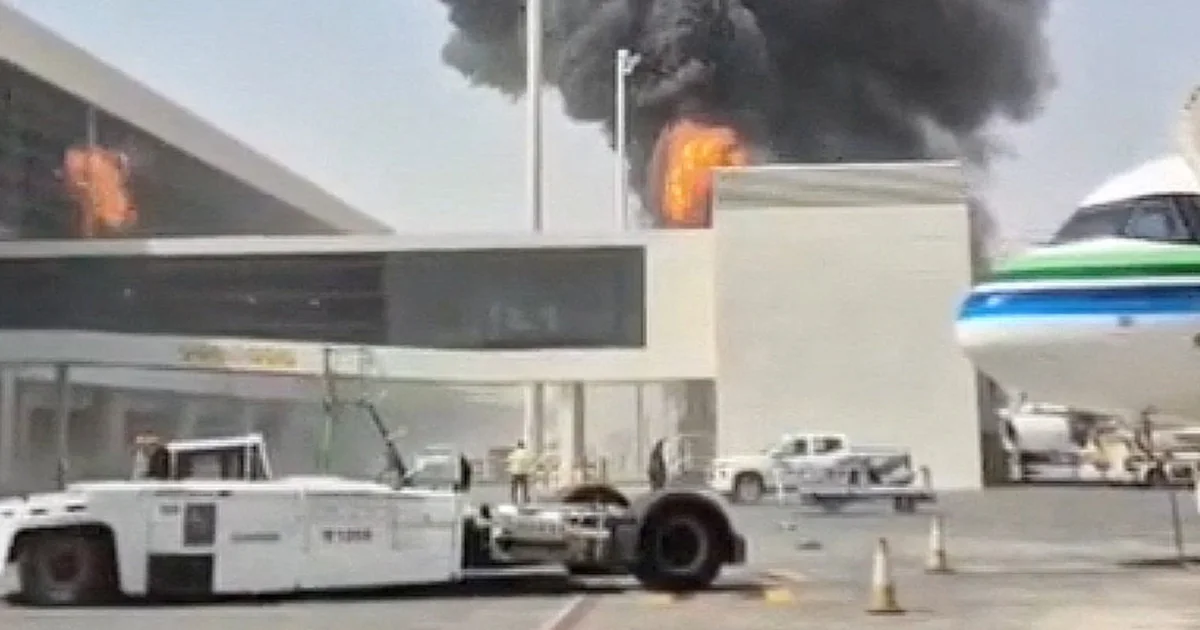
More than 300 people were injured when the kingdom’s main international airport was attacked Saturday, marking a major escalation in the Houthi rebel group’s campaign against the world’s leading oil exporter and key U.S. ally in the region.
Among the victims were one American, as well as four citizens of Saudi Arabia, two Bangladeshi nationals, an Egyptian, a Jordanian, a Palestinian, a Syrian and one Sudanese national. The Indian Embassy in Saudi Arabia later said on Sunday that an Indian national injured in Saturday’s attack had died.
Video capturing the Saturday attack showed a packed airport before the flash of an explosion sends people running for safety as debris falls on them.
The airport remained shut Monday.
The impact of the attacks were felt at the WPC Energy Congress in the capital Monday, with several top energy executives dropping off the event’s schedule.
The chief executives of Exxon Mobil, TotalEnergies, Shell, Chevron and BP had all been expected at the event, which started Sunday, but were no longer on the agenda that conference organizers released early Monday, Reuters reported. The energy giants did not immediately respond to requests for comment from NBC News.
“You know this country is safe and that we hold your protection at whole heart,” Saudi Energy Minister Prince Abdulaziz bin Salman said, according to Reuters, as he opened Monday’s session of the gathering held just miles away from Riyadh airport. But, he added, “our gathering here does not mean the risk is gone.”
He said the stepped-up fighting was serious and that the kingdom’s response must be “equally serious.”
“There is no way that somebody will break our back. We are like a phoenix,” he separately said. “We come out of the ashes all the time and every time.”
Fighting on the ground in neighboring Yemen is also intensifying, with the Houthis expanding their operations along its Red Sea coast and around the Bab el Mandeb, a key shipping route connecting the Red Sea to the Gulf of Aden.
Saudi Arabia and the Houthis began fighting in 2015 after the kingdom entered Yemen’s civil war on behalf of the internationally recognized government.
A period of relative calm following a 2022 ceasefire was shattered in July when the Houthis resumed attacks after accusing Saudi Arabia of firing on the Sanaa airport as a plane from Iran was attempting to land.
Baron said the latest attacks — the deadliest by the Houthis on Saudi Arabia in more than a decade — could have a “galvanizing effect” on Washington and other international actors, including Pakistan and Turkey, which recently reached a joint defense agreement with the kingdom.
“As these attacks are growing stronger and stronger, on the one hand, it’s increasing the hurt on the kingdom, but it’s also increasing assessments for many that that there has to be some strong effort to degrade the Houthis and restore deterrence,” Baron said.
Washington faces mounting pressure. President Donald Trump on Saturday said he was still weighing whether to join in Saudi Arabia’s military operations against the Houthis.
“We may. We’re gonna look at it,” he told reporters. “We just found out about the recent attack. So we’ll make a decision. We move very quickly.”
After sweeping gains by Houthi forces in Yemen last month, Trump said the rebel group had contacted the U.S. to stress that it doesn’t “want to fight with us” and would “much prefer not having us involved.”
While the skies over Riyadh were empty Monday after flights in and out of the capital were canceled, roads were full of traffic as residents tried to get back to normal life.
And in the early hours of Sunday, road crossings at the border with the United Arab Emirates were largely deserted.
“With the Houthis, we knew that they could hit Riyadh airport, but it’s almost about the precision,” Baron said. “There’s a great degree of anxiety in terms of … living in a world where you can just have random armed groups hitting airports, right?”
About the Author