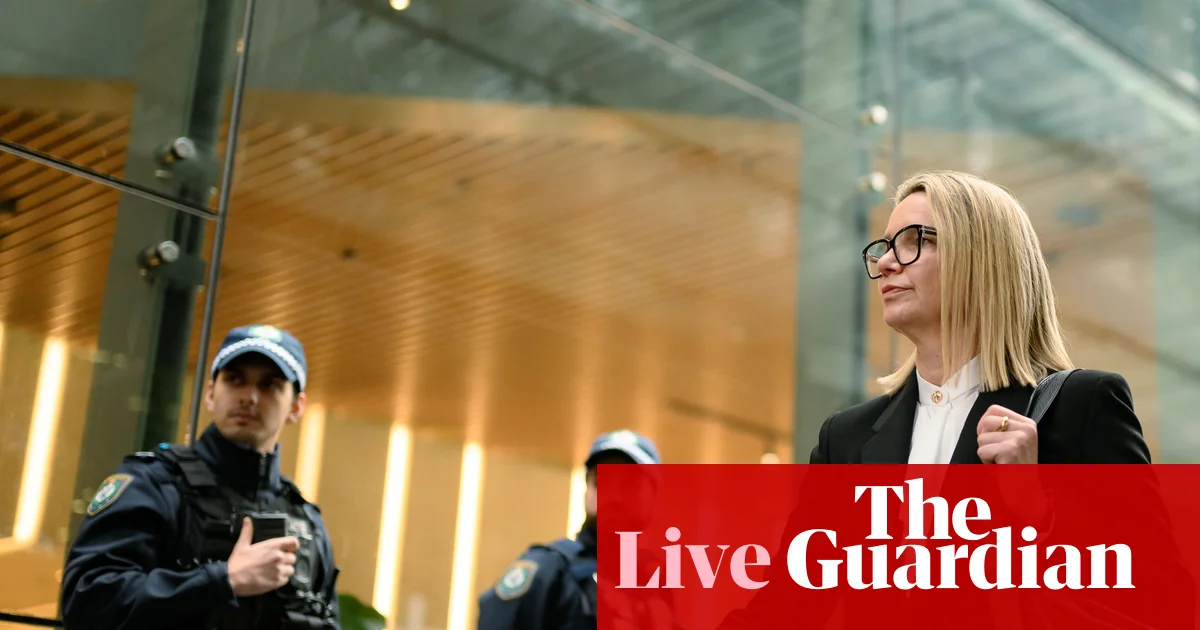
‘Culture of secrecy’ and factchecking at Four Corners criticised by ABC watchdog
A culture of secrecy and inadequate factchecking at the ABC’s leading investigative program has been criticised by an independent watchdog, Australian Associated Press reports.
The ABC ombudsman yesterday found two episodes of the Four Corners program led by a bikie turned journalist had breached editorial standards.
Mahmood Fazal was sacked in May and has denied any wrongdoing after questions were raised regarding the anonymous sources used in the Cocaine Nation and Meth Highway episodes aired during 2023 and 2024.
Both were removed by the ABC due to accuracy concerns.
ABC chair Kim Williams elevated the allegations to ombudsman Fiona Cameron who found the national broadcaster had failed to meet its own editorial standards for accuracy, fair and honest dealing, and independence and integrity.
Audiences were given a misleading impression of who key contributors were, alleges the report from Cameron.
In both episodes, a masked figure who purportedly dealt cocaine to Sydney’s elite was featured.
Media Watch later reported Sydney-based rapper Charissa Habkouk played the role as a favour to Fazal.
Cameron confirmed this was “materially misleading” to the audience and recommended a full investigation in the use of anonymous and confidential sources.
Key events
NSW starts construction on hundreds of discounted rentals for essential workers on prime Sydney land
The NSW government has begun construction on 220 new build-to-rent apartments for Sydney’s essential workers on prime inner city land.
Paul Scully, the state minister for planning, and Rose Jackson, the minister for housing, said the units would be available at discounted market rates for health workers, teachers, police officers, firefighters and others “so they don’t have to choose between an affordable home and a long commute”. The building sits in Annandale, about a 15 minute bus ride from the Sydney CBD.
The NSW government will retain ownership of the properties, which will be built on a vacant site left empty following construction of the WestConnex tunnel. The building is expected to see its first residents by 2029.
Jackson said in a statement:
Every essential worker priced out of the community they serve is a failure of the housing system we inherited, and this is what fixing it looks like.
The Joinery Annandale means a nurse or a teacher in the Inner West does not have to choose between living near their job and being able to afford rent.
Smartglasses ban on Sydney’s eastern suburb beaches on the cards
Smartglasses could soon be banned across Sydney’s eastern suburbs beaches Coogee, Clovelly and Maroubra under a motion put forward to Randwick council.
Councillor Philipa Veitch told the council meeting on Tuesday that the devices created a “gross violation of privacy and a safety risk for children and women” on beaches.
The council has already banned the technology at the Des Renford leisure centre, citing “growing community concerns” about their potential misuse.
Veitch suggested provisions for those with significant vision impairment or other disabilities.
It follows City of Sydney councillors voting to ban smartglasses at council gyms, childcare centres and pools on Monday.
Good morning, Nick Visser here to take over the blog. Let’s get into it.
Albanese joins 20 other world leaders in urging AI safeguards
Anthony Albanese has told the UN general assembly that “retaining sovereignty must have a digital dimension” as he spruiked his teen social media ban, opt out algorithm and AI statement.
In a speech to the coalition for children’s rights and protections in the age of AI, in New York, the prime minister said Australian parents were legally empowered by the digital safety reform.
The conversations they have had together confirm the common concerns they have about their children, that social media is robbing them of their childhood, addicting them to algorithms [and] encouraging anxieties, eating disorders and other harms.
Albanese said he wanted Australian children to “be playing football or netball, making music or reading books, finding friends face to face”.
Put simply, we must give children back their childhood.
Albanese also spoke of AI risks, including the “exploitation of children, the potential to enable biological weapons, or even the loss of control of AI systems themselves”.
In this digital age, retaining sovereignty must have a digital dimension.
It comes after the prime minister signed a declaration with 20 other world leaders urging safeguards over AI, including maintaining human control over the rapidly evolving technology.
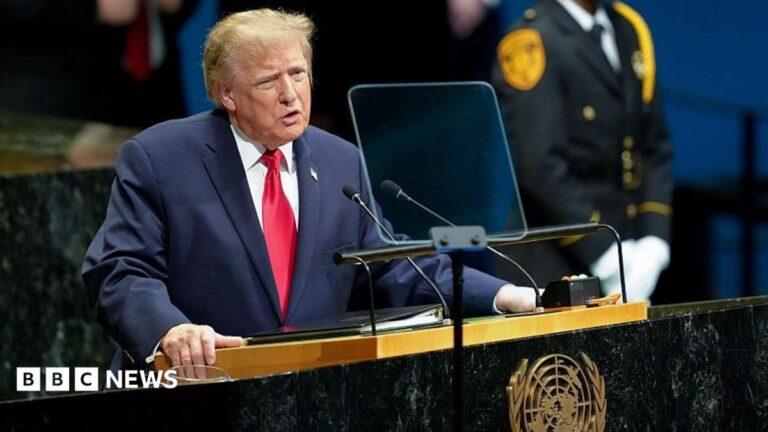
Donald Trump has lashed out at countries seeking to rein in artificial intelligence, even suggesting the technology’s name should be changed to lessen anxieties, Australian Associated Press reports.
Trump’s broadside came at an awkward moment for Anthony Albanese after he urged further safeguards against AI the day before, and as his government was warned about “censorship” by the Trump administration over plans to curb the algorithms of big tech.
In an address to the UN general Assembly overnight, the US president said AI should be renamed as “super intelligence”, rejecting calls for further protections for it.
He said AI had a potential to be bigger than the Industrial Revolution or the internet.
The use of the world artificial makes intelligence sound fake. It is not fake, it’s actually amazing,
The United States also totally rejects any attempt to construct a globalist scheme to control the artificial intelligence being spoken of.
He said the use of the technology should be actively encouraged, instead of being curtailed.
Trump has previously expressed concerns about AI were a hoax and limiting its growth would cause America to cede ground to China.
The comments come a day after Albanese joined more than 20 other countries urging greater oversight for AI.
‘Culture of secrecy’ and factchecking at Four Corners criticised by ABC watchdog
A culture of secrecy and inadequate factchecking at the ABC’s leading investigative program has been criticised by an independent watchdog, Australian Associated Press reports.
The ABC ombudsman yesterday found two episodes of the Four Corners program led by a bikie turned journalist had breached editorial standards.
Mahmood Fazal was sacked in May and has denied any wrongdoing after questions were raised regarding the anonymous sources used in the Cocaine Nation and Meth Highway episodes aired during 2023 and 2024.
Both were removed by the ABC due to accuracy concerns.
ABC chair Kim Williams elevated the allegations to ombudsman Fiona Cameron who found the national broadcaster had failed to meet its own editorial standards for accuracy, fair and honest dealing, and independence and integrity.
Audiences were given a misleading impression of who key contributors were, alleges the report from Cameron.
In both episodes, a masked figure who purportedly dealt cocaine to Sydney’s elite was featured.
Media Watch later reported Sydney-based rapper Charissa Habkouk played the role as a favour to Fazal.
Cameron confirmed this was “materially misleading” to the audience and recommended a full investigation in the use of anonymous and confidential sources.
Crackdown on big money donations to parties, Grattan Institute says
Krishani Dhanji
Major parties should get less money to spend at elections, and new independents should get drastically more, says the Grattan Institute, urging a rethink of donation caps to prevent an election spending “arms race”.
Labor and the Coalition negotiated a new set of donation laws that independents called a “stitch up”, giving major parties a cap of $90 million each to spend, and placing a per-electorate cap of $800,000.
A new Grattan Institute report says the major party cap should be more than halved, to to $40 million. It argues the $800,000 seat cap should remain for incumbents and established-party candidates, but new entrants should get an extra 50% to spend.
Grattan says the Australian Electoral Commission and Australian Bureau of Statistics spend around $30m on big campaigns such as getting Australians to enrol to vote – so they argue $40m for big parties is pretty generous.
And to give you a sense of what $90m buys – Clive Palmer spent $89m during the 2019 election.
The report says:
Big-money elections mean politicians spend more time and effort on fundraising, and political parties become reliant on major donors to fund their campaigns. This creates fertile conditions for wealthy interests to have undue influence over policy making. Capping electoral expenditure puts a ceiling on money in politics.
Political parties collectively declared almost half a billion dollars in expenditure in the year leading up to the 2025 federal election. And this was not a one-off. They declared expenditure of more than $400 million in the lead-up to both the 2022 and 2019 federal elections as well.
Under the government’s newly legislated rules, the tax payer funding for parties increased from $3.38 for every first preference vote for parties and independents that achieved at least 4% of votes, to $5 – which Grattan argues won’t be necessary if the overall spending cap was reduced, saving public money.
Welcome
Good morning and welcome to our live news blog. I’m Martin Farrer with the top overnight stories and then it’ll be Nick Visser with the main action.
A culture of secrecy and inadequate factchecking at the ABC’s leading investigative program has been criticised by an independent watchdog. More coming up.
About the Author