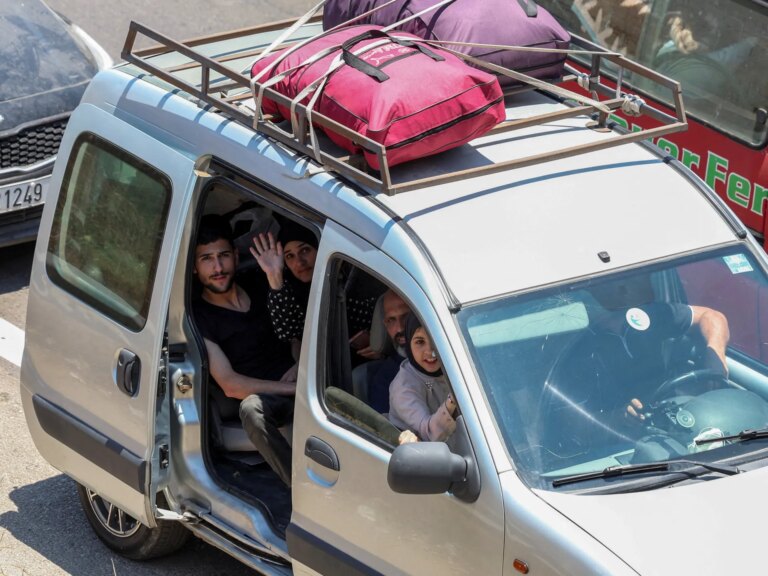
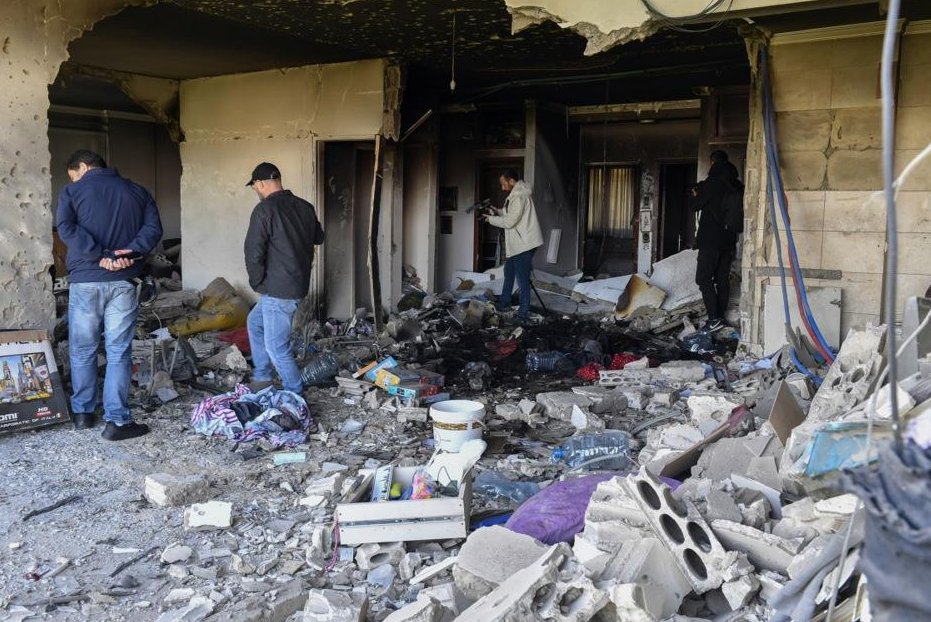
A damaged apartment following an overnight Israeli airstrike targeted a building in Bshamoun, southeast of Beirut, Lebanon, on Tuesday. The Lebanese Ministry of Public Health said more than 1,030 people have been killed and 2,800 others injured in Israeli airstrikes in Lebanon since the start of renewed hostilities. Photo by Wael Hamzeh/EPA
BEIRUT, Lebanon, March 24 (UPI) — The mass forced displacement of more than 1 million Lebanese, triggered by Israeli evacuation orders in southern Lebanon and other Hezbollah-controlled areas, has left the country facing a humanitarian disaster, fueled tensions among its communities and raised concerns about lasting demographic change.
Israel has pledged to apply the “Gaza model” in southern Lebanon, directing its army to accelerate the destruction of villages along the border and demolish all bridges over the Litani River to prevent Hezbollah fighters from moving south and threatening northern Israel.
Hezbollah remained inactive for 15 months since the Nov. 27, 2024, cease-fire agreement, but decided to engage in the U.S.-led war on Iran by firing missiles and drones into northern Israel on March 2, less than two days after the assassination of Iran’s Supreme Leader Ayatollah Ali Khamenei.
The Iran-backed Shiite group said the strikes were in response both to Israeli aggression and to Khamenei’s killing.
The missile firing prompted the Lebanese government to ban Hezbollah from all military activities. However, that failed to prevent a new round of fighting, as Israel responded with a massive air campaign and issued evacuation orders for residents of Beirut’s densely populated southern suburbs and dozens of villages in southern and eastern Lebanon.
Inhabitants of these areas fled their homes in haste, leaving everything behind as they sought safety. Beirut and the southern port city of Sidon became makeshift shelters, with displaced residents crowding streets and sidewalks, many spending the night in their cars or in open spaces.
Fida Karout, a 47-year-old mother of five, spent 14 hours on the road to reach Beirut after fleeing her hometown, the southern border village of Mais al Jabal — a journey that normally takes just two hours by car.
This was her fourth displacement since Hezbollah opened a support front for Gaza on Oct. 8, 2023, a period during which the group suffered significant losses as Israel killed its top leaders, military commanders and an estimated 4,000 fighters.
A cease-fire brokered by the United States and France was intended to end the war on Nov. 27, 2024. However, Israel continued to operate freely and without restraint against Hezbollah beyond Feb. 18, 2025, when it withdrew the bulk of its troops after widespread destruction of villages in southern Lebanon and the killing of some 400 Hezbollah fighters and civilians — while retaining five strategic positions.
When residents of southern Lebanon returned to their villages in February last year, they were appalled by the extent of the destruction inflicted by Israel. Nevertheless, they remained, unwilling to abandon their land.
Karout, who discovered that her house had been completely burned and that 14 other houses belonging to her relatives had been reduced to rubble, had only one option left: a windowless, one-room garage where she managed to stay with her husband and children until being forced to leave again earlier this month.
“It was so painful, violent and terrifying,” she told UPI said after seeking refuge in a public school crowded with some 130 displaced families — one of 176 shelters established by the Lebanese government in Beirut.
She recalled how Israeli forces never stopped striking her village and the surrounding area, sending drones that harassed residents and invaded their privacy. Her 26-year-old nephew was killed during one of these attacks, becoming one of hundreds of civilians and Hezbollah operatives targeted by Israeli drone and airstrikes.
“We reached a point of asking when Hezbollah will retaliate against Israeli aggressions, even if it means a war will break out,” said Karout, clad in a head-to-toe Iranian-style black chador — an outfit distinguishing Hezbollah followers and supporters.
“Resistance has become a decision, not a choice. … We are ready to endure the displacement and make any sacrifices.”
But not everyone — including Shiites and even an increasing number of Hezbollah supporters — agrees with her, expressing dismay and anger at the group for dragging the country into another war, this time in support of its patron, Iran.
Communal tensions are also on the rise, despite the support shown by Christians, Sunnis and other sects who are hosting and assisting the displaced in their own regions.
Suspicion and fear dominate, as wanted Hezbollah and Islamic Revolutionary Guard Corps members have reportedly been renting and hiding in apartments targeted by Israeli strikes — putting civilians’ lives at risk.
Concerns are also mounting over Israel’s large-scale displacement of civilians, which Human Rights Watch described as “a possible war crime,” because it could become permanent.
Israeli plans reportedly include invading southern Lebanon, establishing a military-controlled security zone with systematic destruction of villages and even annexing parts of the region to prevent southerners — especially Shiite residents — from returning.
As a result, displaced southerners would be forced to settle in other regions, raising fears of a demographic shift across the country.
Sami Nader, Middle Eastern affairs analyst and director of the Levant Institute for Strategic Affairs, said Israel is undoubtedly using displacement as a tool to pressure, first and foremost, the Lebanese government to make the decision to fully disarm Hezbollah.
“But more importantly, it is meant to pressure Hezbollah and establish an equation: no return to your villages if we do not have security, no security for the residents of northern Israel,” Nader told UPI. “What if the Israelis don’t withdraw? And what if this conflict drags on, with Israel continuing to occupy the south?”
He cautioned that the flow of refugees would create tensions with Sunnis in Sunni areas, with Christians in Christian areas, and that “if they are evacuated to the Bekaa in eastern Lebanon, this would effectively redraw the map of Lebanon. … This would be the end of the Lebanon we know, especially with some Israelis speaking openly about the establishment of historic Israel.”
To former Interior Minister Marwan Charbel, Israel’s forced displacement was meant to incite division and sow discord among the Lebanese, “but this will not happen,” despite reported friction between some displaced people and their hosts.
Such incidents are swiftly contained by the Lebanese Army and security forces, with constant security checks on the shelters to detect any armed Hezbollah presence.
“We are facing a very difficult situation. … Everyone is aware of the dangers,” Charbel told UPI, acknowledging fears that Israel could maintain its occupation — leaving the displaced unable to return to their villages and forcing them to remain where they are, leading to “a demographic change” across the country.
However, he dismissed such a possibility, arguing that southerners would return “even if they remain on the rubble of their homes and live in tents,” provided that Israel ends its occupation and withdraws.
“This will be Lebanon’s last war,” he said, likening the country to “a pregnant woman who will either give birth naturally or by cesarean section.”
Such a hope is shared by most Lebanese, who suffered repeated wars with Israel, internal strife and constant violence and instability over the past 50 years.
Sanaa Fahs, a displaced woman from the southern Lebanese village of Jibchit, longs to return to her land, rebuild her home and live in peace.
“We will be patient, but in the end, we hope to return to our homes, and that this war will be the last,” Fahs told UPI.
That would require intensive negotiations with Israel as part of any broader agreement between the United States and Iran to end the ongoing war — should such talks materialize. It would also depend on Tehran accepting Hezbollah’s disarmament, as well as the Lebanese state and army succeeding in imposing their authority.
About the Author