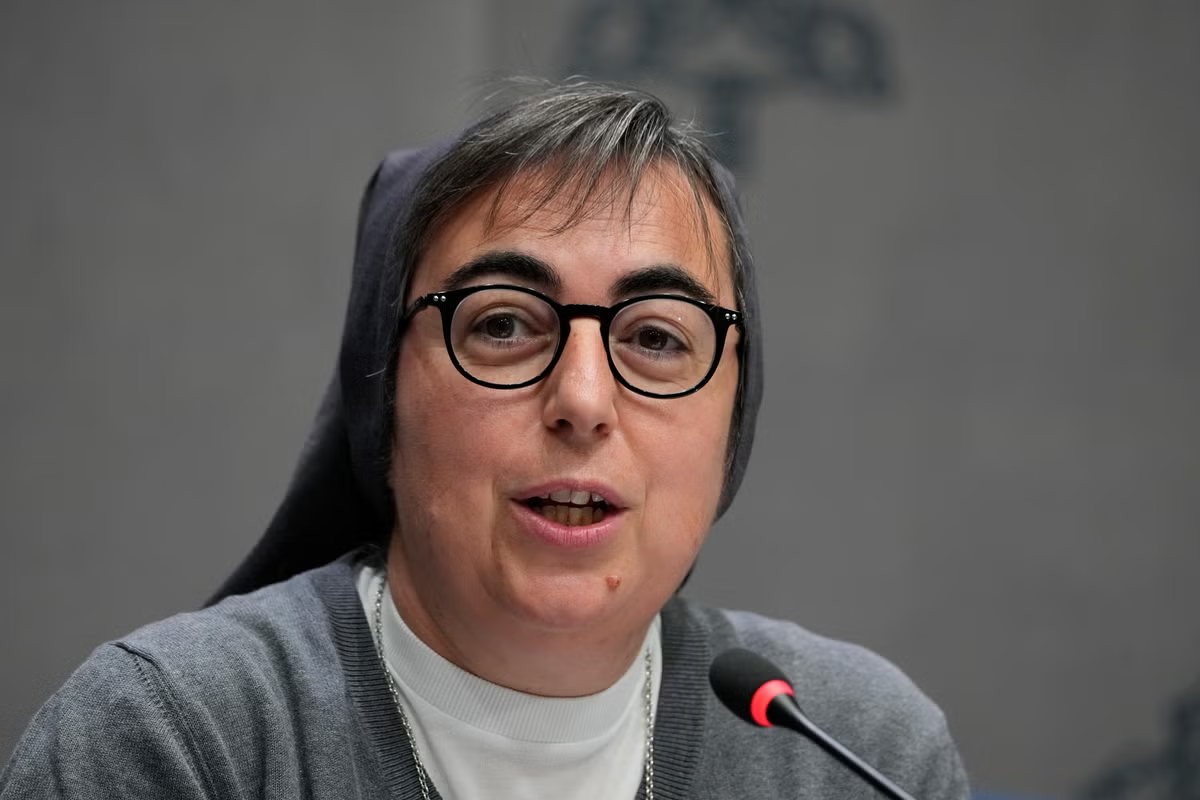
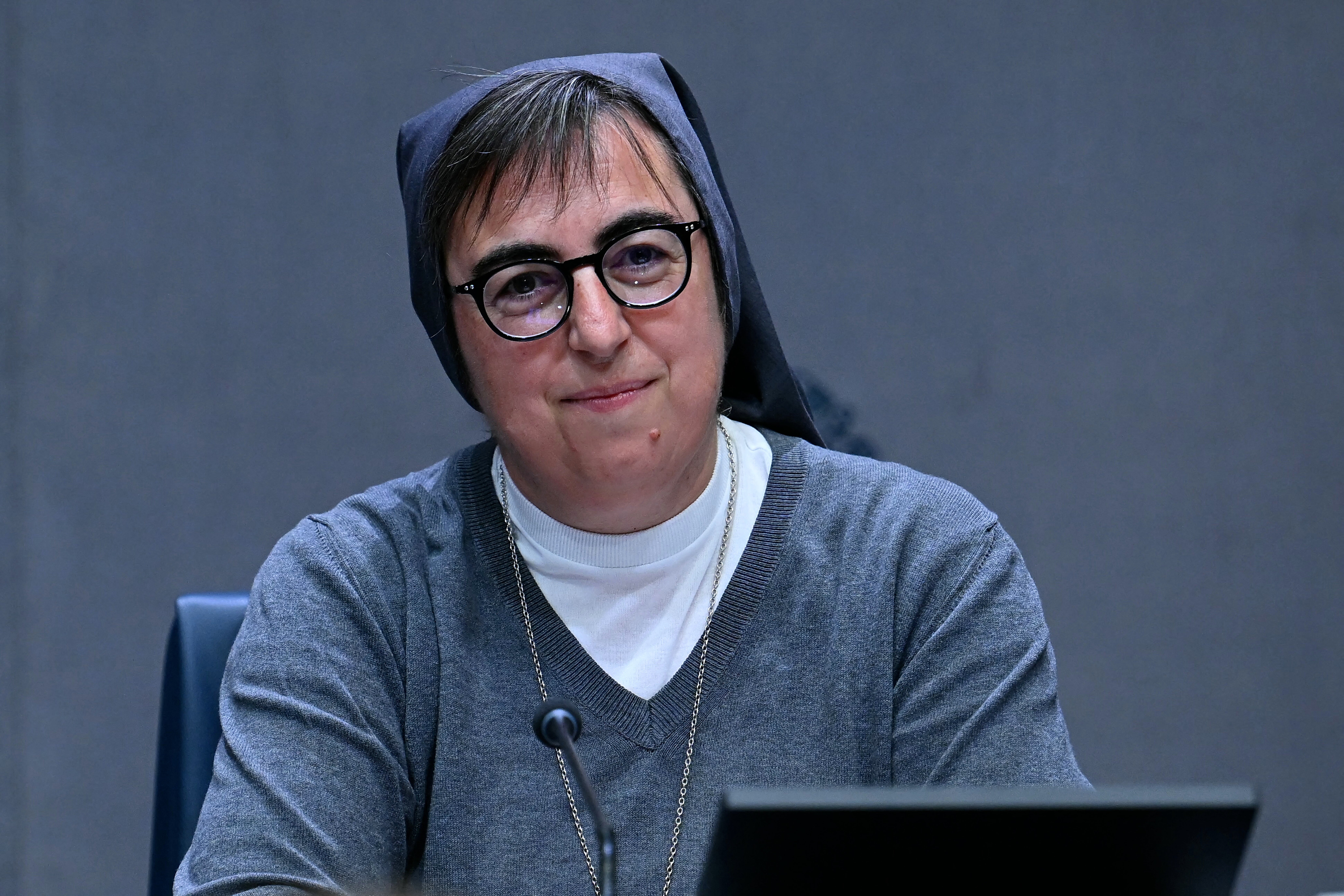
Pope Leo XIV has made a significant move by appointing an Italian nun, Sister Alessandra Smerilli, to lead a key Vatican department, marking his first major promotion of a woman within the Holy See’s hierarchy.
Sister Smerilli, an economist, will now head the Vatican office responsible for migrants, the environment, and development.
She currently serves as the second-in-command within the Dicastery for Promoting Integral Human Development and will succeed the retiring Canadian Cardinal Michael Czerny, who is set to turn 80 this month.
This appointment suggests Pope Leo is continuing the precedent set by his predecessor, Pope Francis, who actively elevated women to senior management positions in response to ongoing calls for greater female involvement in the Church’s decision-making processes.
But Leo too is following Francis’ lead by simultaneously naming Cardinal Fabio Baggio as a “pro-prefect” of the office, where he is currently undersecretary.
The dual nominations recognize that sometimes the role of a Vatican department head requires being an ordained priest and cardinal.
Baggio was also given the mandate to head up the Vatican’s Borgo Laudato Si environmental educational center, at Castel Gandolfo, near Rome.
The Catholic Church reserves the priesthood for men, and women have long complained of a second-class status despite carrying out the lion’s share of the church’s work running schools, hospitals and passing the faith onto younger generations.
Meanwhile, Pope Leo has also begged a breakaway group of traditionalist Catholics to call off its plan to consecrate new bishops without his consent, calling the move a schismatic act and a “sin of extreme gravity.”
“I plead with you and ask you with all my heart: please turn back!” Leo wrote in a letter to the Rev. Davide Pagliarani, the superior of the Society of St. Pius X.
Leo issued the letter a day before the society planned to consecrate four new bishops at its seminary in Econe, Switzerland. Under church law, the consecrations constitute a schismatic act and incur automatic excommunication for the four bishops and the bishop administering the consecration.
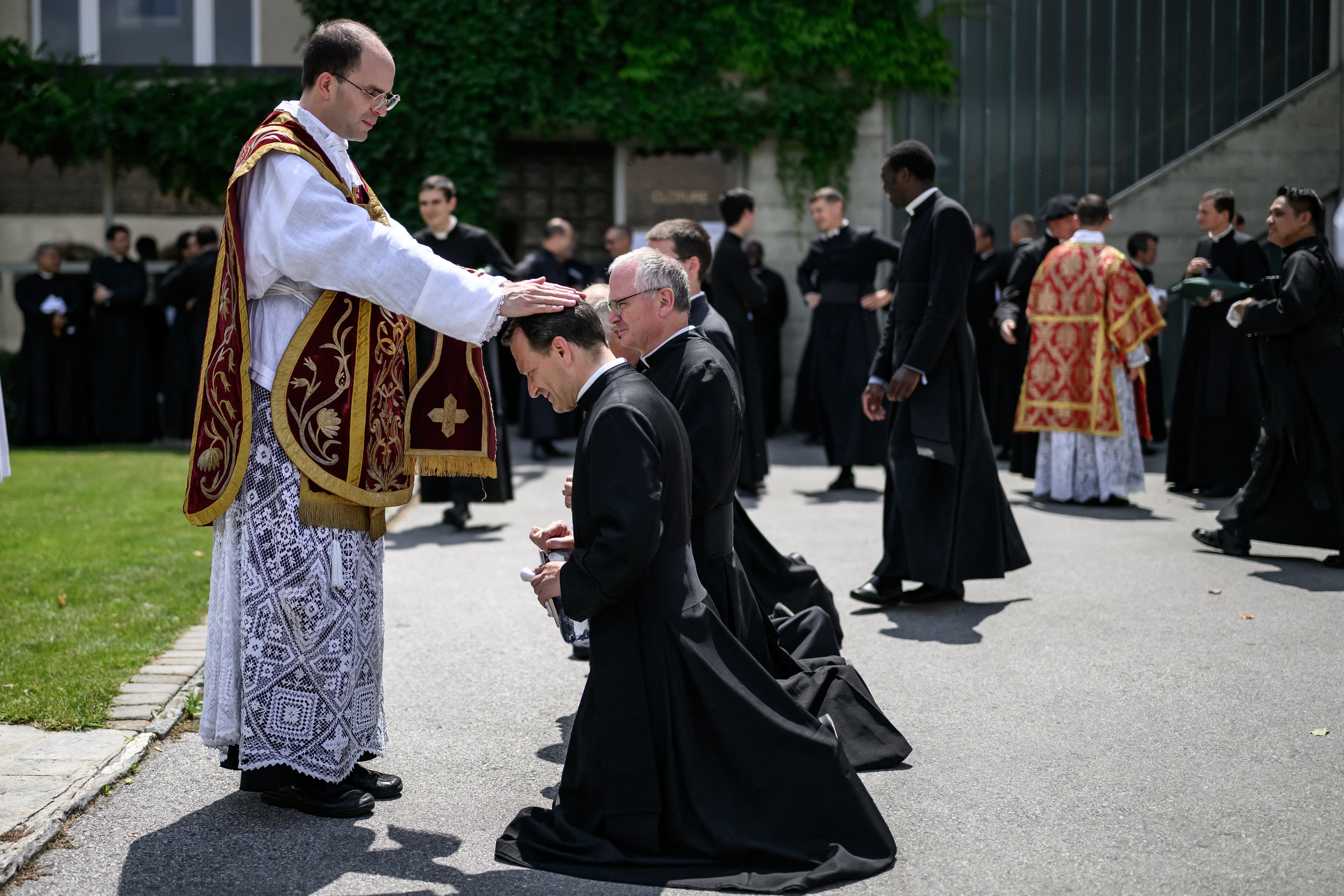
The society, known as the SSPX, was founded in opposition to the modernizing reforms of the 1960s Second Vatican Council. Among other things, the council revolutionized the Catholic Church’s relations with other religions and the laity, and allowed Mass to be celebrated in vernacular languages rather than Latin.
In 1988, SSPX founder Archbishop Marcel Lefebvre consecrated four bishops without papal consent, a grave crime under church law. The Vatican promptly excommunicated Lefebvre and the four other bishops, and the group today still has no legal status in the church.
The Vatican has warned that a similar fate awaits the new bishops.
In his letter, Leo repeated the Vatican’s offer of dialogue and said that going through with the consecrations would be counterproductive for the SSPX faithful.
“I urge you to consider carefully the spiritual good of the faithful, because the schismatic act you are about to undertake would deprive them of the licit, and in some cases, even valid reception of the sacraments,” he wrote.
Despite the original 1988 schismatic act, the group has continued to grow and today poses a threat to the Holy See as a parallel, ultra-Catholic, pre-Vatican II church. The SSPX counts two bishops, 751 priests, 264 seminarians, 145 religious brothers, 88 oblates and 250 religious sisters representing 50 nationalities, according to SSPX statistics.
About the Author