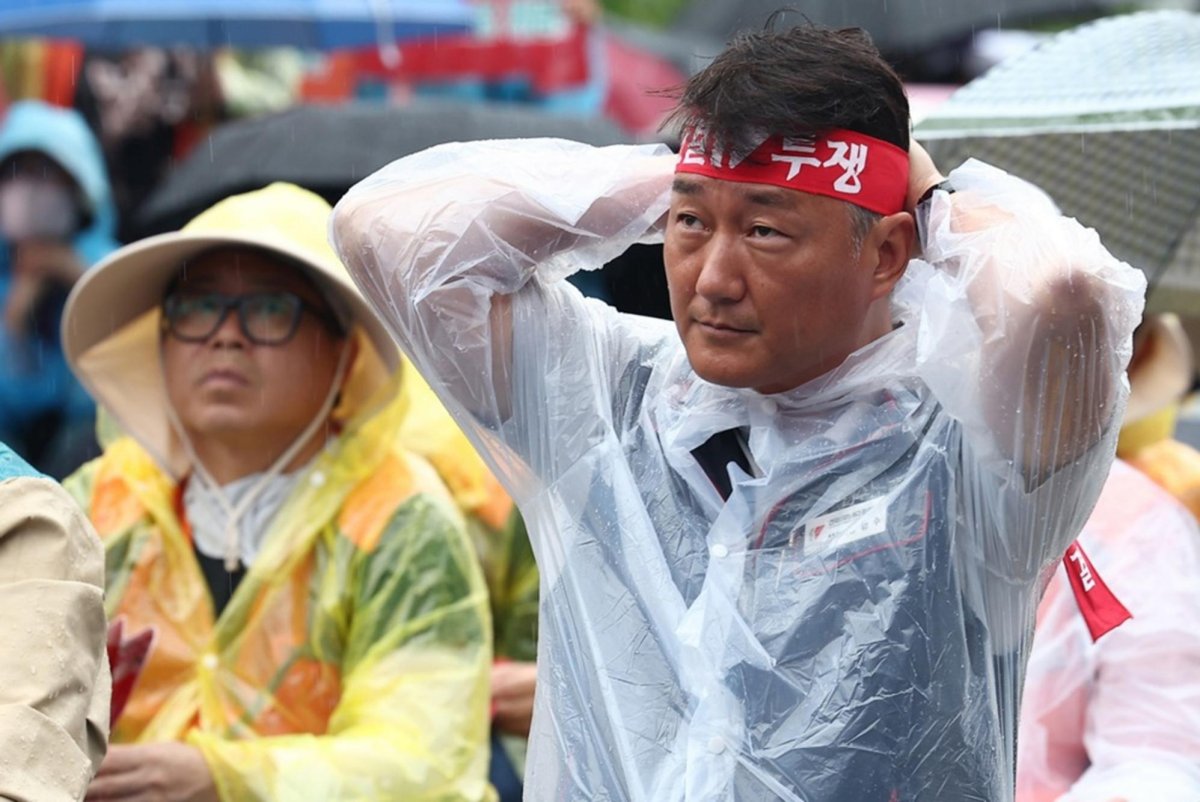
Yang Kyung-soo (R), leader of the Korean Confederation of Trade Unions (KCTU), ties a headband that reads ‘Solidarity and Fight’ during a rally near the National Assembly in Seoul, South Korea. File. Photo by YONHAP / EPA
April 21 (Asia Today) — Franchise owners at South Korea’s CU convenience store chain are facing mounting losses as a strike by unionized delivery drivers drags on, disrupting supplies and leaving some shelves empty.
Store owners said the strike has made it difficult even to place orders normally, as delays and missed deliveries spread through the supply chain, especially for ready-to-eat food items.
According to industry officials, CU’s logistics system relies on BGF Retail outsourcing distribution to BGF Logis, which routes goods through regional logistics centers before local transport companies and drivers deliver them to individual stores.
Drivers affiliated with the Cargo Truckers Solidarity union began striking April 5 and have escalated the dispute by blocking access to major logistics centers, disrupting deliveries to stores.
The union initially blocked entrances to logistics centers in Hwaseong, Anseong, Naju and Jinju, then shifted blockade points as the strike continued. Logistics problems are now centered on Jincheon, Jinju, Anseong and Naju, industry sources said.
Jincheon is a particularly important site because it has a factory producing ready-to-eat foods such as gimbap, boxed meals and sandwiches. Products from the plant are distributed to a wide network of stores, including outlets in the Seoul metropolitan area.
With shipments from the Jincheon facility disrupted, some stores have been unable to restock one of their key revenue categories on time. Industry estimates suggest between 2,000 and 3,000 stores are now affected by product shortages.
BGF Logis has tried to limit the damage by securing substitute delivery drivers and redistributing shipments. Some goods are being sent through alternate routes or transferred to nearby distribution centers, but industry officials said those steps have not been enough to restore normal operations.
Franchise owners said frustration is growing because convenience stores depend heavily on fast turnover of boxed meals, triangle kimbap and sandwiches. When deliveries are delayed, lost sales follow immediately.
With supply disruptions affecting not only refrigerated items but also some shelf-stable products, store owners say normal operations have become difficult. Some said sales have fallen by about 30%.
The longer the strike continues, the more franchise owners risk losing customers and suffering damage to store image, industry officials said, adding that store operators have become unintended victims of a labor dispute between management and delivery workers.
— Reported by Asia Today; translated by UPI
© Asia Today. Unauthorized reproduction or redistribution prohibited.
About the Author