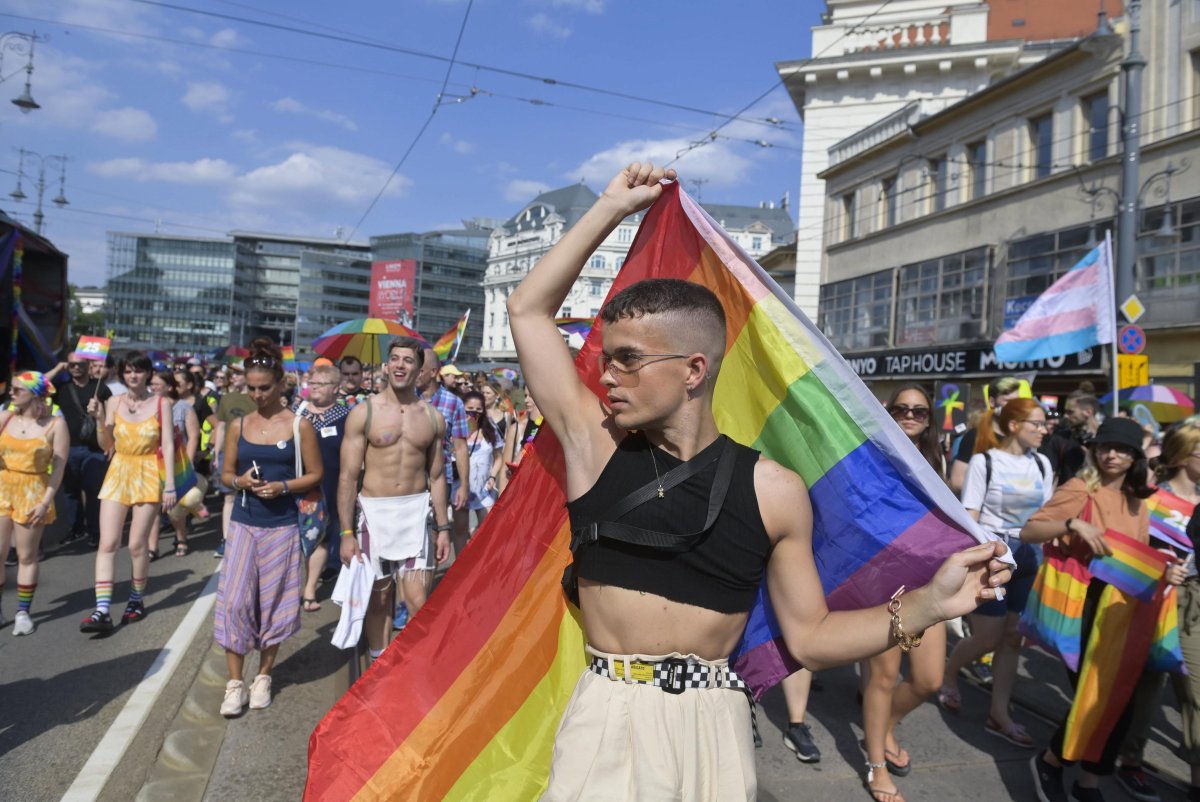
1 of 2 | A participant holds a rainbow flag during the gay pride parade in downtown Budapest, Hungary, on July 24, 2021. On Tuesday, the European Union’s top court said Hungary’s anti-LGBTQ legislation violated the EU’s treaty. File Photo by Szilard Koszticzak/EPA-EFE
April 21 (UPI) — The European Union’s top court ruled Tuesday that Hungary’s anti-LGBTQ laws violated the bloc’s values prohibiting discrimination and ensuring freedom of expression.
The European Court of Justice said the law Hungarian lawmakers approved in 2021 violated the EU’s values as set out in Article 2 of its treaty, thus breaking its law. It’s the first time an EU member state has been found guilty of breaking EU law based on its founding values, The Guardian reported.
The Hungarian law was ostensibly put in place to protect children from sexual abuse, increasing sentences for sex crimes and creating a public database of sex offenders.
But it also restricted LGBTQ content for students under 18. It also restricted advertising deemed to popularize same-sex relationships or genderqueer identities. The Hungarian Parliament overwhelmingly approved the legislation 157-1.
The anti-LGBTQ law was pushed by Hungarian Prime Minister Victor Orbán, whose far-right Fidesz-KDNP alliance was defeated in an election earlier this month by Peter Magyar’s center-right Tisza Party.
During Orbán’s four terms in office, Hungary has seen its democratic standing in the EU slide through legislation and judicial overhauls. The country has become more aligned with Russia amid its war with Ukraine.
Magyar, meanwhile, campaigned on reestablishing Hungary’s relationship with the EU and bringing EU funds back into the economy. Some EU funds were frozen over Hungary’s anti-LGBTQ reforms, though Magyar hasn’t explicitly addressed what, if any, actions he will take on the law, The Guardian reported.
John Morijn, a professor of law and politics at the University of Groningen in the Netherlands, said the ECJ’s ruling Tuesday was historic.
“You cannot equate what is totally natural — that 10% of the population loves the same sex — with egregious crime,” he told the BBC.
About the Author