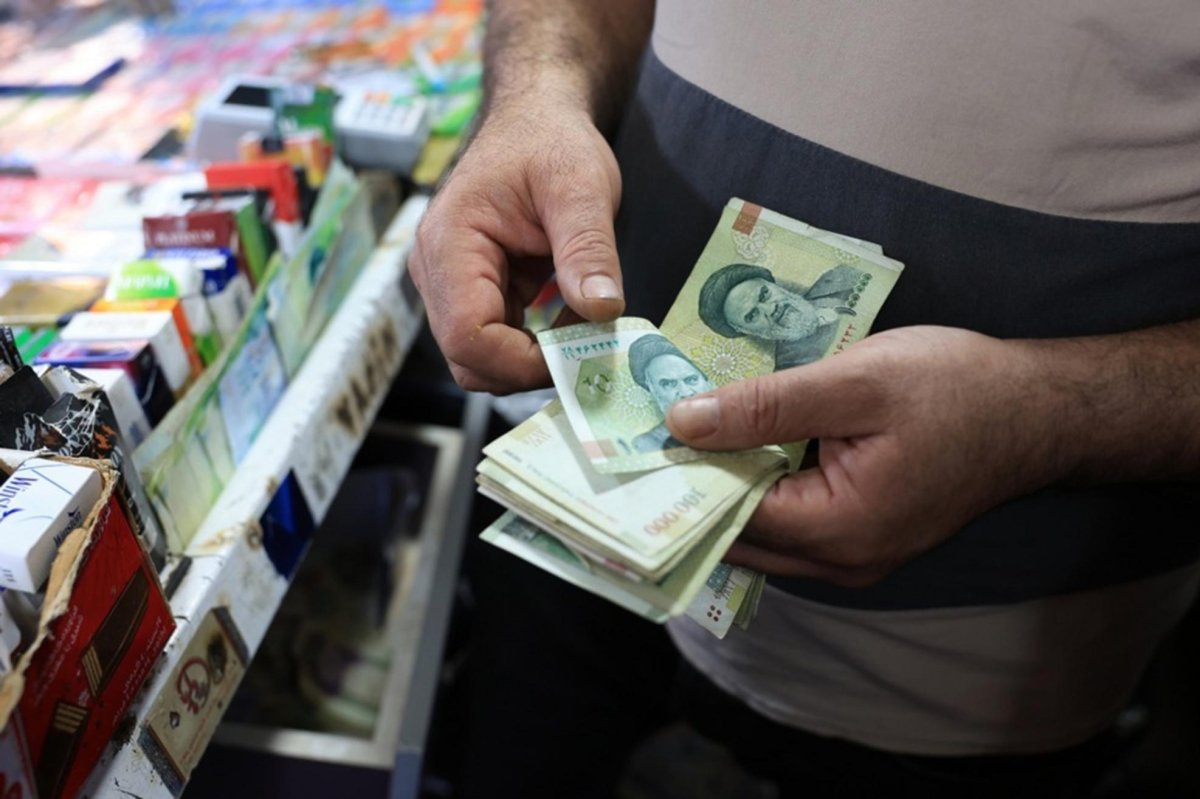
An Iranian shopkeeper counts one hundred thousand rial banknotes in his kiosk in Tehran, Iran. Photo by ABEDIN TAHERKENAREH / EPA
June 18 (Asia Today) — Iran could gain access to tens of billions of dollars in overseas assets frozen under U.S. sanctions following a memorandum of understanding with Washington to end hostilities.
The United States and Iran signed the agreement remotely Wednesday, bringing the framework into effect.
Under the agreement, Washington pledged to issue the licenses and approvals needed for Iran to use frozen assets once Tehran fulfills the terms of the memorandum.
Estimates of the total value of Iran’s inaccessible overseas assets vary widely.
The Iranian government says the amount is at least $100 billion, or about 152 trillion won, while outside experts have offered lower estimates, The Wall Street Journal reported.
Iranian assets are believed to be held in China, Iraq, India, Qatar, Japan, Luxembourg, Oman and the United States. Billions of dollars were also previously held in South Korea.
China, the largest buyer of Iranian crude oil, is believed to hold the largest share, estimated at between $20 billion and $50 billion.
China continued buying Iranian oil through unofficial channels even after fighting began in late February, according to the Journal.
Iran has used some of the proceeds to purchase Chinese machinery, automobile parts and other goods.
South Korea was also a major buyer of Iranian oil before the first Trump administration reimposed sanctions on Tehran.
About $7 billion in Iranian funds accumulated in South Korean bank accounts. Most of that money was later transferred to Qatar as part of a 2023 prisoner exchange agreement between the United States and Iran.
The funds remained subject to strict restrictions and were intended primarily for humanitarian purchases.
Other estimates place about $15 billion in Iraq, $7 billion in India, $6 billion in Qatar and a combined $8 billion in Japan, the United States, Luxembourg, Oman and other jurisdictions.
Because the figures come from different governments, financial institutions and independent analysts, they may overlap and should not be viewed as a precise accounting of Iran’s total frozen wealth.
Tehran is initially seeking the phased release of $24 billion.
Esfandyar Batmanghelidj, founder and chief executive of the Bourse & Bazaar Foundation, said access to some of the money could help Iranian authorities strengthen the rial and curb inflation.
“Releasing some of the cash could allow Iran’s leadership to raise the value of its currency and reduce inflation,” Batmanghelidj said.
He said Iran would still have a strong incentive to pursue broader sanctions relief.
Access to frozen assets could provide Tehran with immediate foreign currency, but broader sanctions relief would have a larger long-term impact by allowing Iran to expand exports, attract investment and obtain foreign technology.
The timing and scale of any asset release will depend on Iran’s compliance with the agreement and the issuance of licenses by the U.S. government.
— Reported by Asia Today; translated by UPI
© Asia Today. Unauthorized reproduction or redistribution prohibited.
About the Author