
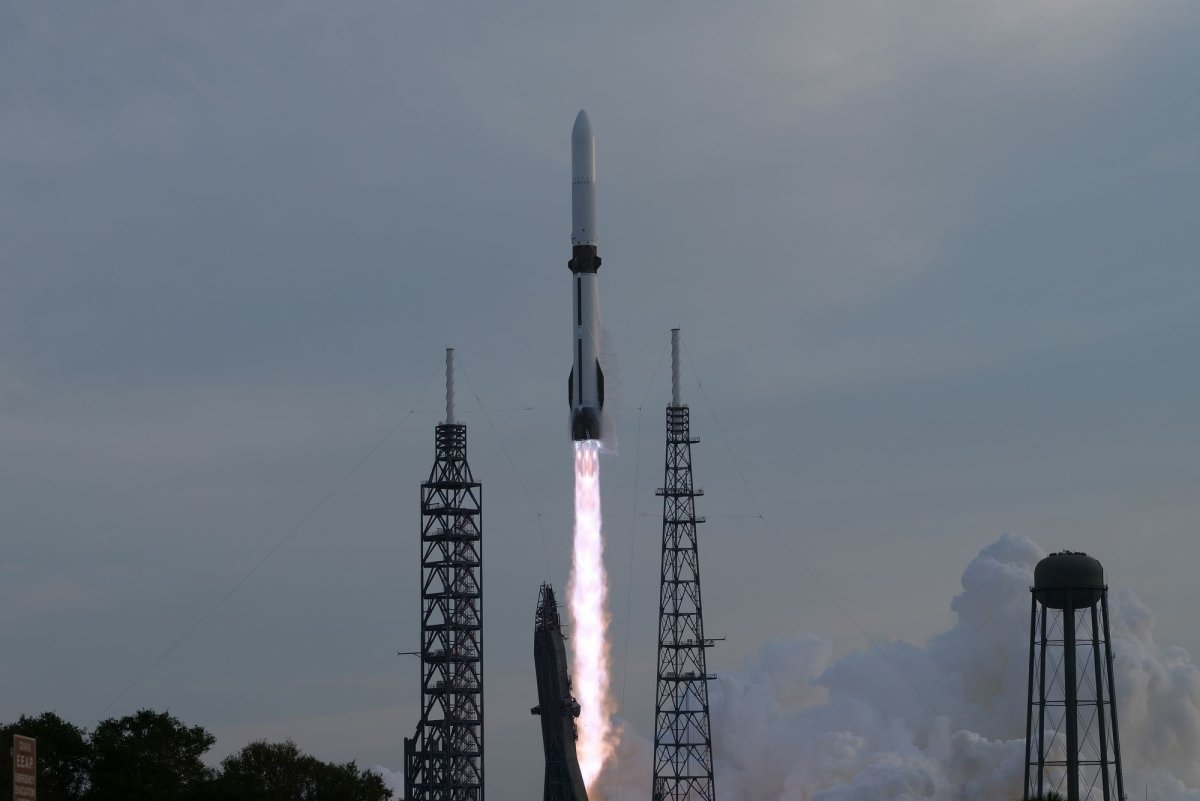
April 19 (UPI) — Blue Origin successfully launched its New Glenn rocket and landed its booster stage, but it delivered a communications satellite into an orbit too low to be useful.
New Glenn-3, the third launch of the company’s rocket, cleared the tower just before 7:30 a.m. EDT on Sunday morning and roughly six minutes later its first stage touched down on the “Jacklyn” drone ship in the Atlantic Ocean.
The fully reusable booster, called “Never Tell Me The Odds,” was making its second landing as the mission hit its second stage engine cutoff, entered orbit and released AST SpaceMobile’s BlueBird 7 satellite successfully.
The release was successful and the satellite powered up properly, but had been placed into “an off-nominal orbit,” Blue Origin said in a post on X.
“During the New Glenn 3 mission, BlueBird 7 was placed into a lower than planned orbit by the upper stage of the launch vehicle,” AST said in a press release.
“While the satellite separated from the launch vehicle and powered on, the altitude is too low to sustain operations with its on-board thruster technology and will de-orbited,” the company said. “The cost of the satellite is expected to be recovered under the company’s insurance policy.”
AST’s BlueBird 7 satellite is part of a space-based cellular broadband network the company is building that will be accessible using normal smartphones.
The satellite would have been the eighth the company has put in orbit for the network, has satellites number through 32 in production and expects BlueBird 8, BlueBird 9 and BlueBird 10 to be completed in the next month.
AST said that it plans to continue launching satellites roughly every other month for the rest 2026 using “multiple launch providers,” with a goal of 45 satellites in orbit by the end of the year.
Blue Origin, in addition to launching satellites for commercial and government entities, is also building a prototype MK1 “Endurance” lander as a test vehicle in an uncrewed moon landing later this year, Space.com reported.
The prototype is a test run for its MK2 lunar lander that will be used in NASA’s Artemis program to explore the moon and establish a permanent human presence there.
About the Author