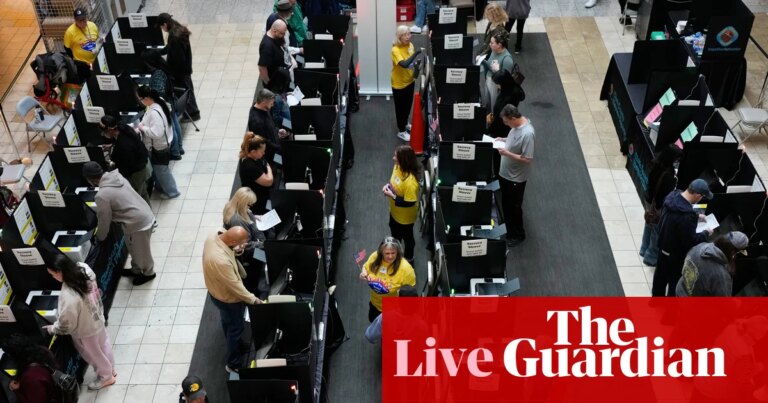
Nov. 3 (UPI) — As Americans vote Tuesday to decide control of the U.S. Congress, many eyes are on a handful of key Senate races that could flip the chamber to Democratic control — or maintain a Republican lock on the balance of power.
The Democrats need to gain four seats in the Senate — while still maintaining the seats they currently hold — to flip control. Republicans now hold 53 seats compared to 47 for Democrats. Of the 35 seats up for election Tuesday, Republicans hold 22 and Democrats hold 13.
The larger the margin held by either party, the more likely that party is to be able to pass legislation. Democrats with a majority could block judicial or Cabinet appointments by Republican President Donald Trump.
In Michigan, Democrat Abdul El-Sayed, a progressive candidate and public health administrator, is facing Republican Mike Rogers, a former member of the House of Representatives.
There was drama in this race this week as Rep. Haley Stevens, a Democrat whom El-Sayed defeated in the state primary, switched her endorsement from El-Sayed to Rogers abruptly Sunday. That switch may have backfired somewhat for Republicans, with El-Sayed’s campaign then raising more than $2.4 million in donations in one day. The Senate seat is now held by Sen. Gary Peters, a Democrat, who is retiring.
In Texas, Democrat James Talarico, a state representative, is running against Republican Ken Paxton, the state’s attorney general. The state has not elected a Democrat to fill a statewide seat in 32 years.
Paxton, who was endorsed by Trump, defeated four-term U.S. Sen. John Cornyn — who currently holds the seat — in the Republican Party runoff in May for the candidacy. However, he also has been plagued by scandal throughout his political career, including a 2023 impeachment by the Texas House of Representatives under articles of bribery and abuse of office. Republicans have attacked Talarico on cultural issues such as LGBTQ+ rights, calling him “Talafreako.”
In North Carolina, which CNN called the Senate seat most likely to flip, former Gov. Roy Cooper, a Democrat, faces Republican nominee Michael Whatley, a former chairman of the Republican National Committee.
That Senate seat is now held by Sen. Thom Tillis, a Republican, who is retiring.
In Ohio, Democrat Sherrod Brown is facing Republican Jon Husted, who currently holds that Senate seat. Husted was appointed to the seat, which was held by now-Vice President J.D. Vance.
Trump has visited Ohio three times in the month leading up to the election to promote Husted, whom Democrats have criticized for previous support for data centers and issues involving the Epstein files. Republicans have criticized Brown over his stated views on taxes and immigration.
In Maine, Democrat Troy Jackson faces Republican incumbent Susan Collins, who is running for her sixth term in the seat.
Jackson, a former logger and state senator, made his bid for the Democratic nomination after former candidate Graham Platner dropped out of the race. Democrats have criticized Collins’ record and support for Trump, while Republicans have lauded her achievements for the state.
In Alaska, Democrat Mary Peltola faces incumbent Republican Dan Sullivan. This race was another to feature late-campaign drama when The New York Times reported that Democrats had recruited another man named Dan Sullivan to enter the race, a fairly common election ploy for both major parties.
That Sullivan, a former teacher who ran as a Republican, did well enough in the primary to be added to the ballot. The incumbent Sullivan is labeled as such, however, and is the only one to have “Republican” added to his name. Peltola, a member of the state House of Representatives and former tribal judge, has said she didn’t know about the alleged recruitment.
In Kansas, Democrat Adam Hamilton, a Methodist megachurch pastor, is facing Republican Roger Marshall, the incumbent senator. Marshall is seeking his second term in the seat.
While Kansas tends to vote Republican, some sources say the seat could flip as Hamilton, a moderate Democrat, invokes concern about high diesel prices and tariffs.
In Iowa, Democrat Josh Turek faces Republican Ashley Hinson in what is expected to be a tight race. The election will decide a successor for Joni Ernst, the retiring Republican senator.
Hinson, a member of the House of Representatives, has campaigned alongside Trump but also distanced herself from some of his policies. Turek, a state lawmaker, has called the race a chance for “generational change.”
In New Hampshire, Democrat Chris Pappas, a member of the U.S. House of Representatives, faces Republican John Sununu, a former U.S. senator running to reclaim his old seat.
The election will fill the Senate seat now held by retiring Sen. Jeanne Shaheen, a Democrat. Sununu held the seat from 2003 to 2009. Pappas has held his House seat since 2019.
In South Carolina, Democrat Annie Andrews faces Republican Darline Graham. Graham now holds the Senate seat, to which she was appointed this summer after her brother, the late Sen. Lindsey Graham, died.
Graham won a close primary challenge by Rep. Ralph Norman to run for a full term in the seat and has been endorsed by Trump. Andrews, a physician, has faced personal attacks by the president during the campaign.
In Georgia, Democrat Jon Ossoff, the incumbent senator, faces Republican Rep. Mike Collins.
Ossoff is seeking a second term in the seat. Collins, who won his primary in a runoff with Derek Dooley, has been endorsed by Trump.

About the Author