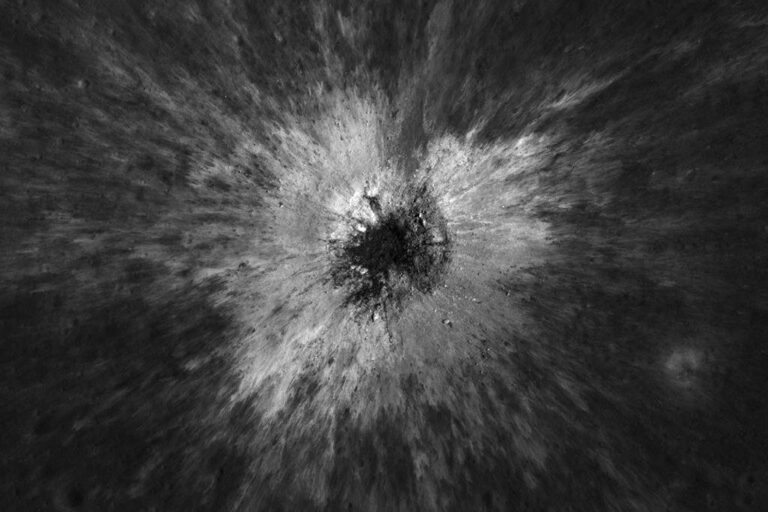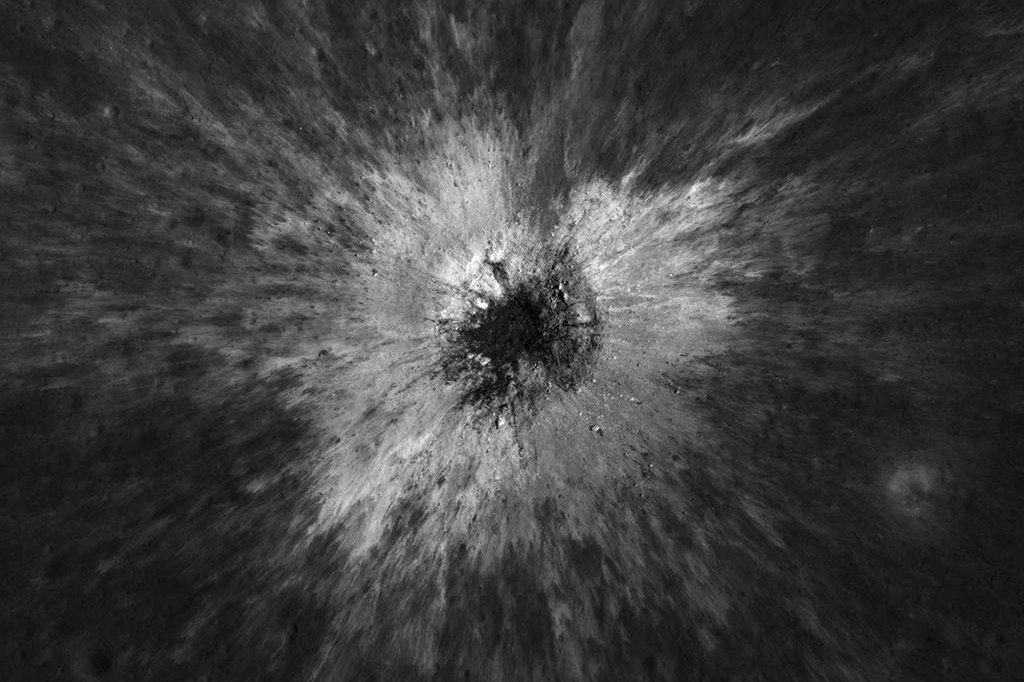
Sept. 17 (UPI) — A scientist working for NASA discovered the largest newly formed crater ever found on the moon and a temperature change in the area surrounding it, the agency announced.
During routine quality checks on Oct. 24, 2025, Robert Wagner, a scientist with NASA’s Lunar Reconnaissance Orbiter, scanned a giant moon map on his computer screen. He noticed a large, bright spot with a dark halo, which indicated the surface had been disturbed.
“I just stopped, dropped everything, and started looking into what that spot was,” said Wagner, an image-processing specialist from Intuitive Machines who works with data from the Lunar Reconnaissance Orbiter Camera system.
He then compared before and after images to be sure, then realized he had made the extraordinary discovery.
Wagner and several other scientists published their findings in Science Advances on Wednesday, and said finding a new crater of its size is a once-in-132-year event.
The crater is named McGetchin for Tom McGetchin, an American geologist and planetary scientist who died in 1979.
It’s on the moon’s eastern edge and was formed between April 11 and May 22, 2024, after a comet or asteroid the size of a three- to six-story building hit. The crater is 728 feet wide and 141 feet deep.
After the crater discovery, scientists using the LRO’s thermal instrument, Diviner, found that a 4-mile area around the crater is about 16 degrees Fahrenheit cooler at night than its surroundings.
They reported this discovery in a second paper published in Science Advances. Researchers say the cooling happens because the impact fluffs up the regolith — the loose surface rocks — around the crater, which makes it less dense and unable to hold heat.
The discovery shows that the impacts that form craters affect the moon’s surface beyond just the crater. The changes could affect how rover wheels interact with the surface, NASA said.
The LRO has orbited the moon for more than 17 years, mapping its topography, surface composition, temperature and radiation. The team has found at least 1,000 new impact craters and flagged 100,000 more surface changes from items crashing into the moon’s surface. But most of these are much smaller than what created the McGetchin crater.
About the Author