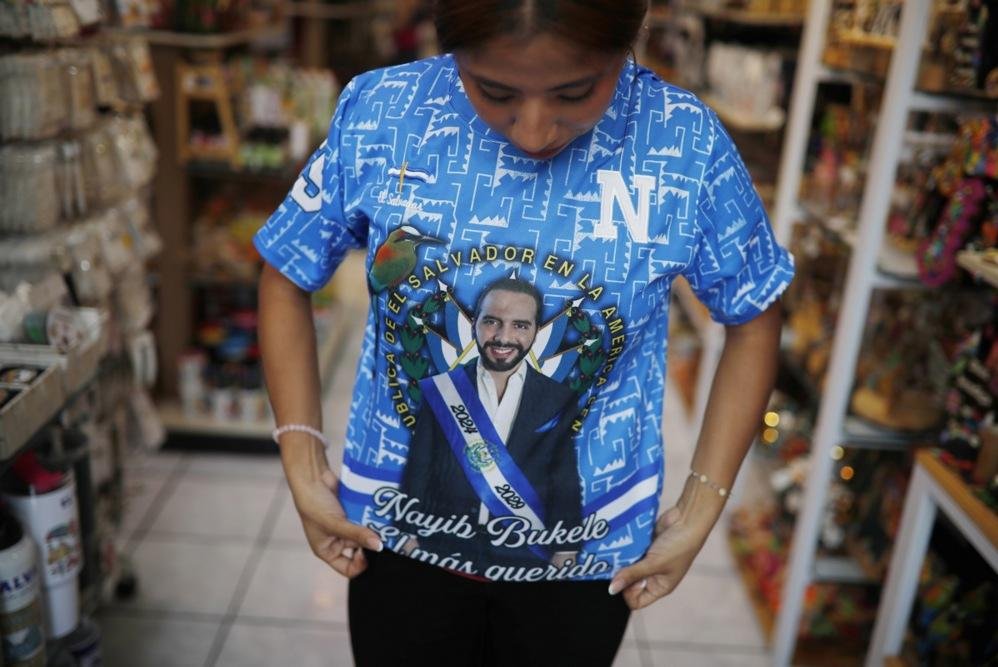
A woman shows her T-shirt featuring a photo of El Salvador’s president, Nayib Bukele, in San Salvador, El Salvador, in June. He has been on office more than two years into his second consecutive term,
July 14 (UPI) — El Salvadoran leader Nayib Bukele was nominated by his party to seek a third six-year term in February elections after a 2025 constitutional reform that allows indefinite presidential re-election.
Bukele, who has been in power since 2019, was nominated as the presidential candidate in internal elections held by the ruling Nuevas Ideas party in which he was the only contender. He is seeking a third term in a political landscape with no other major figures and where the ruling party controls all branches of government.
Nuevas Ideas published on its website Monday the “winners, according to the total number of votes counted, ranked from highest to lowest” from Sunday’s primaries. The page lists candidates selected to run for seats in the Legislative Assembly and includes a photograph of Bukele labeled “president.”
The website does not provide information on the percentage of votes Bukele received or whether there were any other presidential candidates.
Bukele, 44, enjoys broad popularity for his crackdown on gangs, which has driven crime to historic lows in a country that until a few years ago was considered the world’s most violent nation not at war.
The president marked his seventh year in office June 1 with an approval rating of 87.8%, according to a recent survey by the Public Opinion Institute at José Simeón Cañas Central American University.
Bukele’s candidacy was made possible by sweeping changes to the country’s legal framework.
In July 2025, the Legislative Assembly, controlled by the ruling party, approved a reform that permanently eliminated presidential term limits, clearing the way for indefinite re-election.
The same reform extended the presidential term from five to six years. Bukele’s current term, which began in 2024, was shortened to align presidential and local elections, moving the next vote to February. The new rules also eliminated the requirement for a runoff election.
If he wins, Bukele would remain in office until 2033, bringing his total time in power to 14 years.
Opposition political groups and international organizations, including Amnesty International and Human Rights Watch, have described the reforms as a blow to democratic alternation in power.
Critics say the changes have further concentrated power in the executive branch, with the ruling party controlling the Legislative Assembly, the Attorney General’s Office and the judiciary.
About the Author