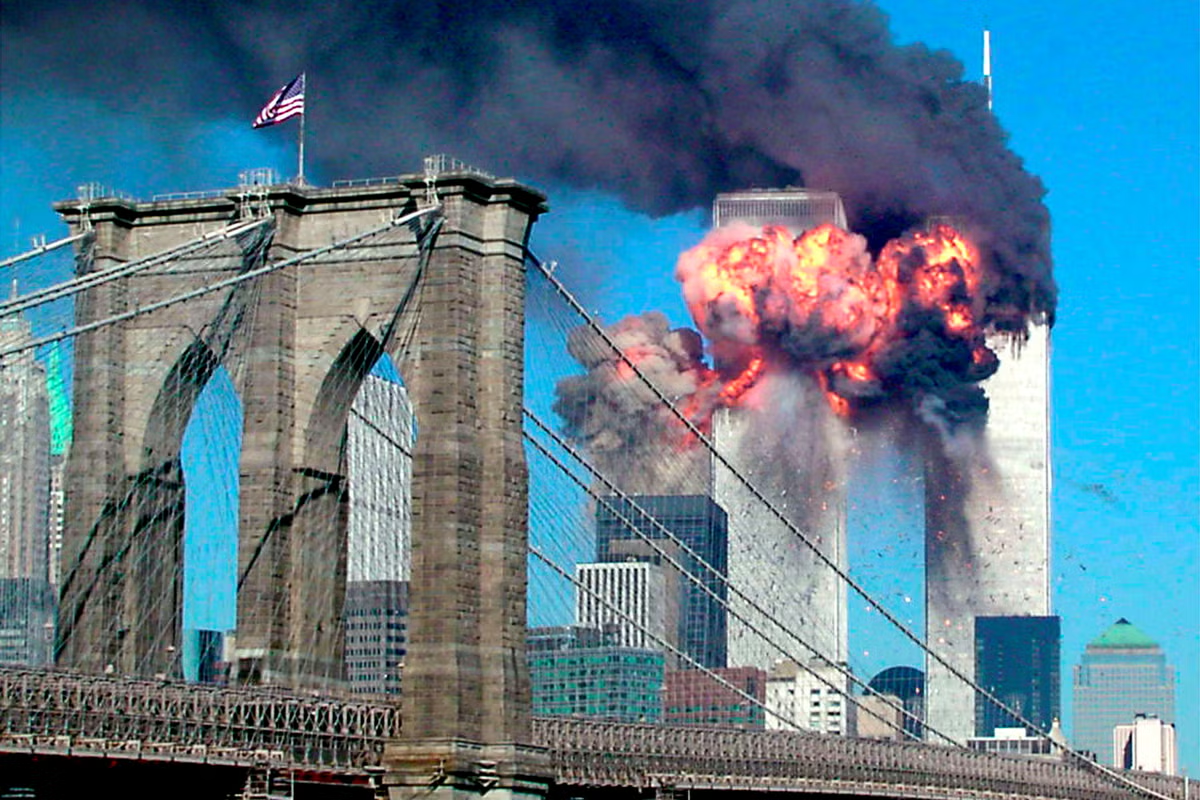
The trauma of 9/11 still lingers 25 years on from the attacks on New York City and Washington, DC, that left nearly 3,000 people dead.
Images of the day’s terrible events, taken as they unfolded – as first one, and then a second, hijacked passenger airliner were crashed into the twin towers of the World Trade Centre, before a third struck the Pentagon and a fourth crash-landed in a Pennsylvania field after passengers fought the hijackers for control of the cockpit – provide a devastating record of what transpired on a quiet early autumn day a quarter-century ago.
Many of those pictures illustrate the human cost of what proved to be one of the most lethal terrorist plots in history – the fear on the faces of those fleeing for their lives, the exhaustion of the rescue workers battling to save everyone they could and the despair of those searching frantically for loved ones still missing among the rubble.
Later, people found hope in other photographs – of crowds gathered for vigils, debris being cleared and citizens attempting to rebuild both their own lives and the city around them.
These images, viewed by millions around the globe in the aftermath of September 11, helped us to understand that the date had been one on which the course of history changed forever, not just for Americans, but for the entire world.
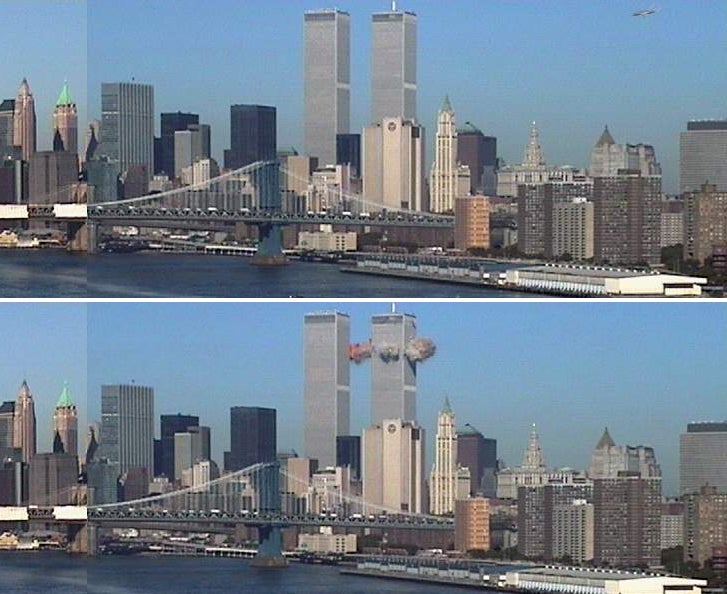
1. American Airlines Flight 11 approaches and collides with the North Tower of the World Trade Center
Only three pieces of footage of the first collision are known to exist. The above frames were taken from Brooklyn by artist Wolfgang Staehle, who had set up a camera earlier that month to capture a time-lapse image of lower Manhattan.
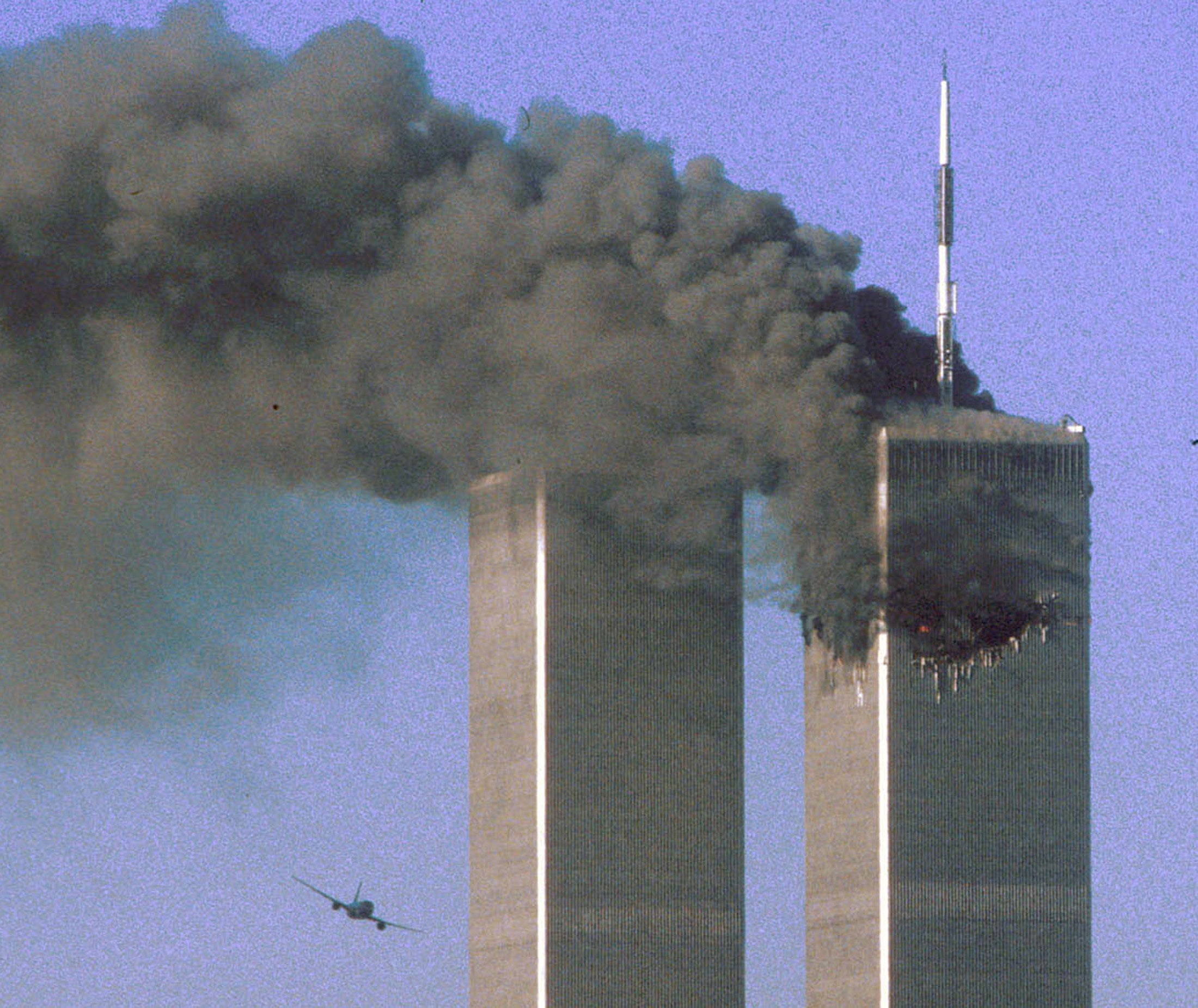
2. Hijacked United Airlines Flight 175 barrels towards the South Tower at 9.02am
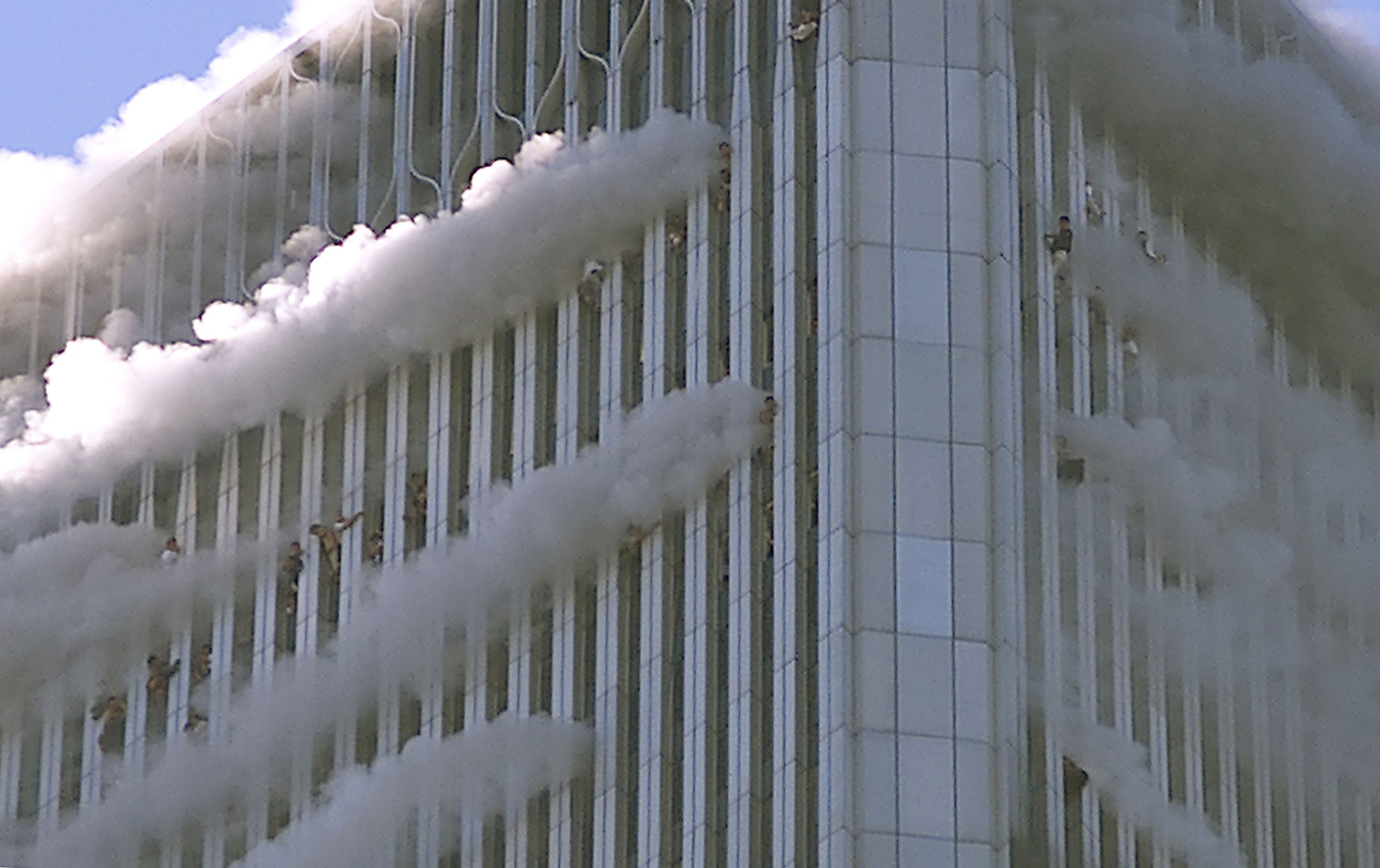
3. Many people inside the buildings were forced to hang on for dear life, creating some of the most lasting and harrowing spectacles of the day
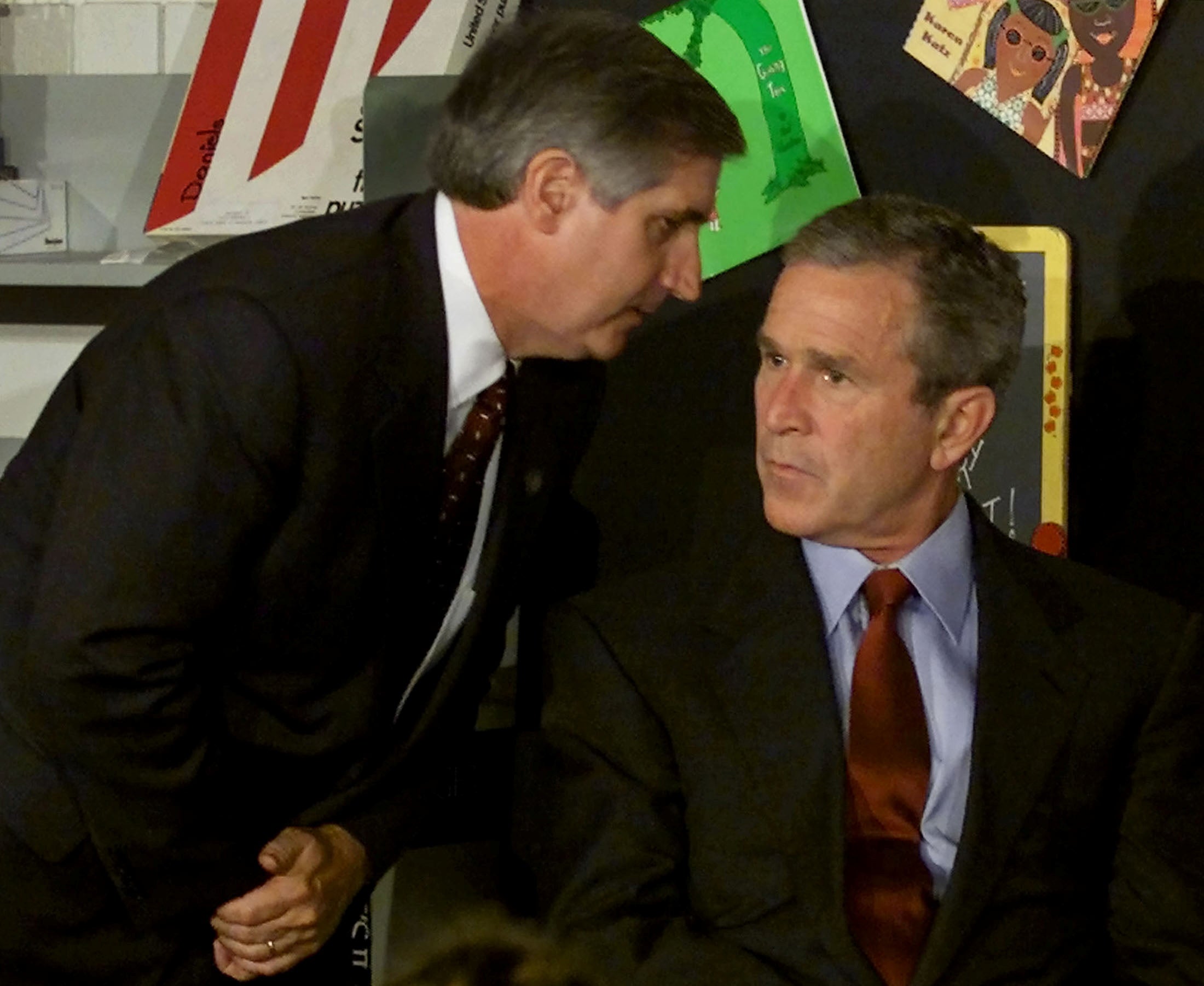
4. President George W Bush listens as White House Chief of Staff Andrew Card informs him a second plane has hit the World Trade Center
Bush was reading to second graders at the Emma E Booker Elementary School in Sarasota, Florida and continued the story to the end before reacting to avoid upsetting the children.
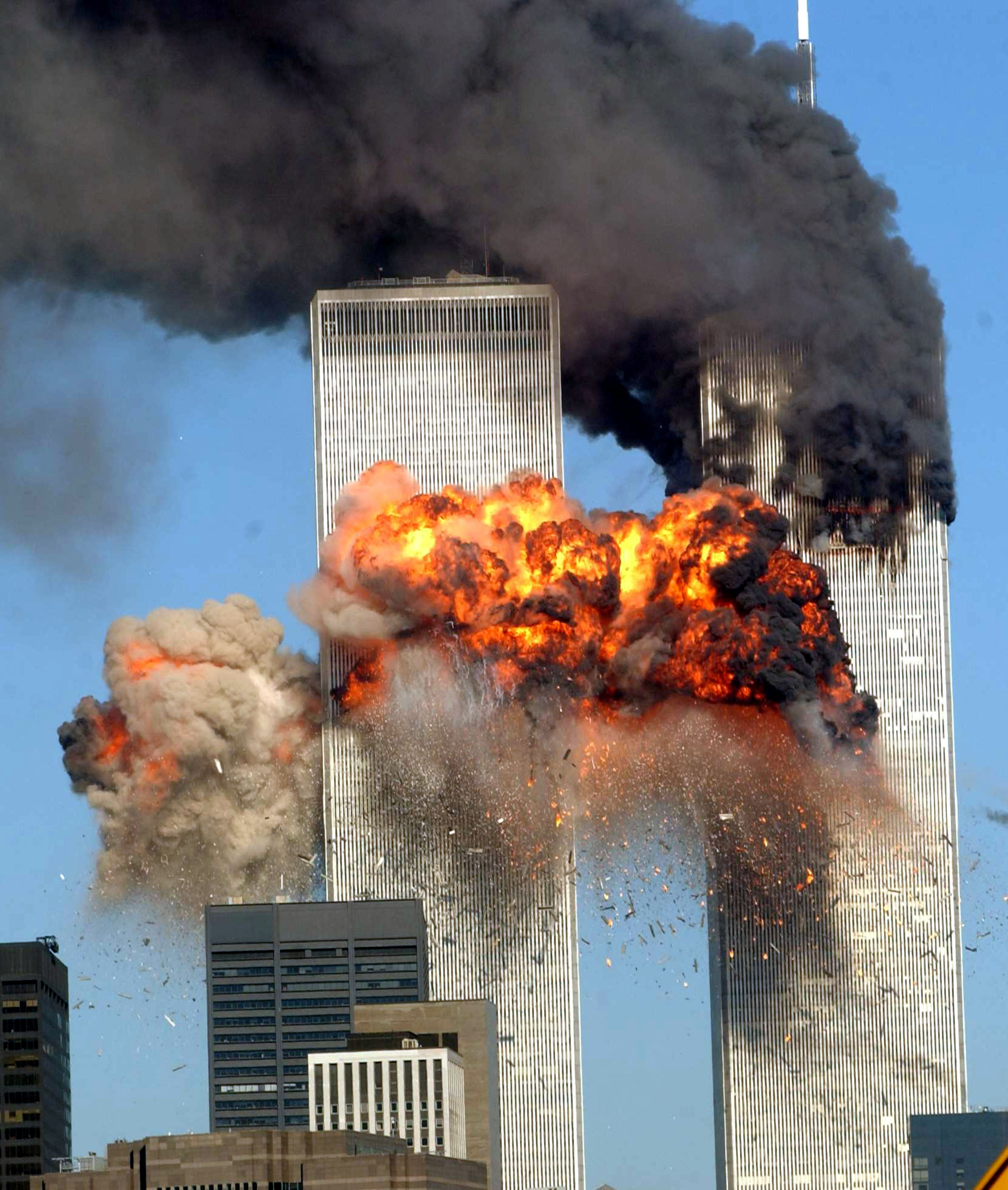
5. The plane hitting the south tower was broadcast live on news across America, as the the media was reporting on the breaking news of the north tower collision barely 15 minutes earlier
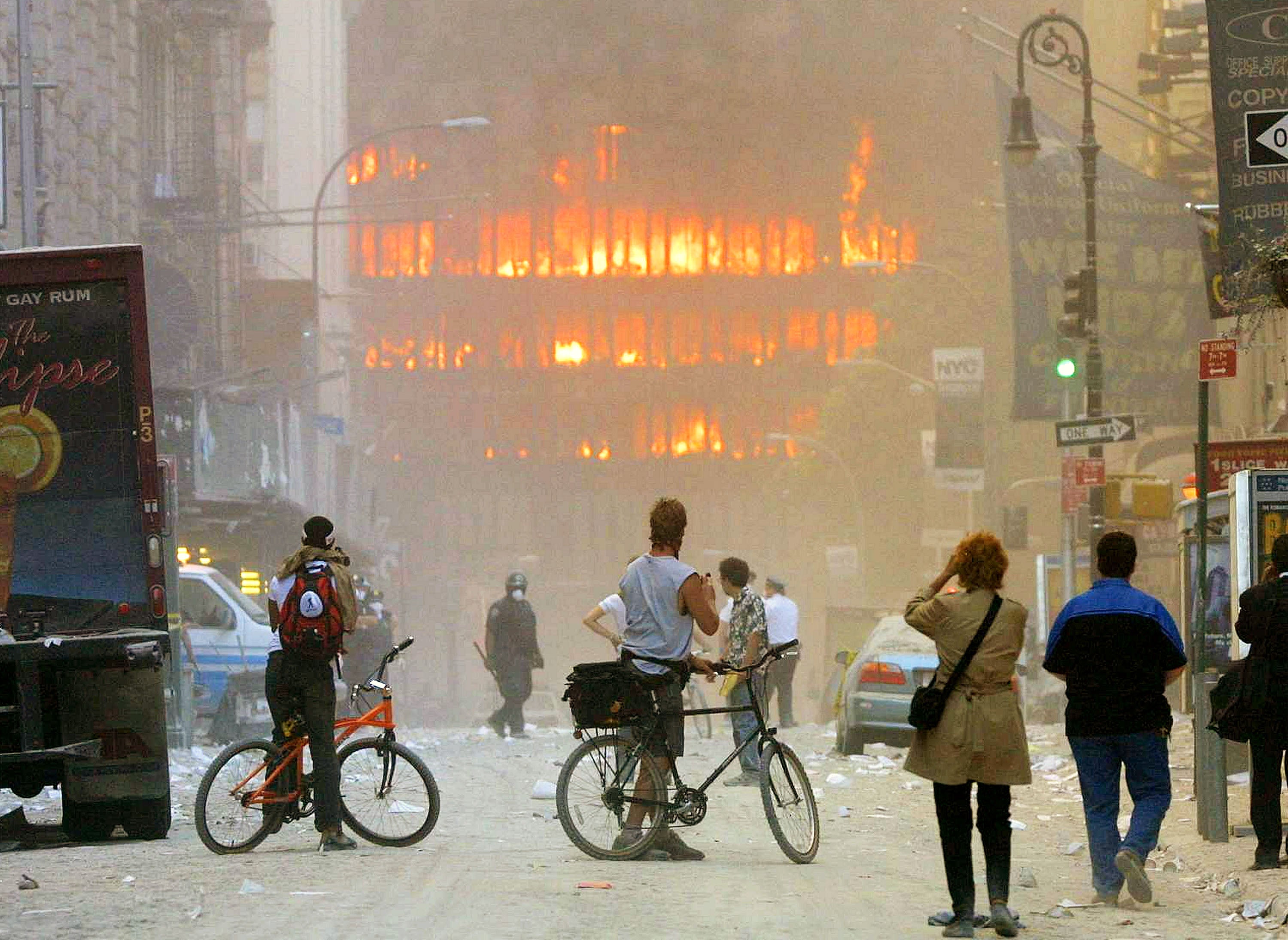
6. The collisions caused the two towers to catch fire, the all-devouring flames feeding off the planes’ jet fuel and eating into the skyscraper’s raw materials, fatally weakening its infrastructure
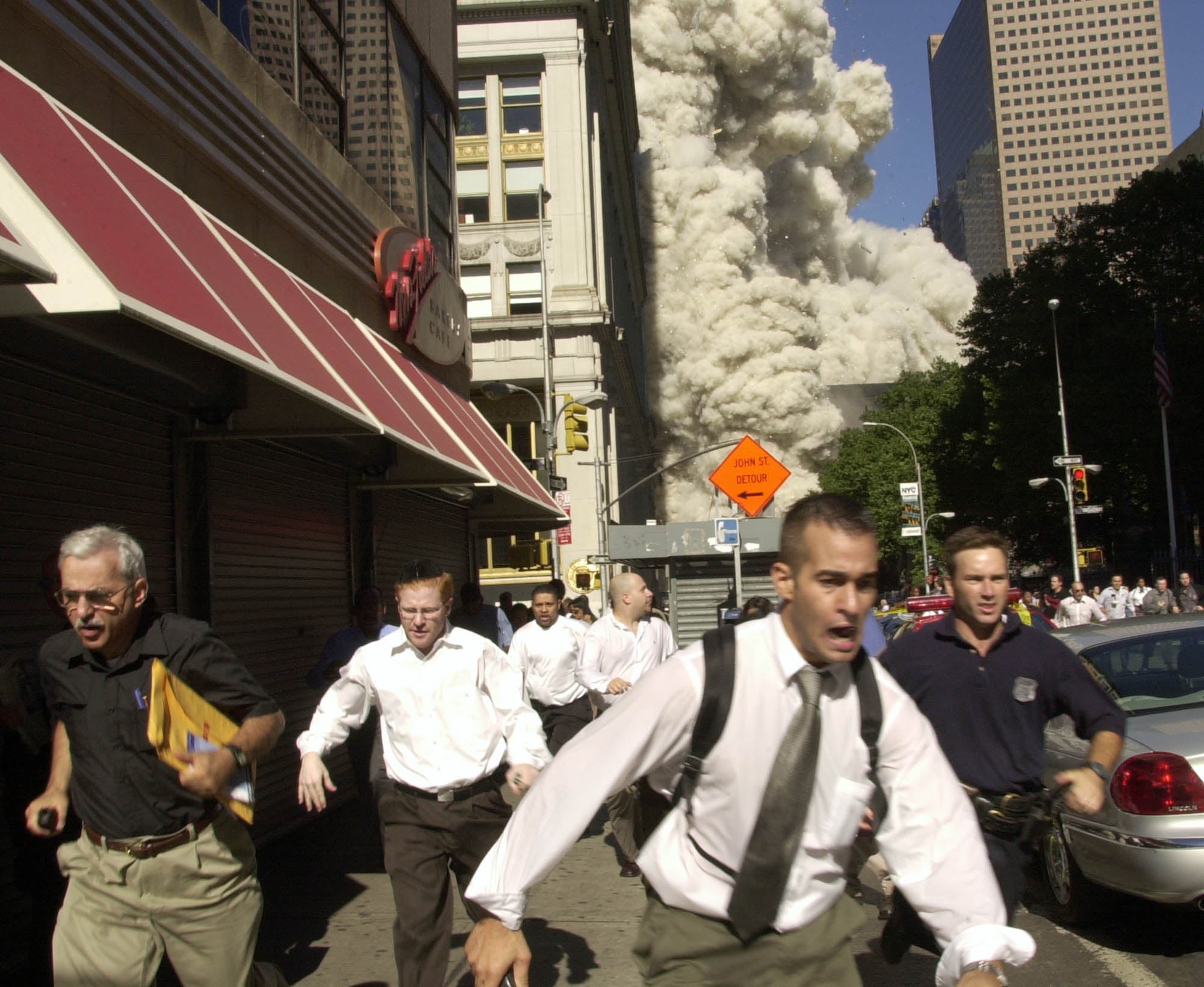
7. Passersby were forced to flee the scene in panic as debris from the attack collapsed onto the street below
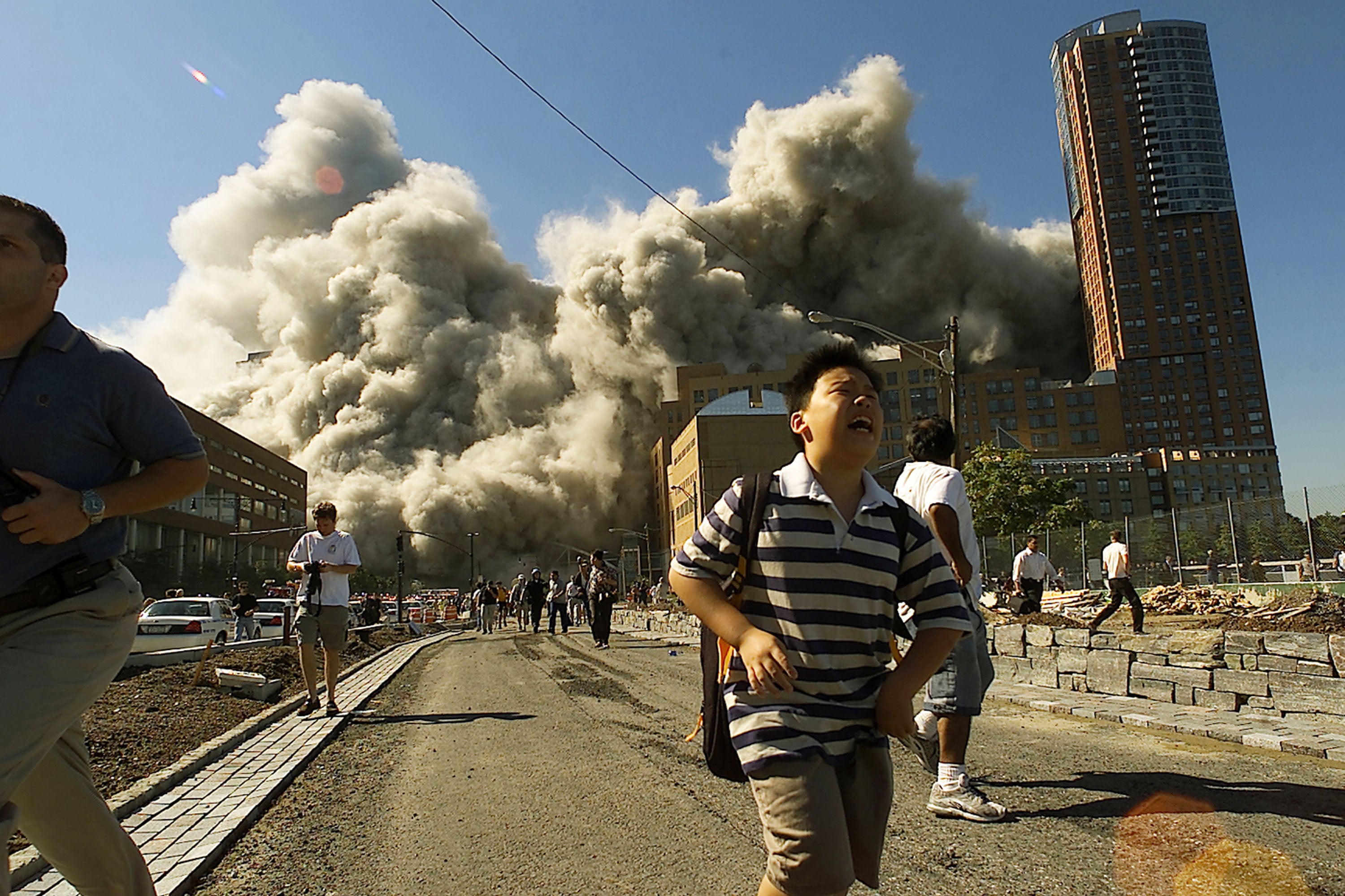
8. After approximately an hour of burning, the buildings began to collapse, raining down glass and steel onto downtown Manhattan
Residents and tourists visiting New York had little idea where to turn to seek refuge as they ran from the billowing smoke, raging fire and falling debris plummeting towards them.
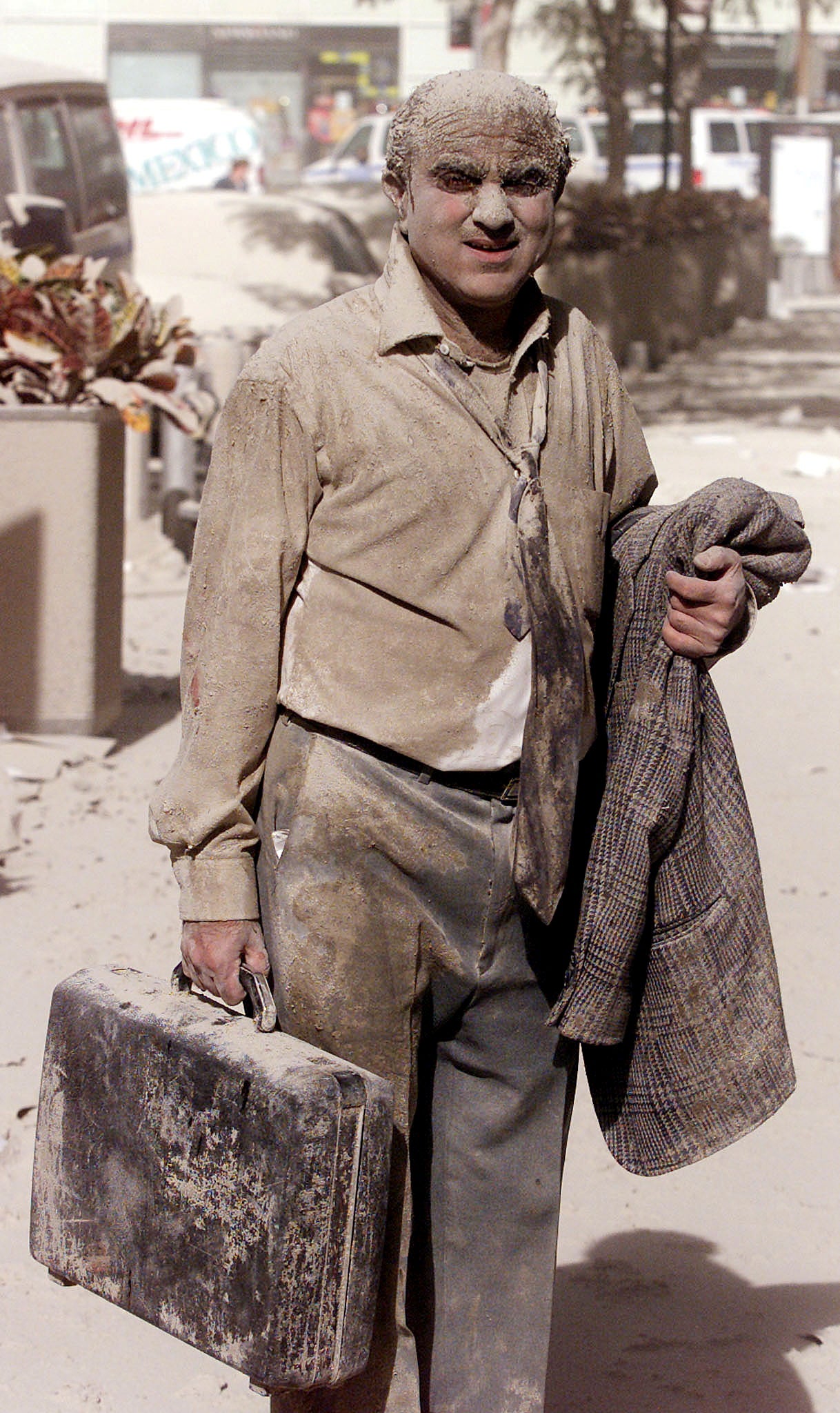
9. People in the immediate vicinity, like this man, were left covered in ash and dust
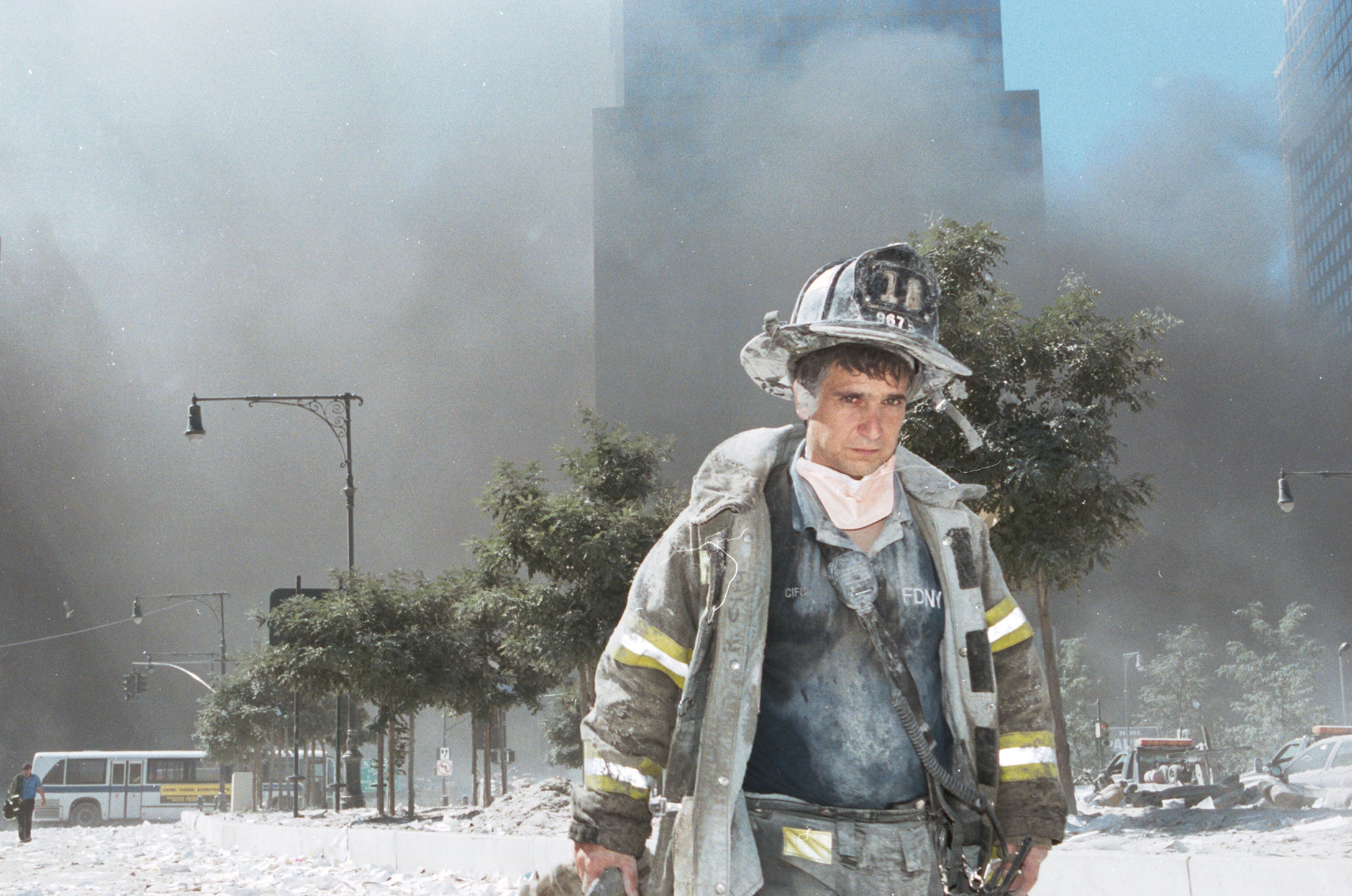
10. The rescue operation began almost immediately, and the last survivor was not pulled from the rubble until 27 hours after the towers fell, that person having spent more than a day buried alive
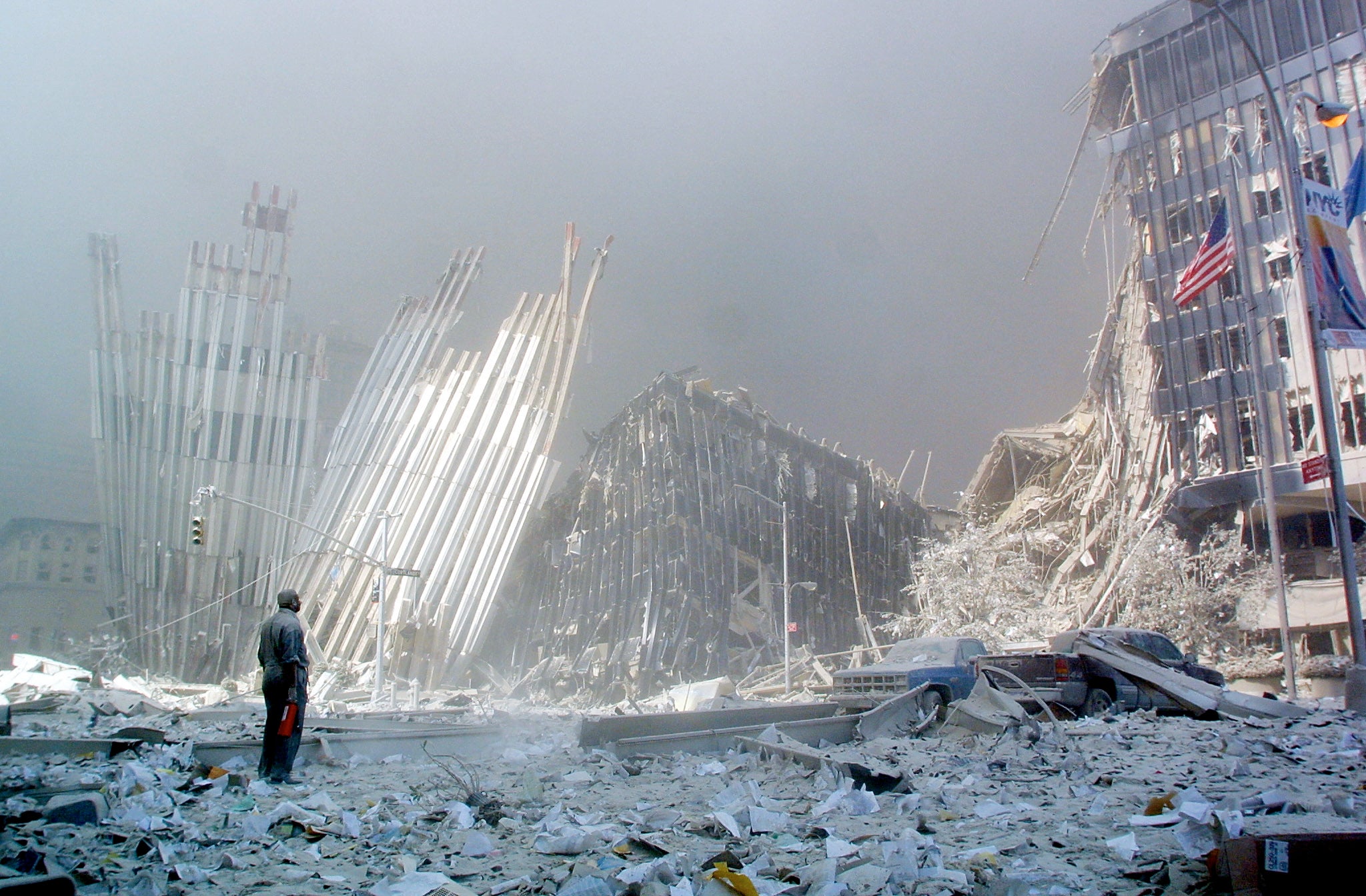
11. Lower Manhattan was covered with dust and debris after the tower collapse
Onlookers noted enormous amounts of paper that streamed out of the office buildings after the initial impacts.
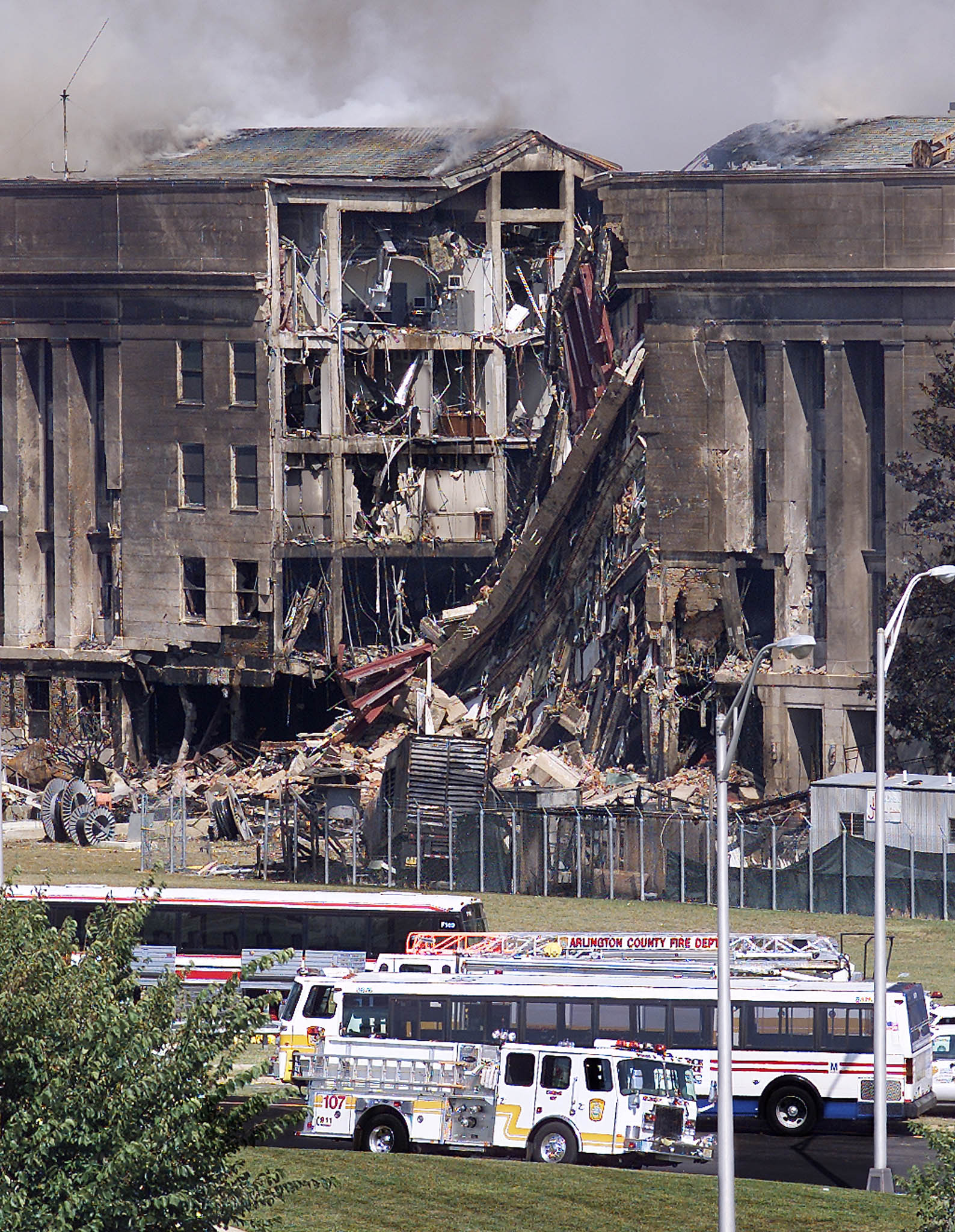
12. The Pentagon, home of the Department of Defense in Washington, was also a target the al-Qaeda militants who hijacked four planes, and was hit at 9.37 am that morning
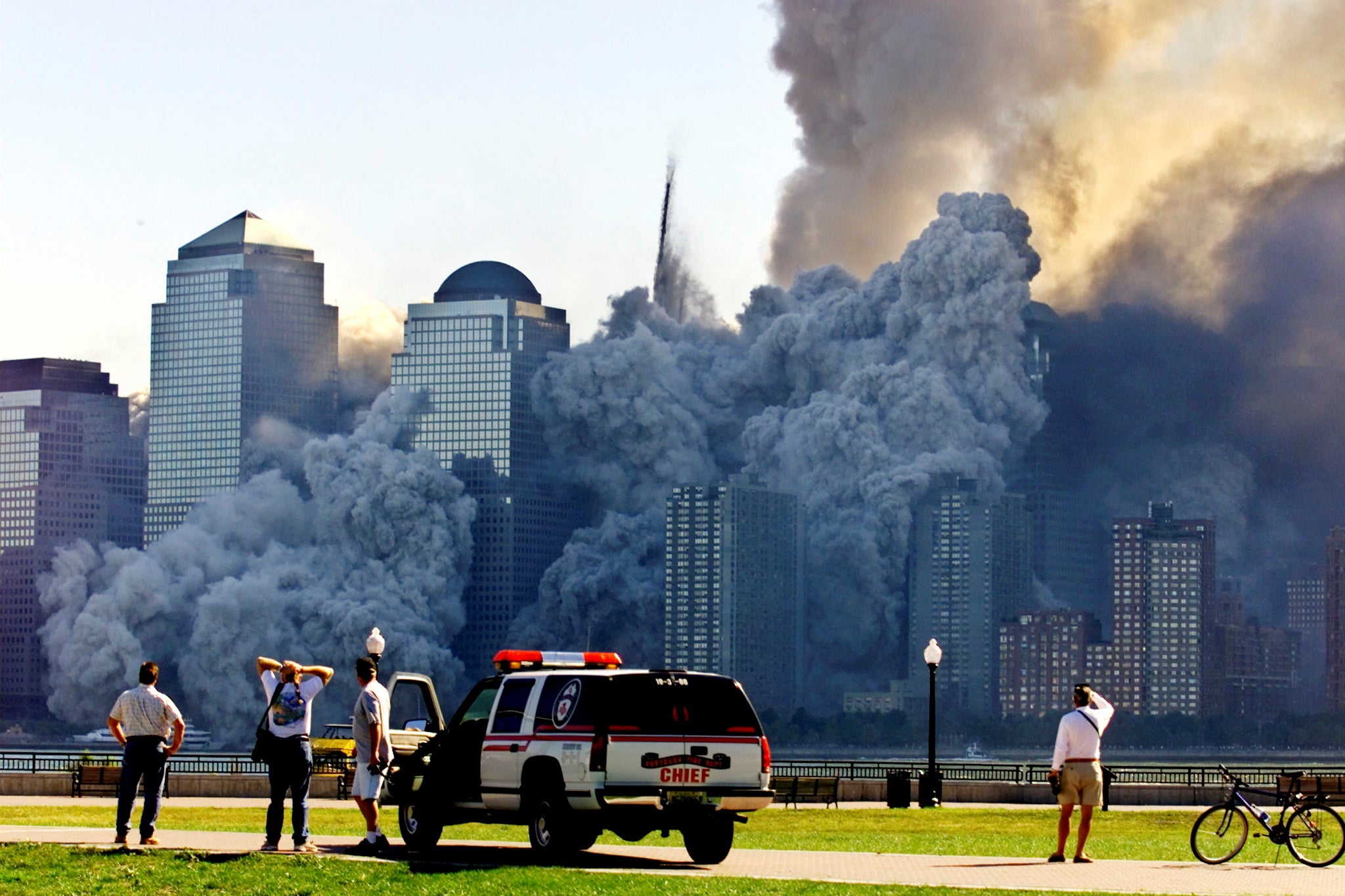
13. Back in New York, and half an hour after the first tower fell, the second began to crumble, leaving a path of destruction in its wake
Clouds of smoke darkened the air as people raced for their lives, sought out the injured and tried to process what had happened.
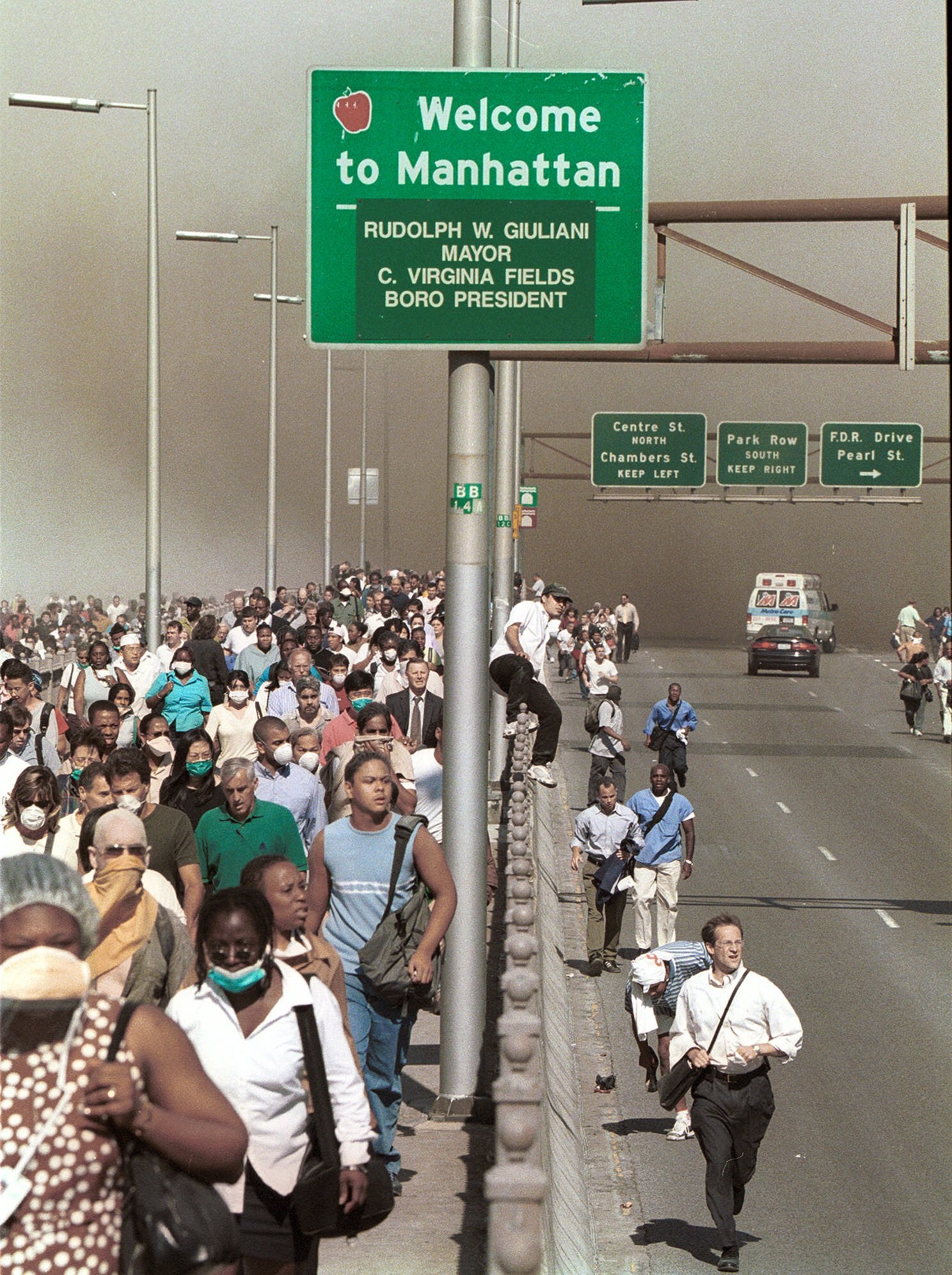
14. Those at street level had further cause for panic as they feared there could be further plane attacks to come
They simply could not know what might come next and the uncertainty only served to heighten their terror.
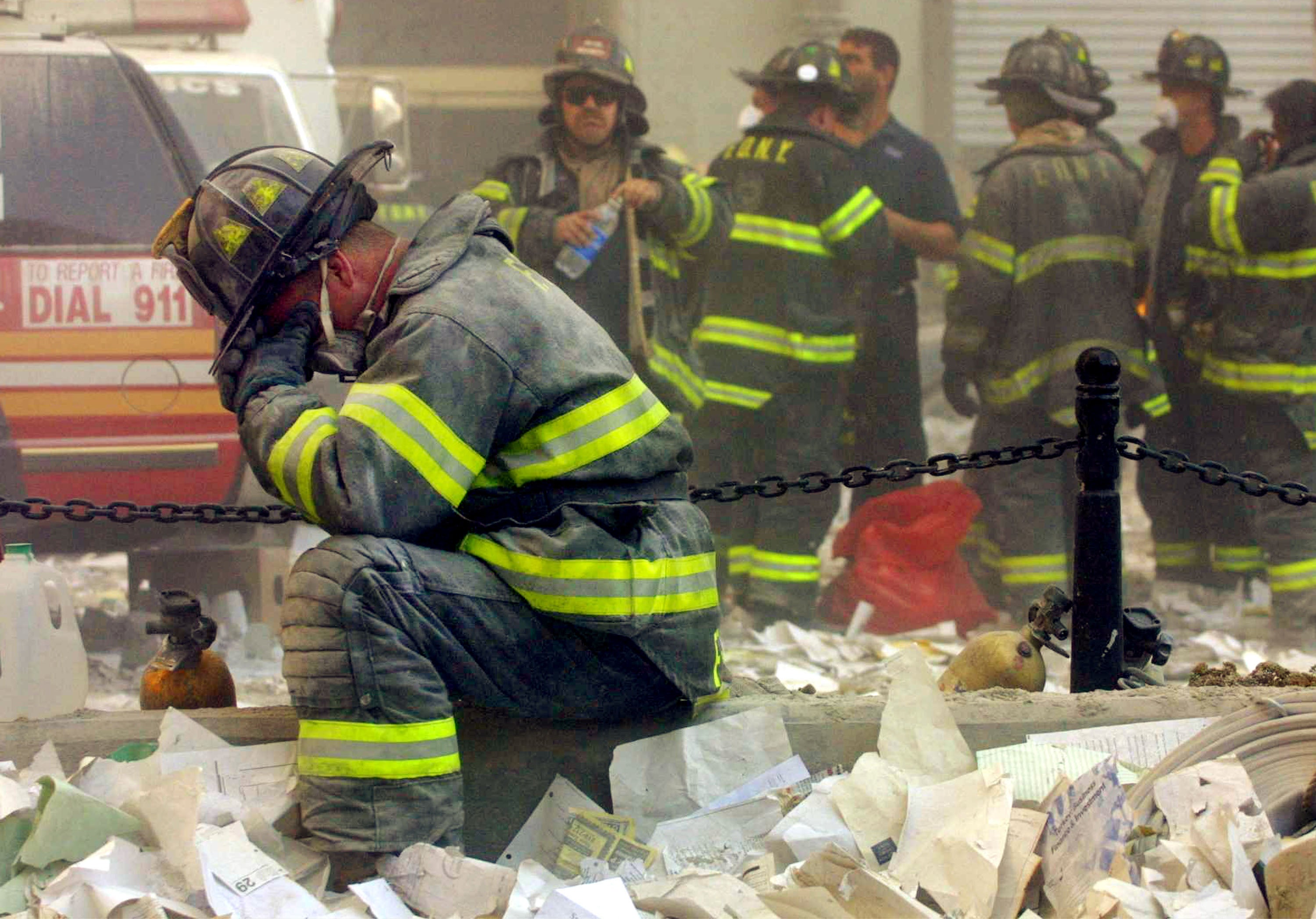
15. New York firefighter Gerard McGibbon was one of the fearless rescue workers who ran towards danger that day
He would later help the victims of Hurricane Sandy in 2012 before passing away in 2021, aged just 61, leaving behind a wife, Diana, and three children, who hailed him as a hero in their obituary.
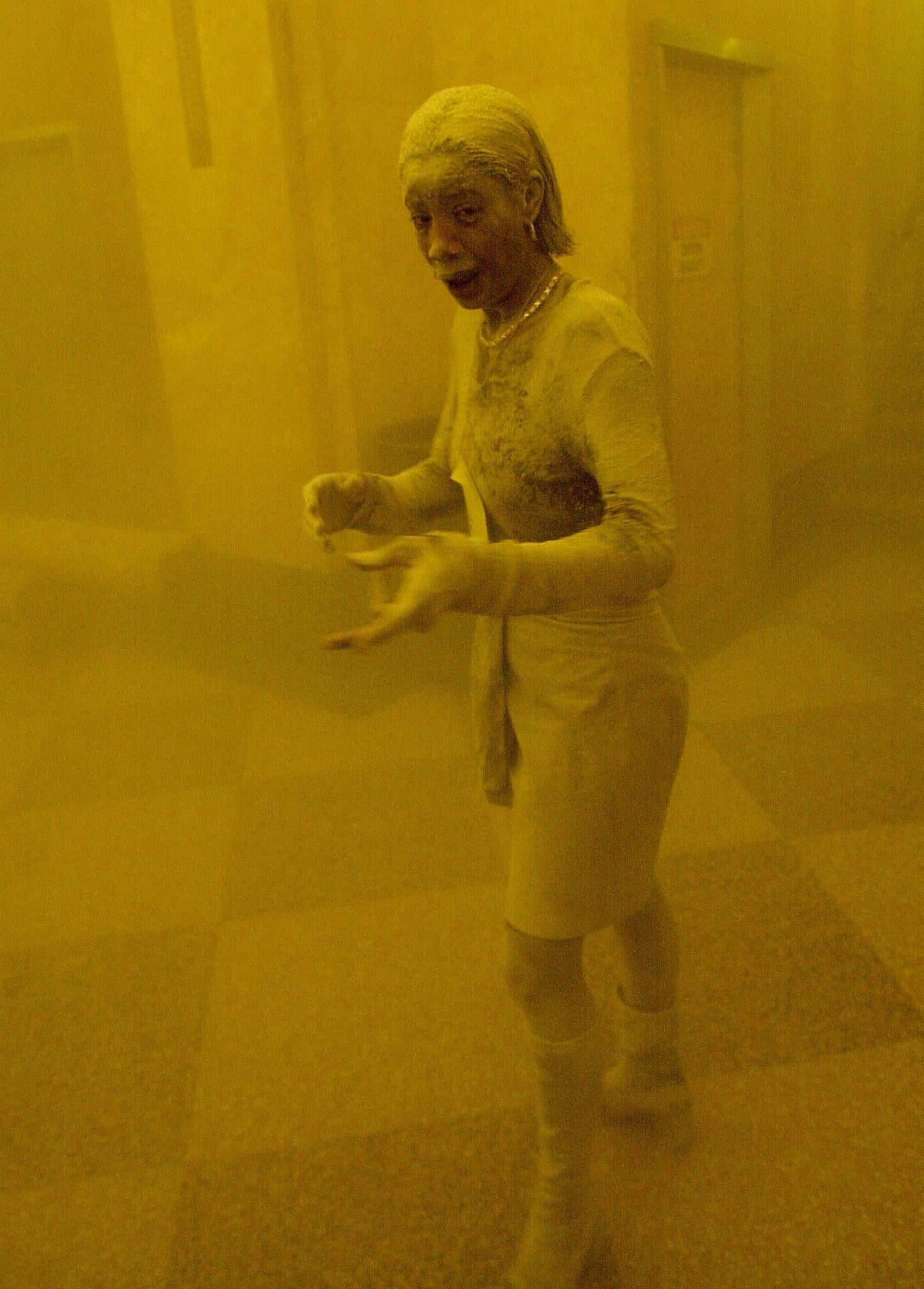
16. Marcy Borders worked as a bank teller at Bank of America
After this picture of her emerged, she was given the nickname “the Dust Lady” and gained international attention. In 2014, she died of stomach cancer, aged just 42, which she believed may have been a result of the dust and debris from the attack.
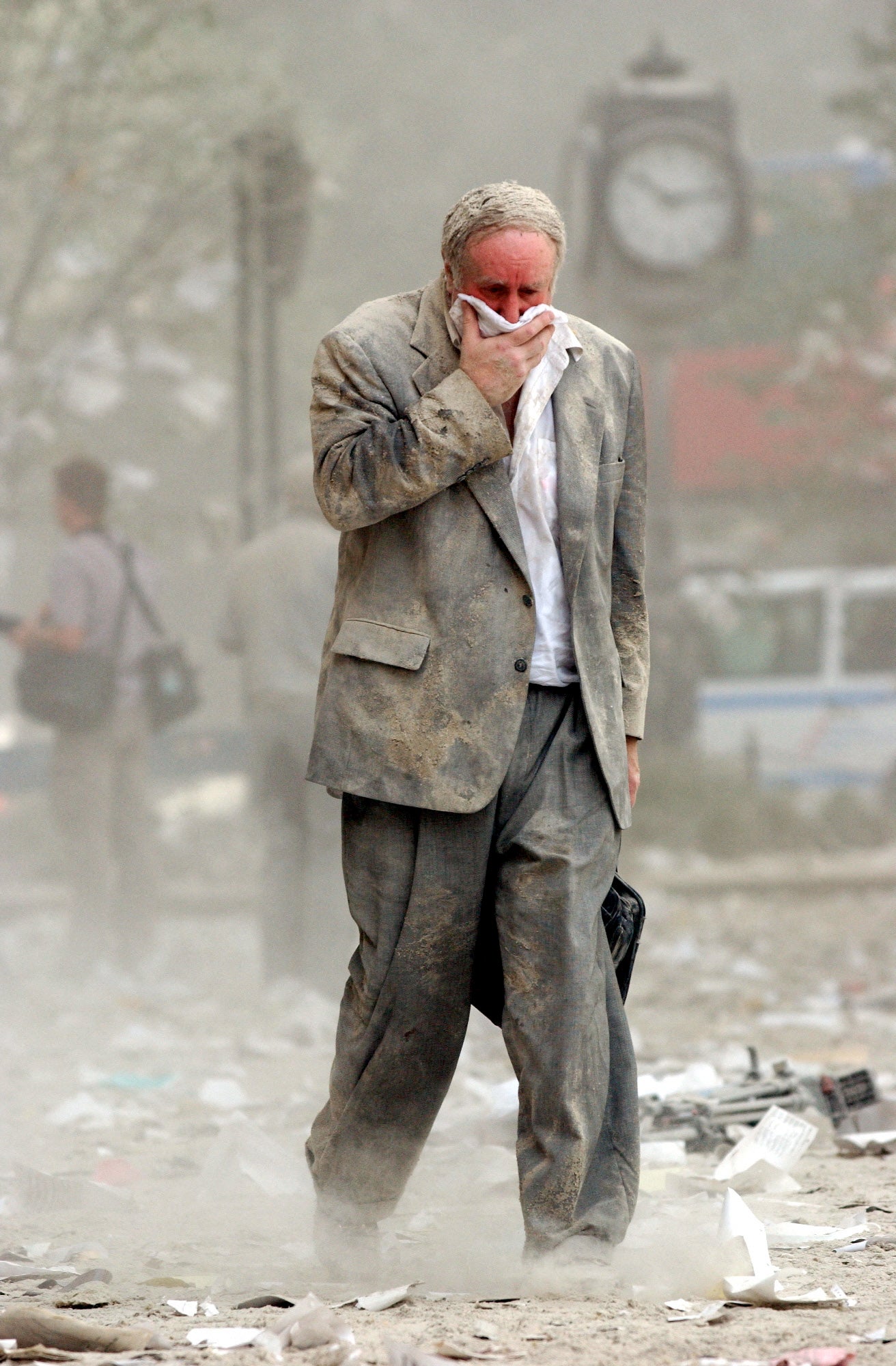
17. Survivor Edward Fine worked on the 79th floor of the North Tower
Ten years after the attack, he was quoted as saying: “I had no idea the photo was being taken but it became an iconic image. One picture editor told me it symbolized the resilience of the American businessman.”
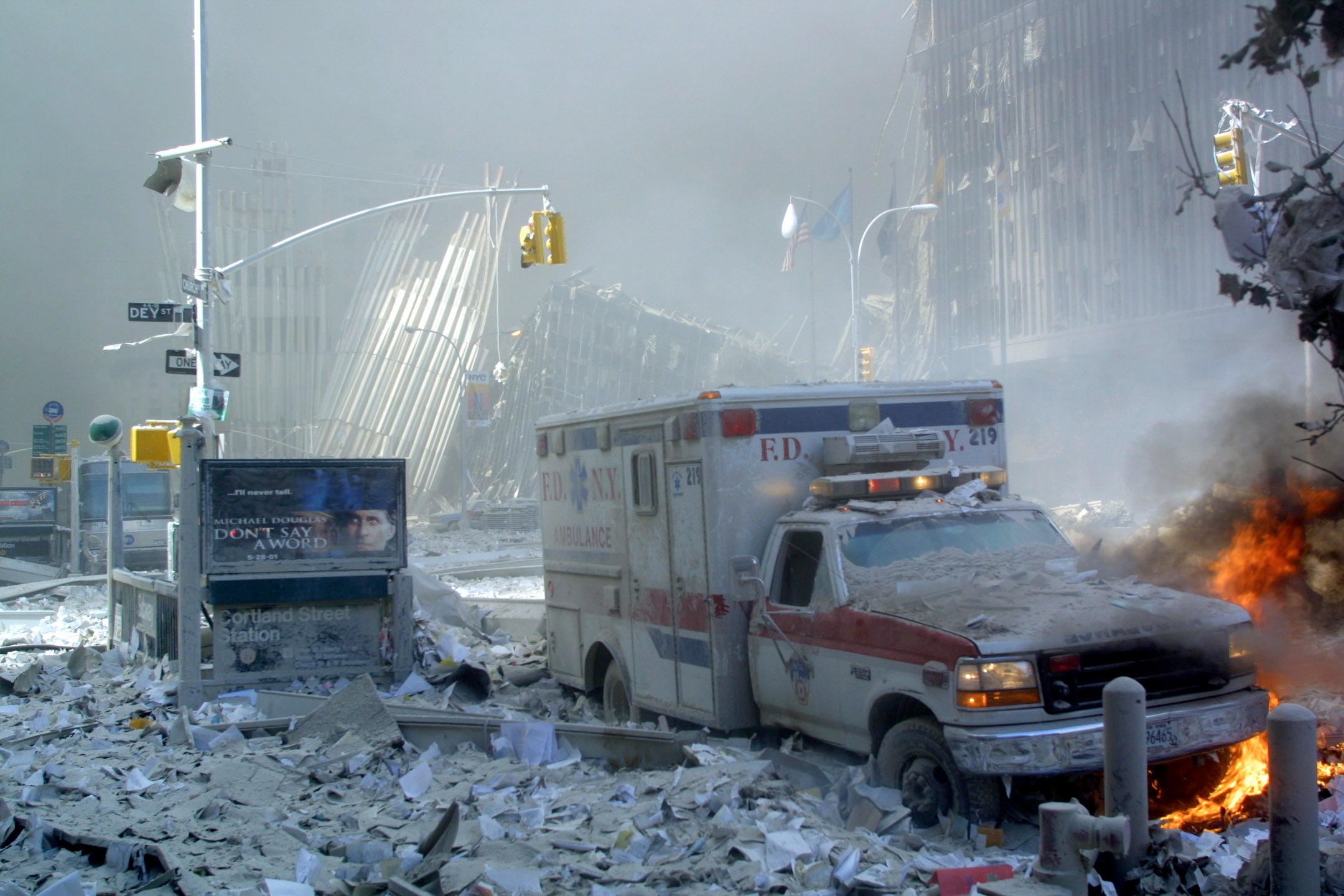
18. Ambulances were deployed to the scene as soon as the attack was confirmed, according to documents later published by City Hall
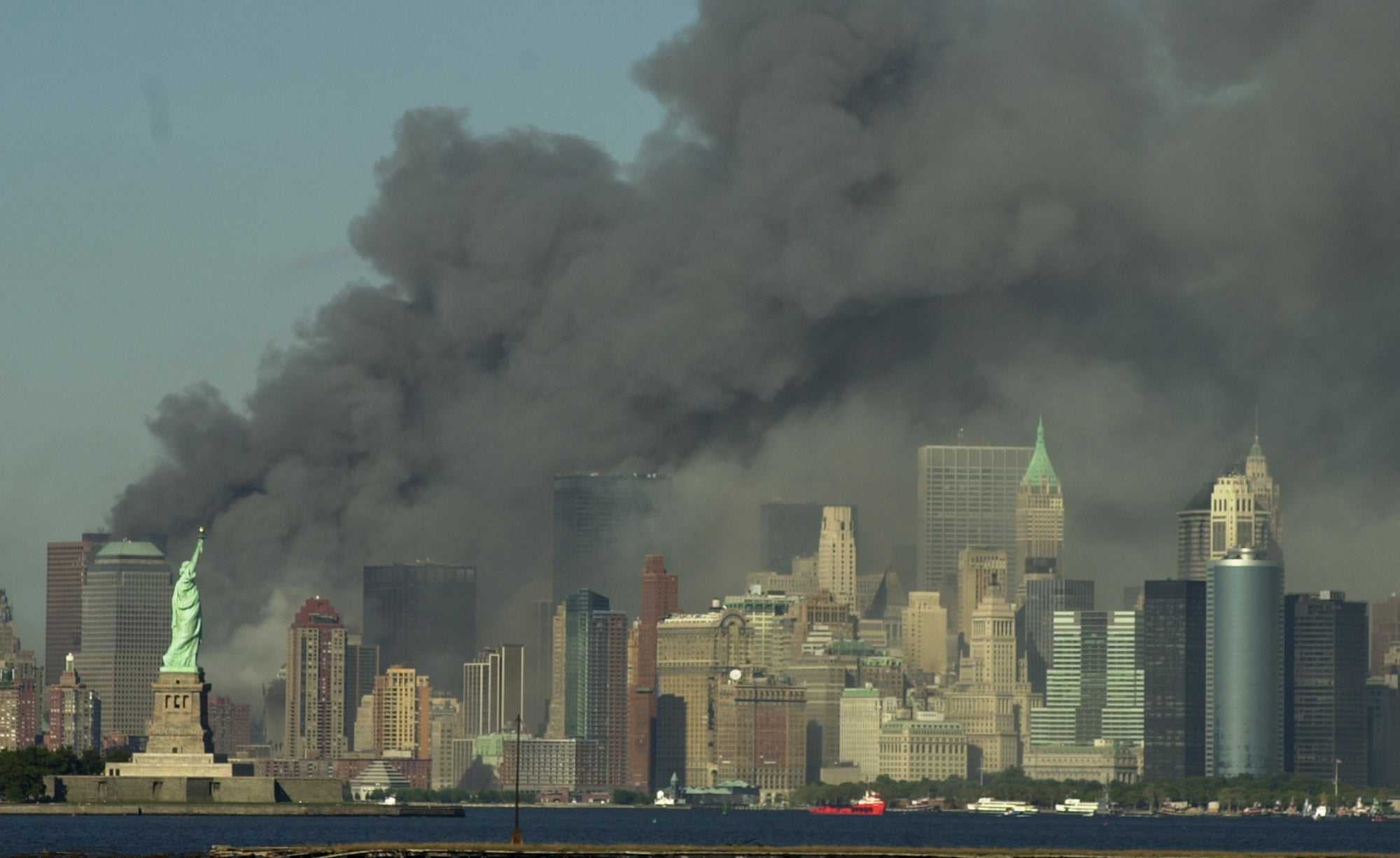
19. Smoke was said to be seen all across the lower half of Manhattan as the day progressed
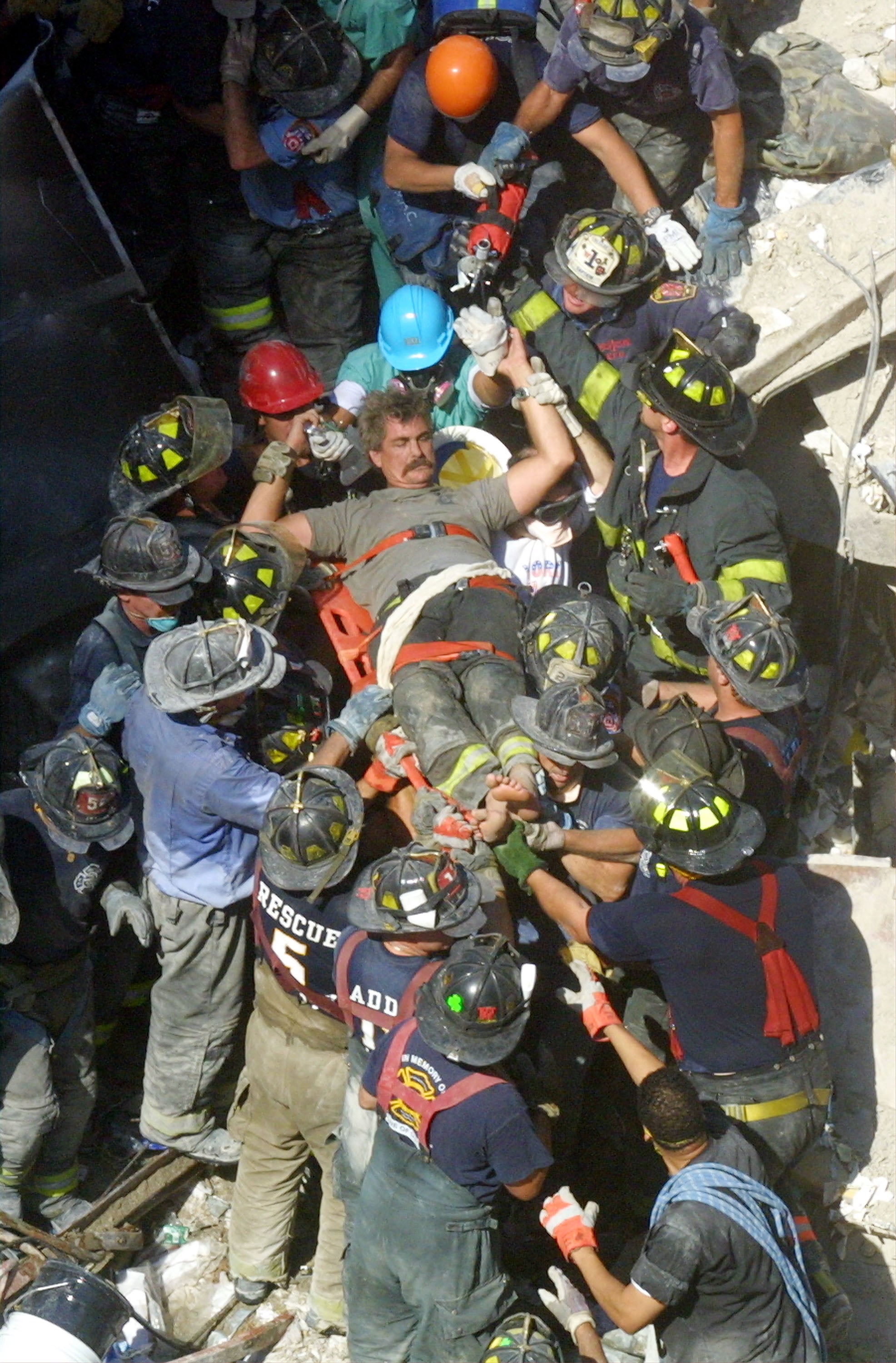
20. According to City Hall, 91,000 rescue and recovery personnel were needed to clear up the destruction
A process was later set up to allow them to claim compensation for any health issues incurred during their work.

21. According to New York Magazine, 1.8 million tonnes of debris were removed in the nine months it took to clear the scene
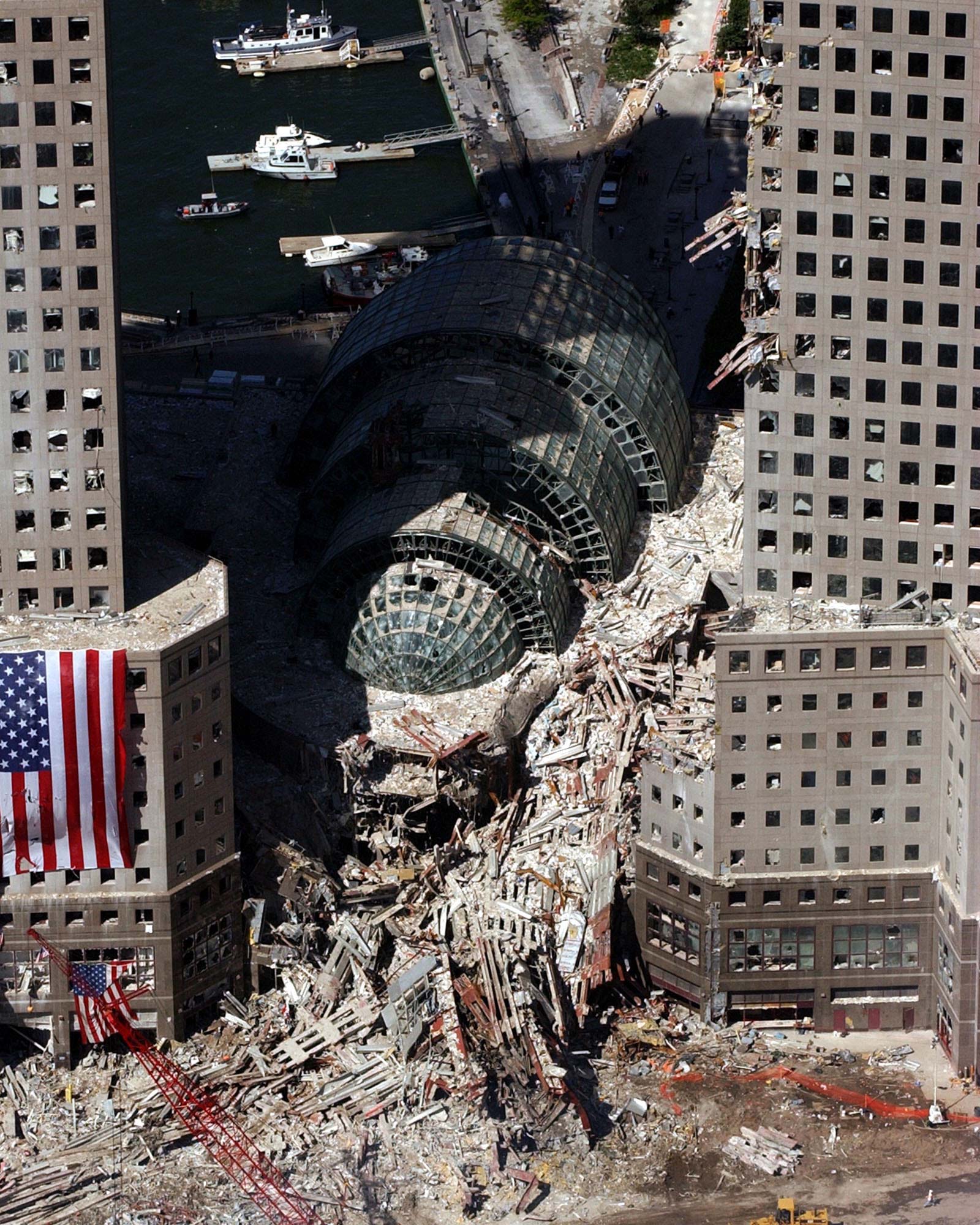
22. The Winter Garden, a shopping center near the towers, sustained a considerable amount of damage
However, it also provided a vital escape route for many fleeing the disaster, according to The New York Times.
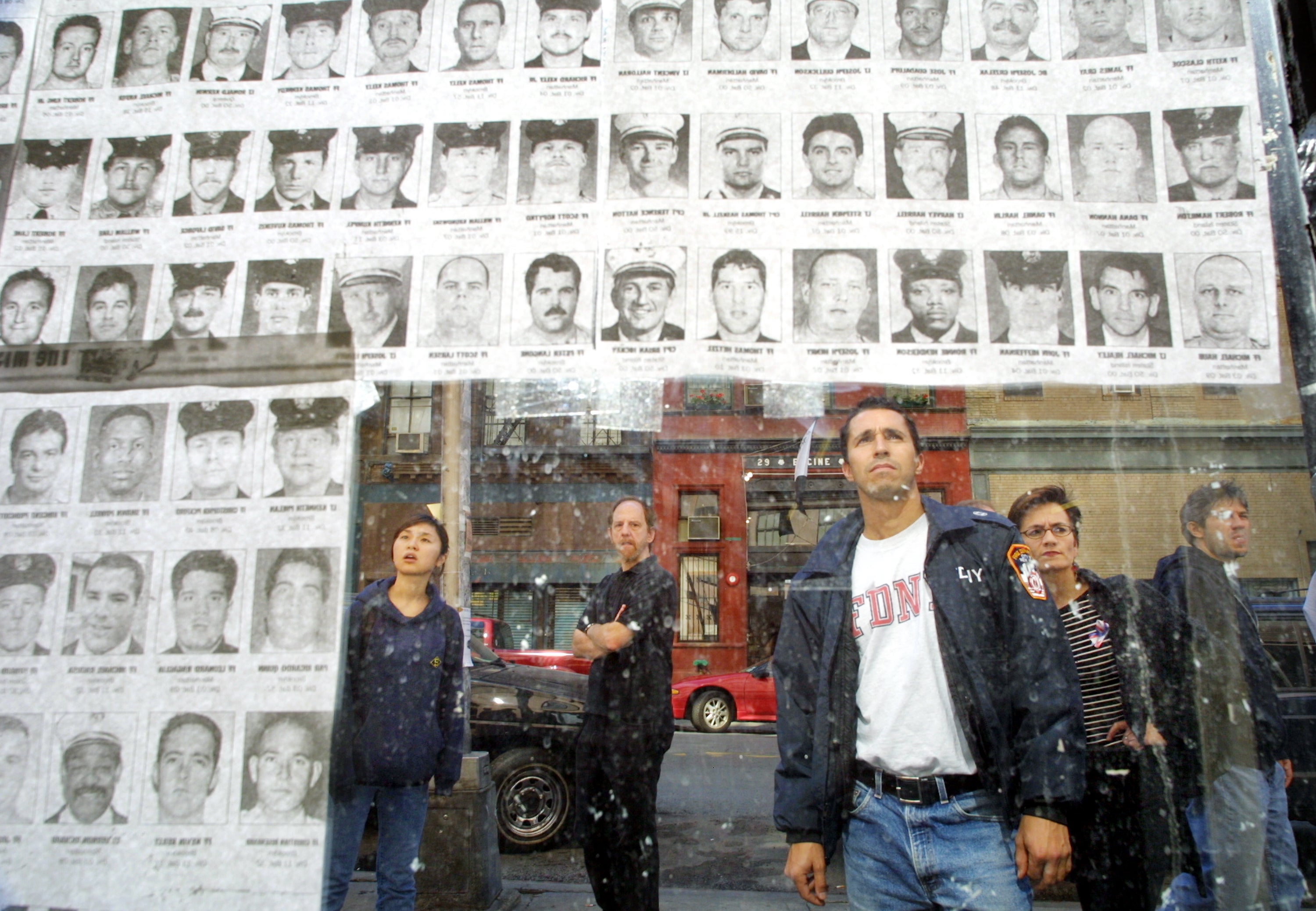
23. Out of the nearly 3,000 people that died in the attack, 412 were emergency workers such as firefighters and police officers. According to the Officer Down Memorial Page, 10 different law enforcement agencies suffered losses
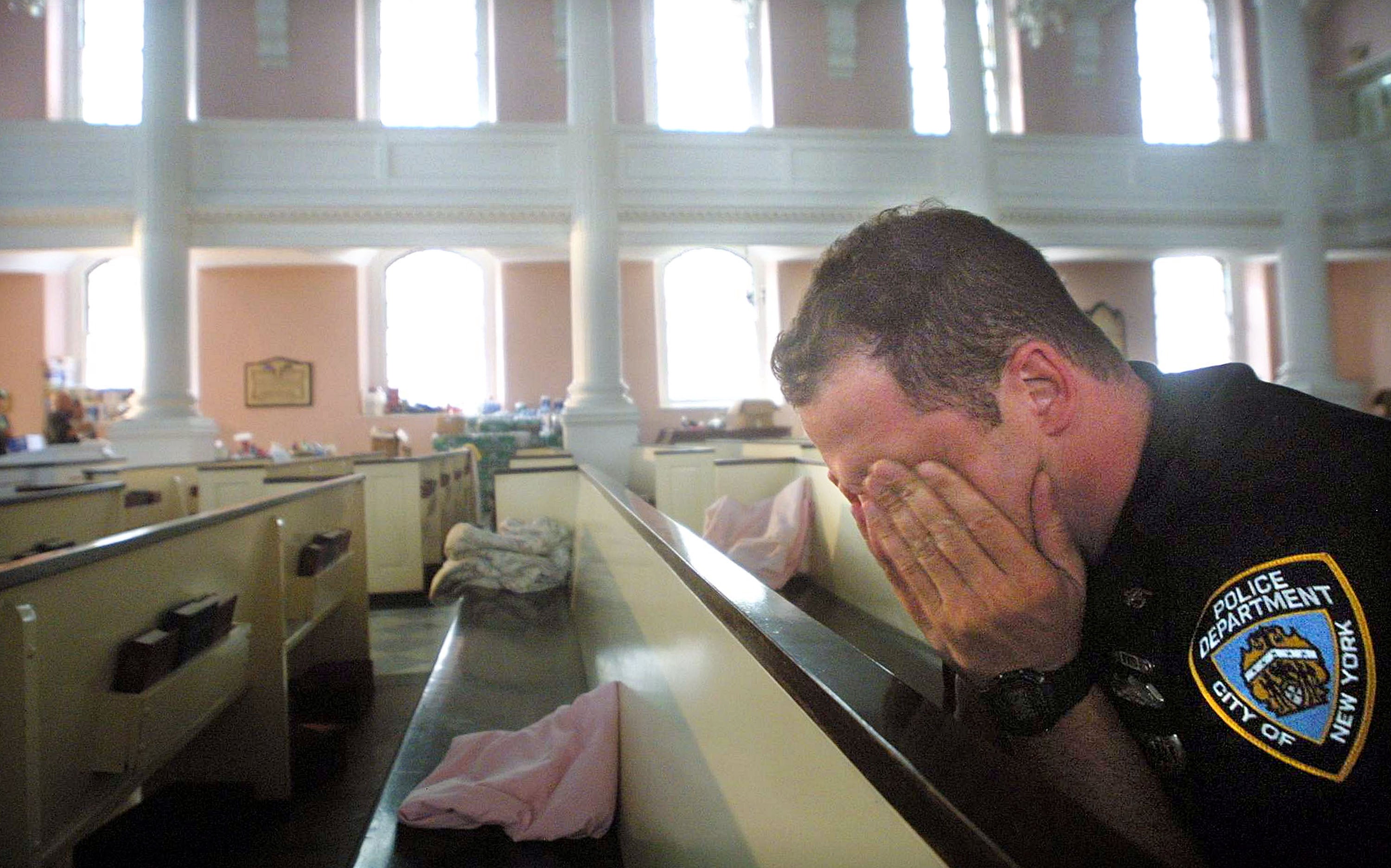
24. St Paul’s Episcopal Church lies across the street from the World Trade Center and its officials were amazed to find it unscathed from the attacks, according to its website
Its miraculous survival led to it serving as a headquarters for the relief effort, a place to receive and dispense donations to those in need and for responders to take breaks from the devastation outside.
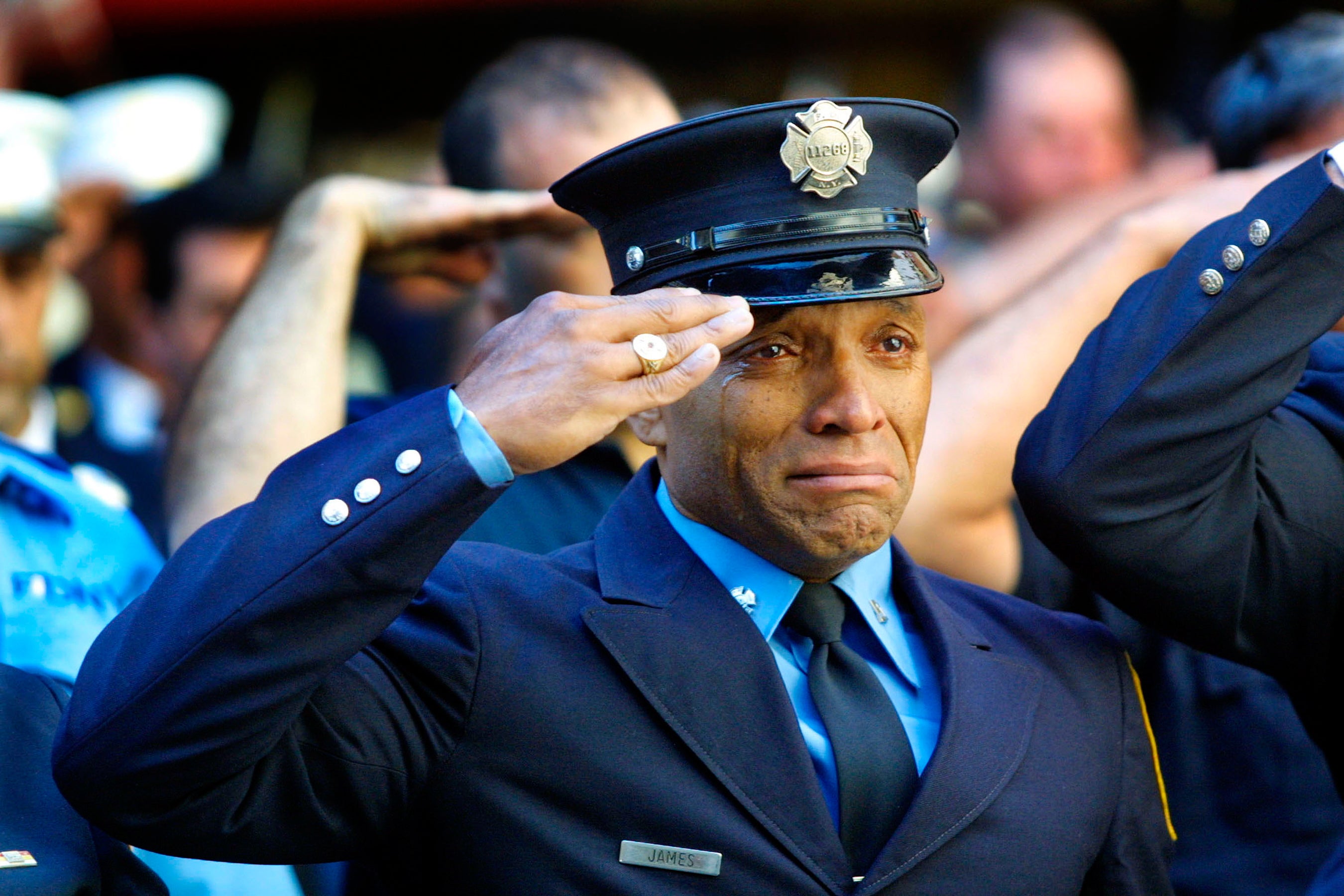
25. The Rev. Mychal Judge, the FDNY’s chaplain, was one of the 343 serving members of the New York Fire Department who lost their lives on 9/11
Firefighter Tony James is pictured attending the chaplain’s funeral days after the attack.
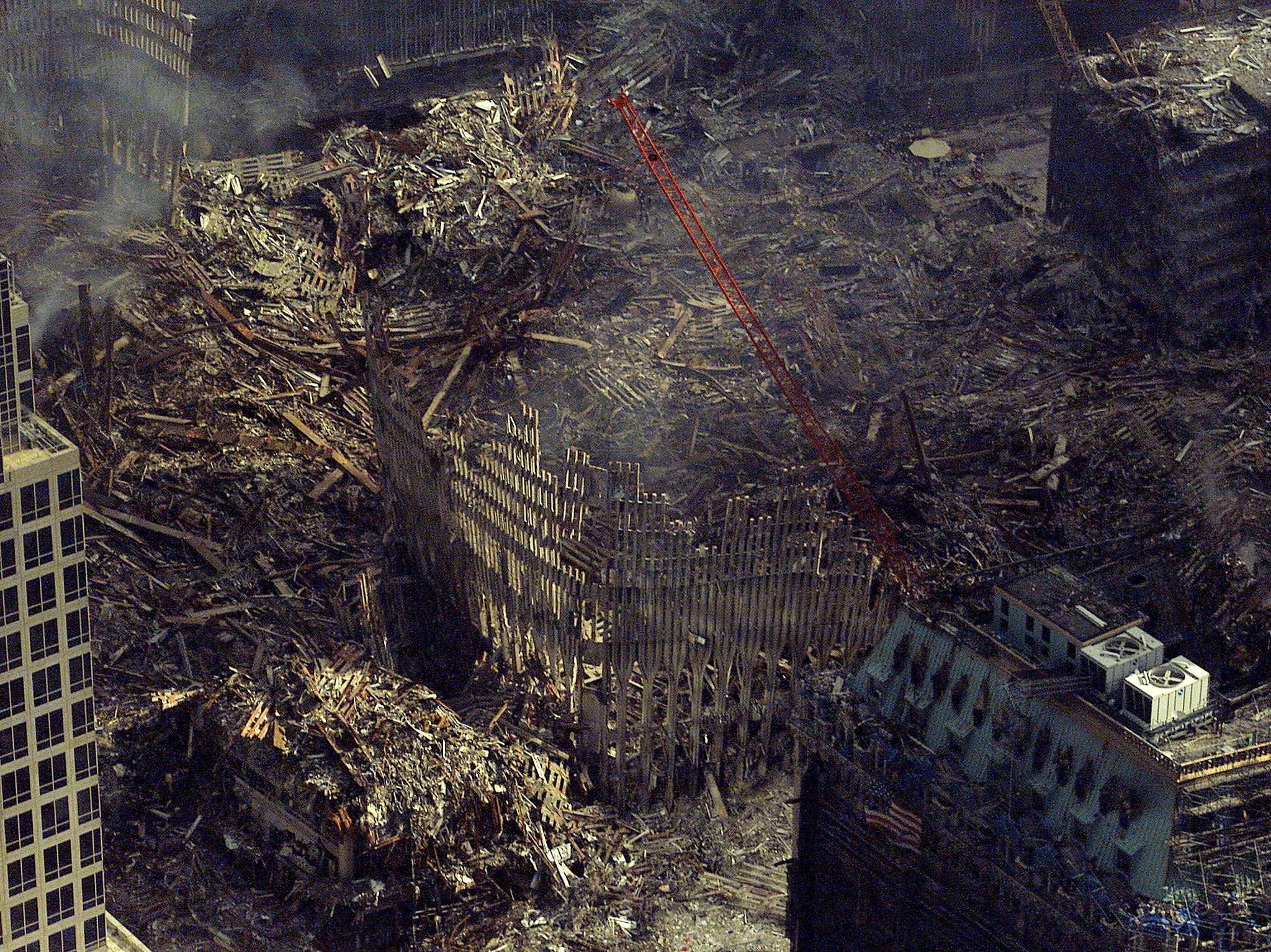
26. The site where the World Trade Center once stood is now known as Ground Zero and memorializes the events of that infamous day
About the Author