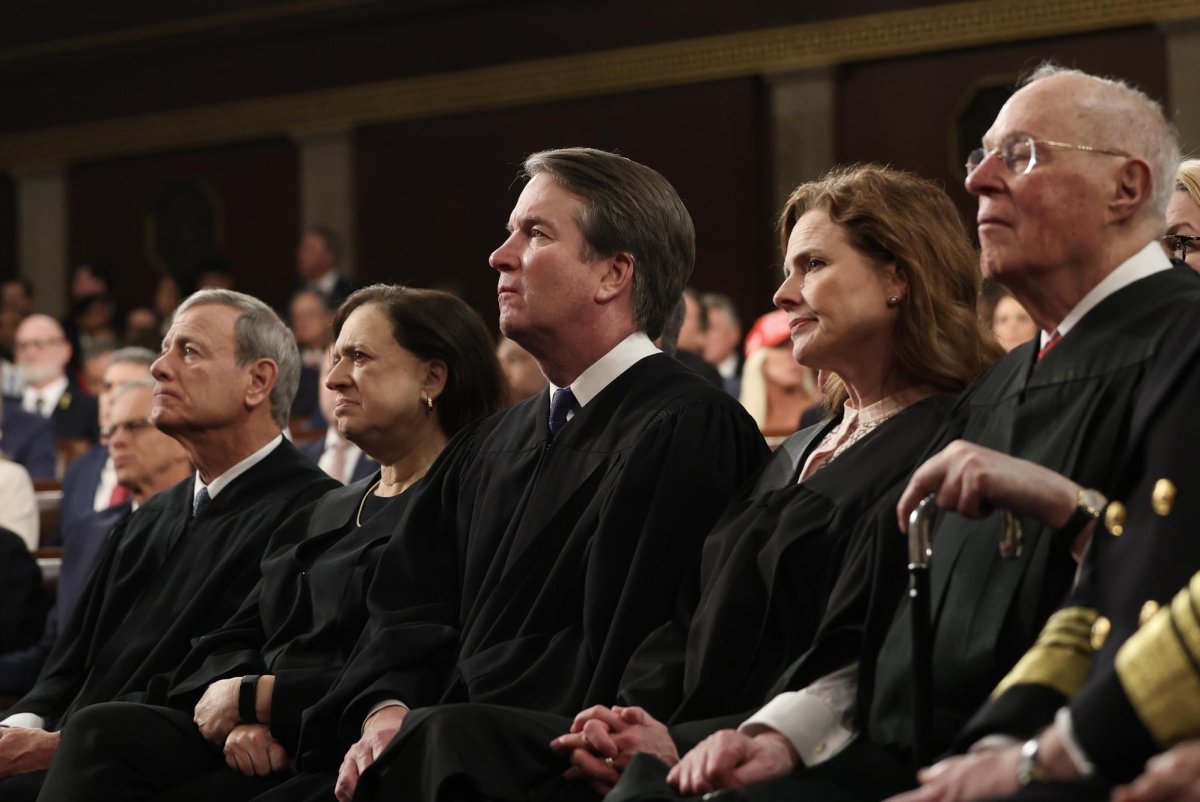
April 27 (UPI) — The U.S. Supreme Court is considering the lawfulness of police warrants obtaining broad cellphone location data in investigations on Monday.
The case stems from an armed robbery in Midlothian, Va., on May 20, 2019. When the search for the suspect went cold, investigators were granted a “geofence warrant” by a federal judge, allowing them to obtain data about cellphone users in the area of the robbery from Google.
The data was used to identify Okello Chatrie as the prime suspect but data was also turned over for 18 other identified cellphone users.
Chatrie made away with $195,000 in the robbery.
Chatrie pleaded guilty to armed robbery and brandishing a firearm. He was sentenced to nearly 12 years in prison but he appealed, raising the case that is before the Supreme Court. His appeal was rejected by the 4th U.S. Circuit Court of Appeals in Richmond, Va. The lower court ruled that law enforcement’s warrant did not fit the Fourth Amendment context of a “search.”
The lower court also said users generally allow their data to be collected by tech companies voluntarily.
The high court has been asked to rule on whether the data requested by investigators from Google violated Chatrie’s constitutional right to be free from unlawful searches and seizures under the Fourth Amendment of the Constitution.
“What’s to prevent the government from using this to find out the identities of everybody at a particular church, a particular political organization?” Chief Justice John Roberts asked Monday. “What are the restraints that are going to prevent that from becoming a problem?”
The data tracking was possible due to Chatrie’s phone having the Google location history setting turned on. His location history showed that he was in the vicinity of the robbery about 10 minutes before it happened and he left shortly after it was over.
The Justice Department argued that a warrant was not needed in this case, though one was used to obtain the data leading to Chatrie’s arrest. U.S. Solicitor General John Sauer argued that Chatrie could have taken steps to turn his location data off.
About the Author