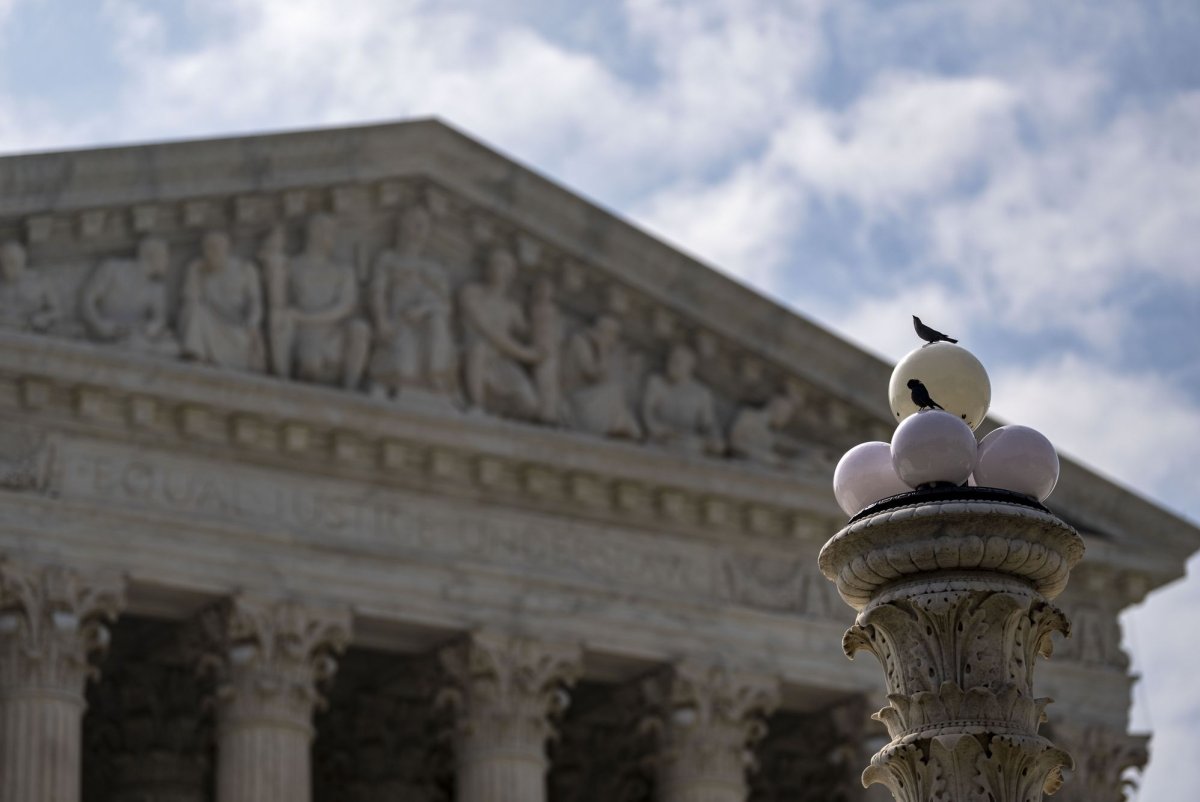
Aug. 24 (UPI) — The U.S. Supreme Court on Monday ruled that President Donald Trump can begin implementing measures from an executive order intended to restrict mail-in voting in many states and Washington, D.C.
However, legal challenges to that order could still cause issues for that plan before the midterm elections in November.
The ruling Monday means that the Department of Homeland Security can begin moving forward with compiling state-specific lists of people it believes are eligible to vote in the states — all led by Democrats – that had challenged the executive order.
Another part of the executive order required the U.S. Postal Service to require states that want to send ballots through the mail to submit lists of eligible voters with information allowing those ballots to be tracked by the government. A lower court had blocked that policy nationwide in a separate case, meaning that more legal action will be needed before the postal service can continue.
The high court’s ruling did not address the overall legality of the executive order.
“If the Postal Service’s final rule harms the states, theymay challenge that rule,” the ruling said.
The postal service entered an unpublished version of that final rule into the Federal Register late Friday despite the court injunctions against it.
Trump has repeatedly and without evidence claimed that mail-in voting is “inherently corrupt” and full of fraud, although voting experts have criticized the order and say such fraud is exceedingly rare. The president himself has voted by mail as recently as this year, NPR reported.
The high court handed down the ruling in an unsigned order over the dissent of three of its members: Justices Sonia Sotomayor, Elena Kagan and Ketanji Brown Jackson.
In a dissent, Jackson said the ruling “needlessly injects chaos and uncertainty into the upcoming midterm elections,” CNN reported.
She noted that, in the past, the Supreme Court has turned away challenges to election law because they were too close to elections. “Today’s revelation is that such claims can also come too early — never mind that an election is looming and related harms are presently occurring.”
About the Author