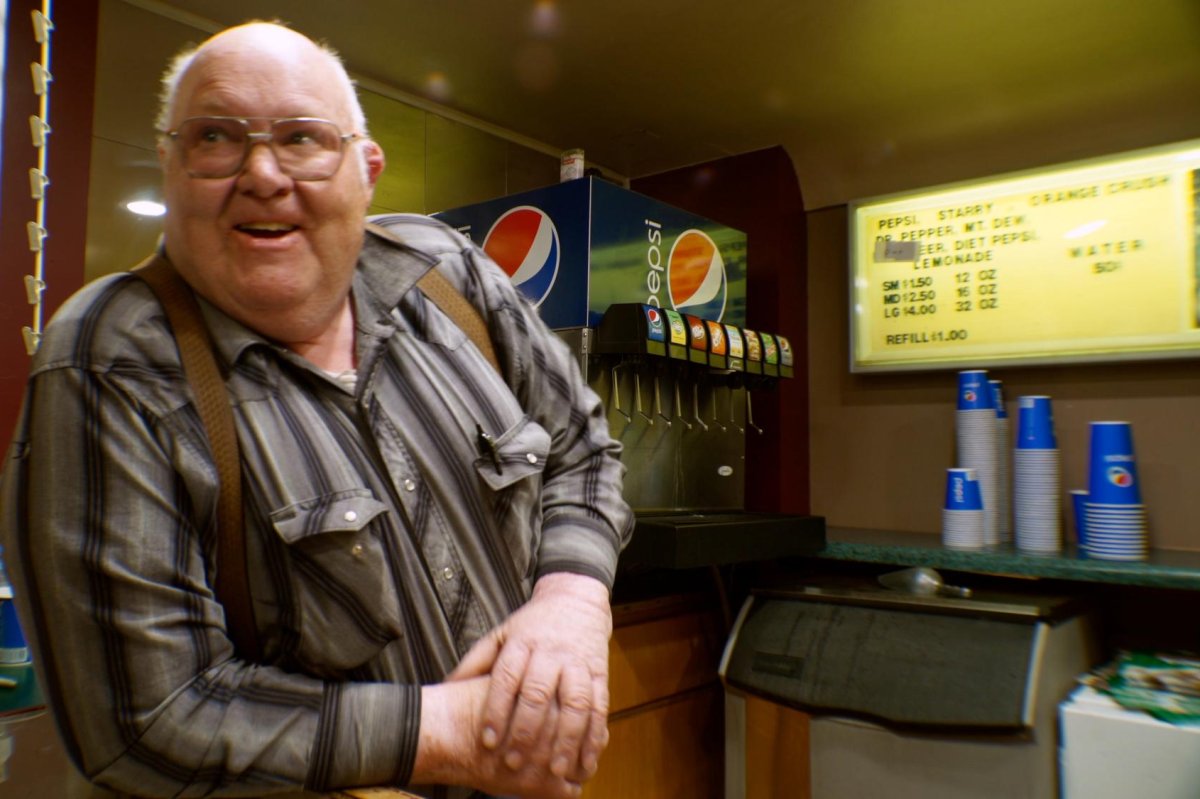
1 of 5 | Tiny Pederson runs the Desert Historic Theater in Burns, Ore., featured in “The Last Picture Shows,” in theaters Friday. Photo courtesy of Foghorn Features
LOS ANGELES, Aug. 7 (UPI) — In The Last Picture Shows, in New York theaters Friday, director Rustin Thompson profiles small town movie theaters in the western United States. Theater owners discuss challenges facing cinema and propose solutions to Hollywood.
In a recent Zoom interview with UPI, Thompson said theaters have two of the three components necessary to survive. They already have theater spaces and filmmakers making films.
“The one thing we need to keep it going is the audience,” Thompson said. “They have forgotten what it’s like to be in a communal space with a big screen and great sound, in darkness watching this film and you can’t stop it.”
After July’s openings for The Odyssey and Spider-Man: Brand New Day, mainstream Hollywood movies are doing well. However, that blockbuster mentality still limits the audience for theatrical screenings.
“I think if they had more variety, more people would come back to the theater,” Thompson said.
In towns with only one theater, some owners said studios require a minimum commitment of two weeks. Some towns are so small that there’s no audience left for the second weekend.
“The owners that I talked to said, ‘For films like that, we get a good audience for the opening weekend and then the rest of the time it’s dead,'” Thompson said. “No one’s coming because everybody in town has already seen the movie. So this theater is stuck there playing the same film.”
Thompson said some theaters work around those policies by waiting three weeks to screen big films like The Odyssey. In August, they offer enough showtimes for The Odyssey so everyone who wants to can see it, but also slot in other options for different audiences.
“Hollywood needs to really listen to these theater owners,” Thompson said. “They need to listen to the audience. They need to figure out a way to make it more economically feasible for the small town theater operators to stay in business by giving them options on running these films.”
Theater owners in the film also discuss studios’ rush to premiere movies at home on video-on-demand, often while they are still playing in theaters. Many suggest a return to the policies of the VHS era in which the theatrical window was much longer before home video.
“One says six months, another one says a year,” Thompson said. “If they can go back to waiting that long, the theater business will be much easier to operate and survive.”
Thompson admitted he did not look deeply into the economics of VOD. As a fan of the theatrical experience, Thompson suspects there are ulterior motives for rushing through theatrical releases.
“People will forget about the latest Spider-Man so we can make the next one in five years,” Thompson suggested. “I think a lot of these studios are not lovers of cinema. They’re lovers of content and dollars.”
He did reach out to some studios for their perspective, but stopped pursuing them when PR departments did not return his requests.
“I want to talk to the people in those towns that are trying to survive,” Thompson said. “I don’t need to hear somebody from the studio give me their story. So far I think that strategy has worked because we’re getting this perspective that we never get.”
One common complaint amongst moviegoers is the increase in ticket prices. Thompson cited that a $1.50 movie ticket in 1969 is approximately $13 adjusted for inflation, which is a common ticket price today.
“It’s not the movie ticket that has become out of range,” Thompson said. “It’s everything around it. It’s the popcorn, it’s the soft drinks, it’s the parking, it’s the babysitter, it’s the restaurant that you go to before.”
The Last Picture Shows also highlights everything that the ticket price pays for in a cinema.
“You’re getting a theatrical experience and you have to pay for employees,” Thompson said. “You’ve got to pay for the projector. You’ve got to keep the screen. You’ve got to replace the bulb in the projector every couple years so there are costs to that.”
Many of the theaters featured in The Last Picture Shows were undergoing renovation projects. Thompson had a few more updates since completing the film.
The Washoe Theater in Anaconda, Mont. is still raising money to fix their sign. The owners of the Milton-Freewater Drive-In in Oregon have bowed out.
“They are now quitting the business,” Thompson said. “They’re selling the theater so I think it’s still going to exist, but [after] 65 years they are done.”
The Last Picture Shows opens Aug. 21 in Los Angeles.
About the Author