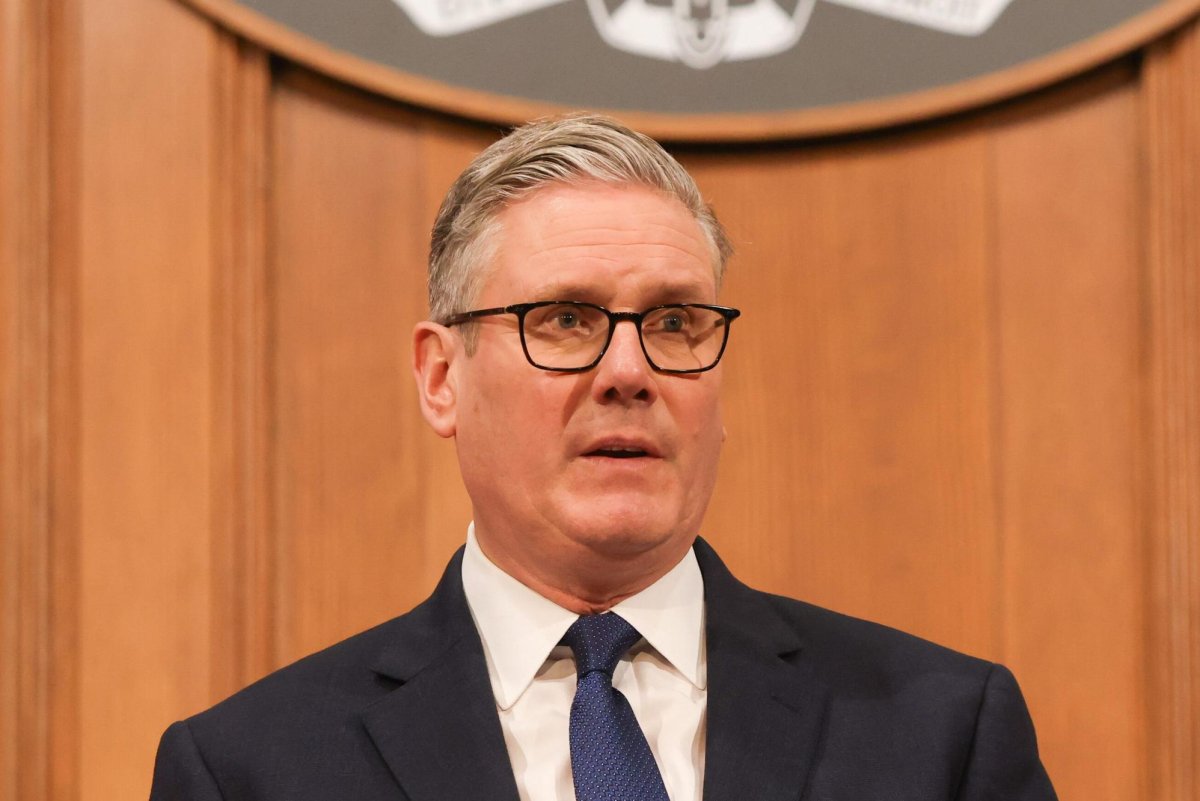
British Prime Minister Keir Starmer avoided a parliamentary probe after lawmakers voted down an opposition motion Tuesday demanding he should be investigated over the process by which Peter Mandelson ended up being appointed as Britain’s ambassador to the United States. Photo by Betty Laura Zapata/EPA
April 29 (UPI) — British Prime Minister Keir Starmer avoided a parliamentary investigation into whether he misled lawmakers over the process by which Peter Mandelson ended up being appointed as Britain’s ambassador to the United States.
MPs voted 335-223 on Tuesday to defeat a Conservative opposition motion to refer the case to the House of Commons’ Privileges Committee, the bipartisan panel responsible for looking into alleged breaches of parliamentary rules by elected officials.
However, 15 backbench MPs in Starmer’s Labour Party rebelled, defying government orders to vote against the motion, which accuses the prime minister of misleading MPs by telling them “full due process” was followed in Mandelson’s security clearance and that the Foreign Office was not pressured to green-light him.
The Conservatives and other parties question Starmer’s account that he had made it clear that Mandelson’s “position was subject to developed vetting” and his assertion the permanent secretary at the Foreign Office with the final say had been unambiguously clear when he said nobody had “put pressure on him to make this appointment.”
Under the Ministerial Code, ministers must resign if they are found to have misled parliament intentionally or unintentionally and failed to return to parliament at the earliest opportunity to put the record straight.
Starmer fired Mandelson as ambassador in September after files released by the U.S. House Oversight Committee on Jeffrey Epstein contained emails between Mandelson and Epstein that indicated Mandelson’s friendship with Epstein was much closer than he had let on when he was named as ambassador in December 2024.
The Foreign Office said the emails showed “that the depth and extent of Peter Mandelson’s relationship with Jeffrey Epstein is materially different from that known at the time of his appointment.”
However, earlier this month it emerged that during the time after Starmer named Mandelson as his pick for ambassador and when he was sent to Washington in February 2025, he had “failed” vetting, not because of his links to Epstein, but the Foreign Office cleared him anyway and didn’t inform Downing Street.
On April 16, Starmer sacked the top civil servant at the Foreign Office, Sir Olly Robbins, calling the fact Mandelson’s security status had been kept from him and all his ministers “staggering” and saying it was “unforgivable” because he wouldn’t have told parliament due process had been followed had he known the truth.
However, Sir Olly, who is pursuing an unfair dismissal case against the government, has since told Parliament’s Foreign Affairs Committee that Mandelson’s case was “borderline,” rather than a fail, but confidentiality rules prevented him from sharing any information with Starmer and that he was under “constant pressure” from Downing Street to complete the process.
Sir Olly, who was appointed permanent secretary at the Foreign Office after Mandelson had already been named as ambassador, said there was “already a very, very strong expectation” that Mandelson’s appointment would go through and that “he needed to be in post and in America as quickly as humanly possible.”
A Privileges Committee investigation into so-called Partygate, alcohol-fueled staff socials in Downing Street during COVID lockdowns in 2020 and 2021, was a key factor in former Prime Minister Boris Johnson’s resignation in July 2022.
He had told parliament they were working events and that “all guidance was followed completely in No. 10” with no COVID rules broken — but in the following months Johnson and then-chancellor Rishi Sunak and more than 40 other officials and staff were fined by the police.
Johnson quit politics completely in June 2023, stepping down as an MP after the final report of the Privileges Committee found he had misled parliament and recommended a 10-day suspension from the House of Commons.
About the Author