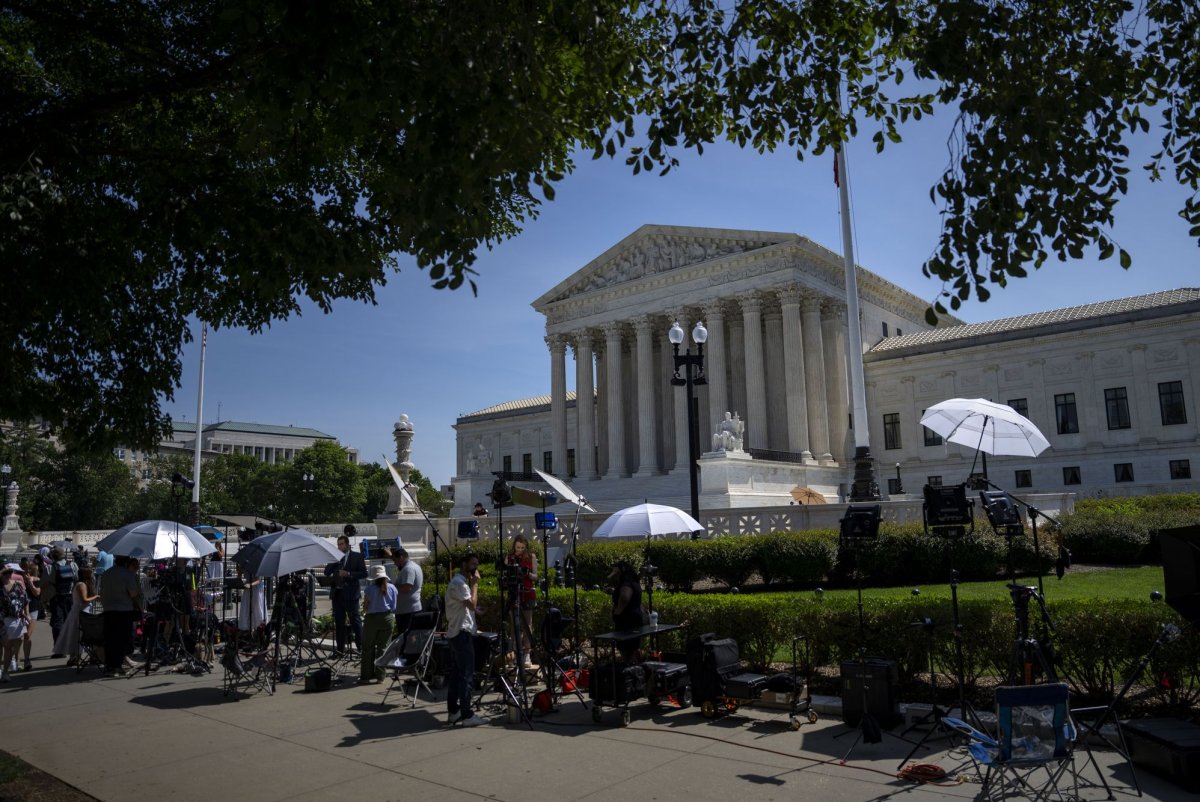
July 27 (UPI) — The Trump administration on Monday asked the U.S. Supreme Court to allow it to move forward with an extensive executive order restricting mail-in voting ahead of the November midterm elections.
This comes after an appeals court upheld a federal judge’s block on the order Saturday, saying it would “threaten disenfranchisement of many eligible voters” and “sow confusion,” The Washington Post reported.
Trump has pushed for new limits on voting ahead of the midterms, during which control of both the House of Representatives and the Senate are be at stake. The president has claimed, without evidence, that there are widespread issues with voter fraud benefiting Democrats, particularly in the 2020 presidential election that he lost.
The order, which Trump signed in March, would require states to hand over their eligible voter rolls to the federal government. It would mandate that the U.S. Postal Service refuse to mail ballots to those the administration determines are ineligible to vote. At one point, the postal service proposed to meet that requirement in part by only delivering ballots in states that had handed over their voter rolls.
The order would also require individualized tracking barcodes on ballot envelopes.
Twenty-three states, all led by Democrats, challenged the executive order, saying it is unconstitutional and designed to suppress legal voters. A federal district court first blocked the order’s implementation, followed by the appeals court this weekend.
The Trump administration isn’t directly defending the executive order but says that the states challenging the order did so prematurely because the mandates haven’t been implemented yet.
“The executive order is an intra-branch directive from the president to his subordinates — which, of its own force, does not change anything at all about elections in any state,” D. John Sauer, U.S. solicitor general, said to the Supreme Court in the appeal, CNN reported. “It does not require the states to do (or refrain from doing) anything at all.”
The administration asked for an immediate “administrative” order to put the lower court decisions on hold.
About the Author