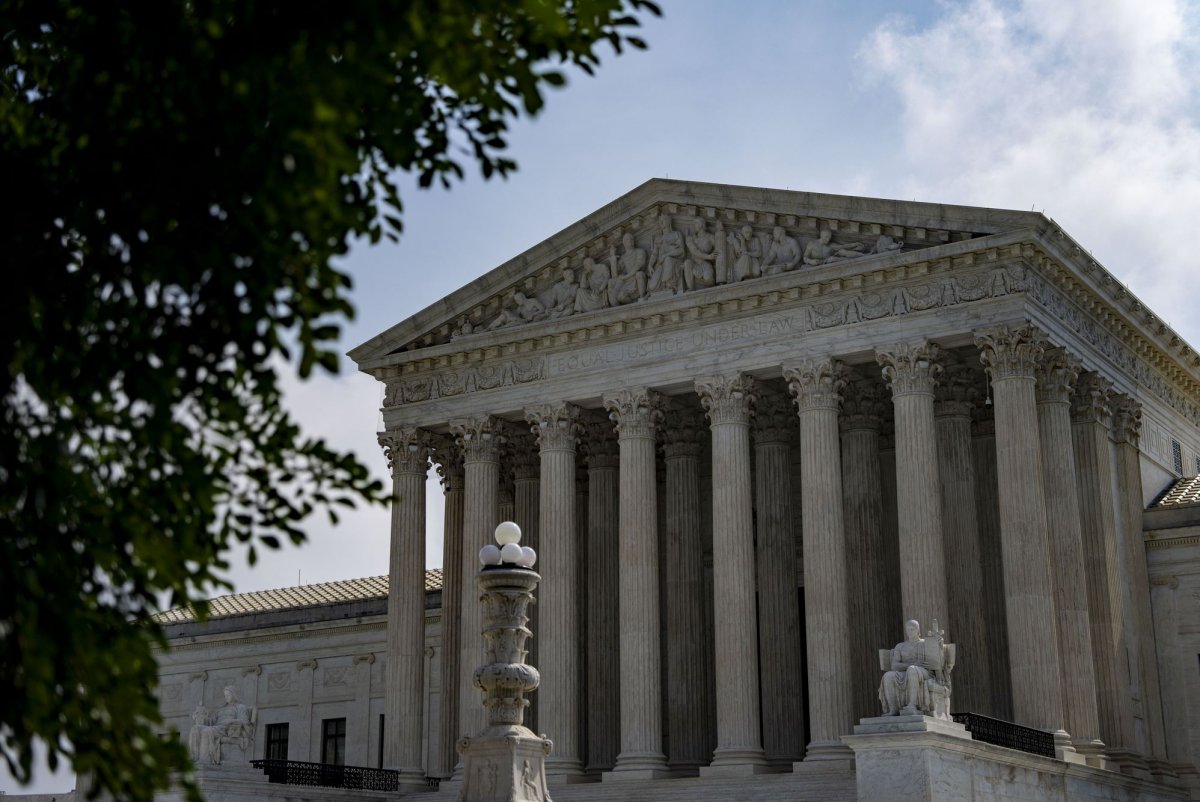
June 29 (UPI) — The U.S. Supreme Court on Monday ruled that law enforcement agencies looking to obtain sweeping data on cellphone users in the vicinity of a crime scene must have a warrant.
The case, Chatrie vs. United States, involved a man convicted for a bank robbery in Virginia after police obtained information from Google on cellphones nearby during the crime while not seeking a particular suspect. The court ruled 6-3 that this broad “geofence” surveillance equals a search under the Fourth Amendment of the Constitution, which protects people against unreasonable searches and seizures.
The Trump administration had argued that the police officers didn’t need a warrant for the information at all, NBC News reported.
The court did not rule on whether the warrant in this particular case was valid but sent the case back to a lower court for review.
Justice Elena Kagan wrote in the decision that there is a “judicial obligation” to guard against the risk of “undue encroachment” in police searches. She said that the Fourth Amendment applies when officials seek to “tap into” Google’s database of physical location information.
“That database is new, but the principle covering it is not: That principle is instead the one our history has given,” Kagan wrote. “The Fourth Amendment must, as ever, protect against unjustified governmental intrusion on the privacy of the individual.”
Justice Samuel Alito wrote a dissent saying no warrant should be required. He said the majority was “striking a pose as a great champion of privacy in the digital age.”
“I cannot support this irresponsible escapade,” Alito wrote.
NBC News reported that privacy rights advocates have expressed concerns about such geofence warrants because they include information about a broad range of people rather than only a suspect or two.
In 2017, the Supreme Court ruled in Carpenter vs. United States that police also needed warrants for location information from cellphone towers.
About the Author