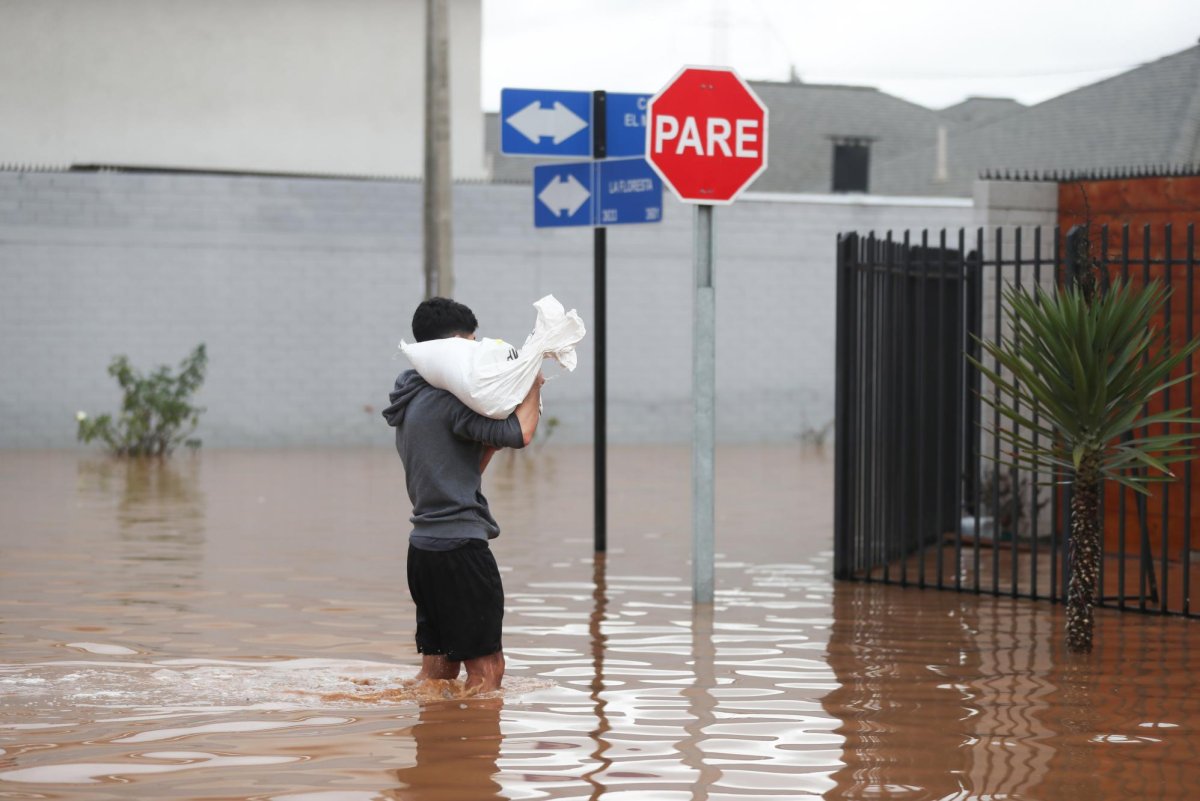
Powerful mudslides struck cities in northern Chile, one of the world’s driest regions, leaving thousands of people displaced and damaging homes and roads after extraordinary rainfall swept across the desert. File Photo by Hernan Contreras/EPA
Aug. 19 (UPI) — Powerful mudslides struck cities in northern Chile, one of the world’s driest regions, leaving thousands of people displaced and damaging homes and roads after extraordinary rainfall swept across the desert.
The emergency was concentrated in three regions: Antofagasta, Tarapacá and Atacama. The rainfall caused normally dry ravines to overflow, sending water, mud and debris into urban and coastal areas.
The most severe situation was reported in Tocopilla, a coastal city of about 25,000 people in the Antofagasta region. Videos posted on social media showed mudslides flooding large parts of the area, sweeping away vehicles and cutting off roads.
Antofagasta Gov. Ricardo Díaz said Tocopilla received about 30 millimeters, or 1.2 inches, of rain within a few hours. The area normally receives about 5 millimeters, or 0.2 inches, of rain a year.
“Sixty percent of the homes in Tocopilla have been damaged and many of them have structural damage. We have to restore access to the city,” Díaz told Radio Pauta.
Tocopilla Mayor Ljubica Kurtovic said 2,000 people lost their homes and were staying in shelters. She said authorities still needed to assess the full extent of the damage because the disaster “exceeded all expectations of what had been forecast.”
The scale of the emergency prompted Chilean President José Antonio Kast to declare a state of catastrophe, allowing the government to allocate emergency resources and placing the military in charge of coordination and security operations.
Chile’s National Service for Disaster Prevention and Response also reported people affected by the rainfall in Iquique, which had accumulated just 0.1 millimeter of rain this year. The city received about 25 millimeters, or nearly 1 inch, of rain within a few hours Tuesday, along with thunderstorms and strong winds.
Cristóbal Ramírez de Arellano, director of the geology program at Andrés Bello University and president of the Geological Society of Chile, told UPI that only a few millimeters of rain can saturate the soil in northern Chile, producing mud and causing widespread damage.
“The cities are usually located on narrow plains between the sea and the coastal escarpment,” Ramírez de Arellano said. “This condition increases the risk of mudslides, considering the role of gravity, which ultimately moves the water, mud and debris.”
He said the presence of El Niño favors the development of this type of rainfall. Although El Niño has existed for a long time, climate change has intensified it, he said.
Despite extensive damage to communities, Ramírez de Arellano said northern Chilean cities have adopted preventive measures since 2012 to reduce the impact of extreme weather events and limit fatalities.
“Mudflow channels and sediment retention basins have been built, and green areas have even been expanded, such as Tocopilla’s Geopark, which can absorb rainwater and make the city more permeable,” he said.
About the Author