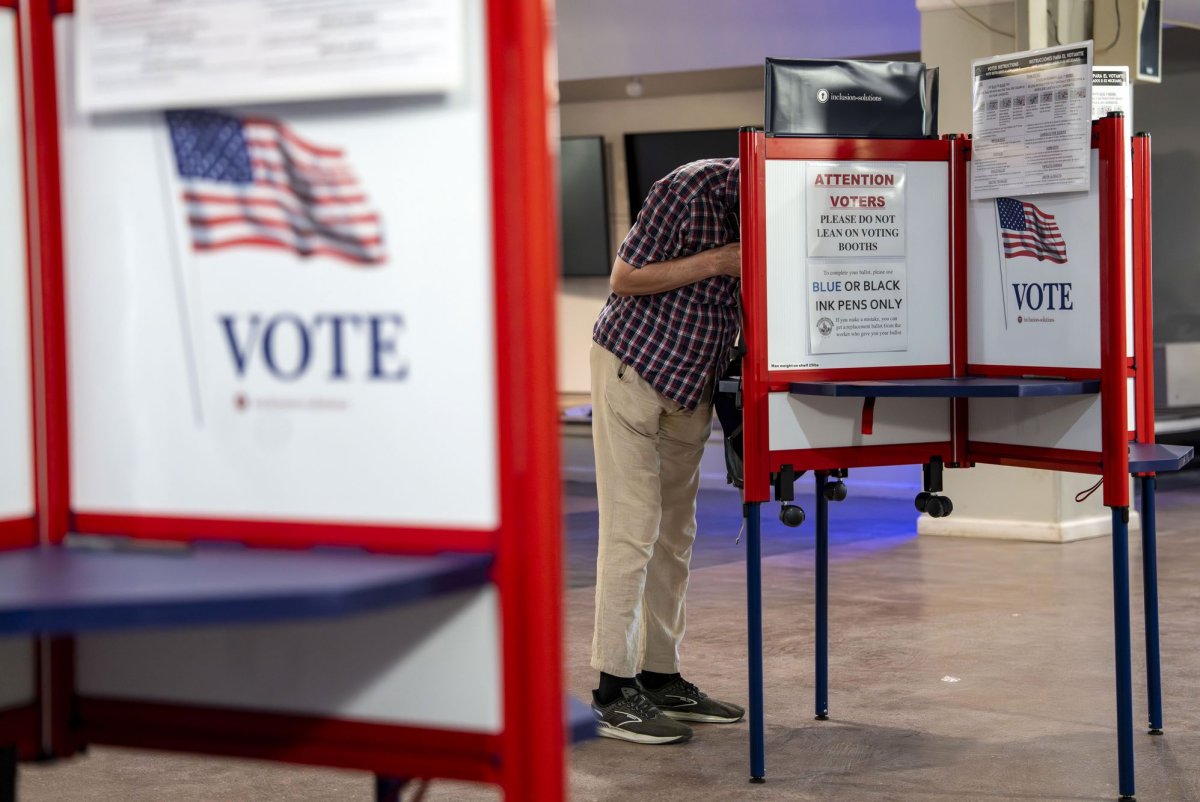
June 18 (UPI) — Sen. Elissa Slotkin, D-Mich., introduced a bill Thursday called the Protect Our Polls Act that would block the president from sending soldiers or federal agents to voting sites during elections.
The bill comes after President Donald Trump said he wouldn’t rule out sending the National Guard or Immigrations and Customs Enforcement to polling places in November.
“I’d do anything necessary to make sure we have honest elections,” The Hill reported Trump told reporters in May.
Slotkin said the bill would prevent Trump from “weaponizing our military and armed federal officers to interfere in our elections.”
The legislation, if passed, would require approval from Congress before a president could send uniformed military or federal law enforcement to polling sites. It would also require 48 hours’ notice to lawmakers, intel, legal justification and evidence that proves a state can’t handle a threat on its own.
The bill is backed by senators Tammy Baldwin, Wis.; Ruben Gallego, Ariz.; Mark Kelly, Ariz.; Amy Klobuchar, Minn.; Alex Padilla, Calif.; Jacky Rosen, Nev.; and Raphael Warnock, Ga.
In a statement, White House spokesperson Abigail Jackson told NBC, “If Democrats really cared about securing our elections, they would pass the SAVE America Act which includes commonsense election integrity measures supported by the vast majority of Americans.”
Federal and state laws already ban deployment of troops and agents from elections, except “to repel armed enemies of the United States.”
“The idea that a president would send troops or armed agents to polling places to intimidate voters is un-American and illegal,” Kelly said in a statement. “Federal law has protected polling places from military interference since the Civil War for a reason. President Trump has made clear he thinks he can ignore those limits. We’re making sure he can’t.”
Secretary of Homeland Security Markwayne Mullin said in March that he wouldn’t send agents to polling places without good reason.
“The only reason why my officers would be there is if there was a specific threat for them to be there, not for intimidation,” Mullin said. “There will be a reason for us to be there, and it’ll be known why we’re there.”
About the Author