
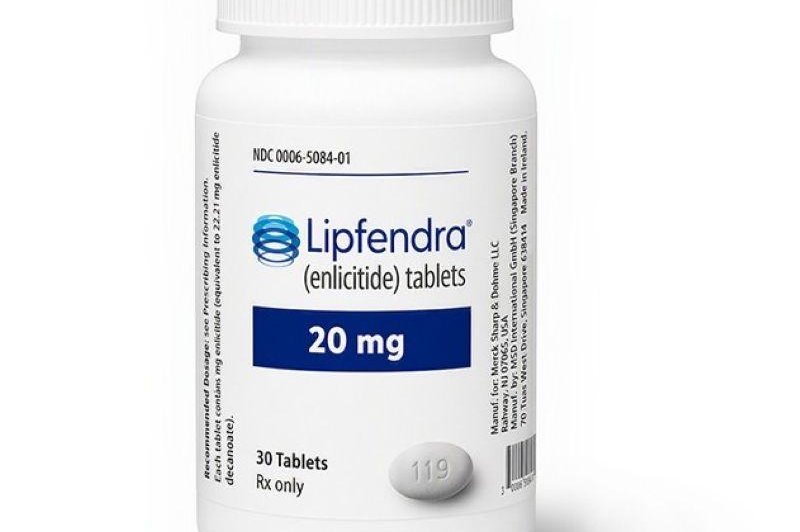
July 16 (UPI) — Heralding what some are calling a revolution in cholesterol management, U.S. regulators on Thursday approved the use of pill shown to significantly reduce dangerous “LDL-C” cholesterol in at-risk adults.
The Food and Drug Administration announced it has OK’d enlicitide, produced and marketed by pharma giant Merck as Lipfendra, for use by patients with high LDL-C cholesterol or who have an inherited type of high cholesterol called heterozygous familial hypercholesterolemia, or HeFH.
LDL-C is a major risk factor for atherosclerotic cardiovascular disease, which is the leading cause of death globally.
Lipfendra, which works by inhibiting the PCSK9 liver protein, is a tablet taken by mouth once per day. Its cost has been set at $315 per month before discounts, Fierce Pharma reported — roughly half that of other PCSK9 products on the market.
Merck says it is a more convenient and less costly alternative to injected inhibitors now available in the United States, and that by introducing an oral option, cholesterol patients will have “much broader access” to advanced cholesterol-lowering therapy.
Treatment adherence among patients will also be improved for who prefer taking a daily pill, the company predicted.
“By harnessing the innovative science of PCSK9 inhibitors and novel macrocyclic peptide technology, LIPFENDRA was designed to significantly lower LDL-C in the form of a convenient once-daily pill,” said Merck president Dr. Dean Y. Li in a statement.
“This is a pivotal moment as we bring the first U.S. FDA-approved oral PCSK9 inhibitor to adults with high LDL-C, offering patients an important new option. We’re proud of our work with regulators on this rigorous and efficient review process.”
The FDA approval came after a pair of Phase 3 clinical trials dubbed CORALreef Lipids and CORALreef HeFH.
In CORALreef Lipids, Lipfendra reduced LDL-C by 56% compared to placebo at week 24, while In CORALreef HeFH, the new pill reduced LDL-C by 59% at week 24 compared to placebo.
Its safety profile was similar to placebo, with the most common adverse reactions in adults being diarrhea and dizziness.
About the Author