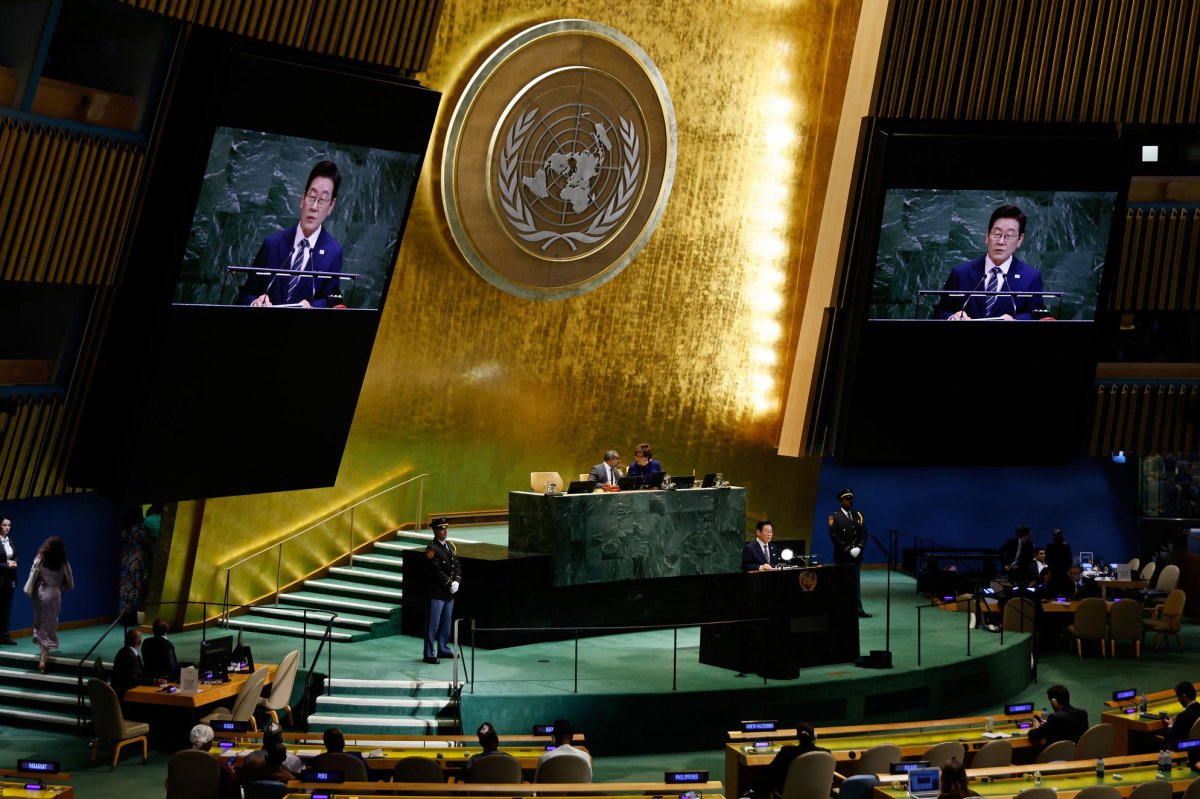
SEOUL, Nov. 19 (UPI) — A U.N. General Assembly committee adopted a resolution condemning North Korea’s human rights violations for the 22nd consecutive year Wednesday, as the United States abstained for the first time.
The draft resolution “condemns in the strongest terms the long-standing and ongoing systematic, widespread and gross violations of human rights in and by the Democratic People’s Republic of Korea, including those that may amount to crimes against humanity.”
The Democratic People’s Republic of Korea is the official name of North Korea.
The measure urges Pyongyang to immediately close its political prison camps and unconditionally release everyone held arbitrarily, including political prisoners and people detained for their religious beliefs. It also calls for an end to torture, forced labor and the use of the death penalty, including for exercising freedom of religion or expression.
The United States abstained for the first time on the annual resolution, which it had long co-sponsored. The Third Committee had adopted the measure by consensus for the previous decade, but Washington requested a recorded vote Wednesday.
The committee approved the measure 95-14, with 58 abstentions. The full General Assembly is expected to take it up in December.
U.S. Ambassador to the U.N. Economic and Social Council Dan Negrea said after the vote that Washington objected to language encouraging the Security Council to consider referring North Korea’s human rights situation to the International Criminal Court.
“Our commitment to promoting human rights, accountability and access to independent information for North Koreans is unwavering,” Negrea said.
Washington’s opposition to the International Criminal Court intensified after the court issued arrest warrants for Israeli Prime Minister Benjamin Netanyahu and others.
The Trump administration imposed sanctions on the court on Oct. 9, saying it was acting to defend U.S. sovereignty. The court called the sanctions “an assault on the rule of law” and said it would continue its work.
Ireland’s delegate, speaking on behalf of the European Union, said the reference to the court had been in the resolution for more than a decade.
“As a staunch advocate of the fight against impunity, the EU cannot support any weakening in recognition of the ICC’s essential role in prosecuting the most serious crimes,” the delegate said.
North Korean Ambassador to the United Nations Kim Song rejected the resolution before the vote, calling it a “politically motivated provocation aimed at tarnishing the image of our dignified State.”
He accused Western countries of ignoring abuses at home, citing widespread protests throughout Europe.
“European countries should be sitting in the dock, instead of taking issue with the human rights situation in other countries,” he said.
This year’s text cited “cyberthreat activities” for the first time, listing them among reported forms of transnational repression alongside international abductions and the repression of people who have fled the country. It also raised concerns about expanded digital surveillance and the use of technology to restrict freedoms inside North Korea.
At South Korea’s proposal, the resolution emphasized dialogue with Pyongyang, including inter-Korean talks, as a way to improve human rights and humanitarian conditions, Seoul’s Foreign Ministry said Thursday. The text also called for progress on the cases of abductees, detainees and South Korean prisoners of war and for reunions of families separated by the 1950-53 Korean War.
About the Author