
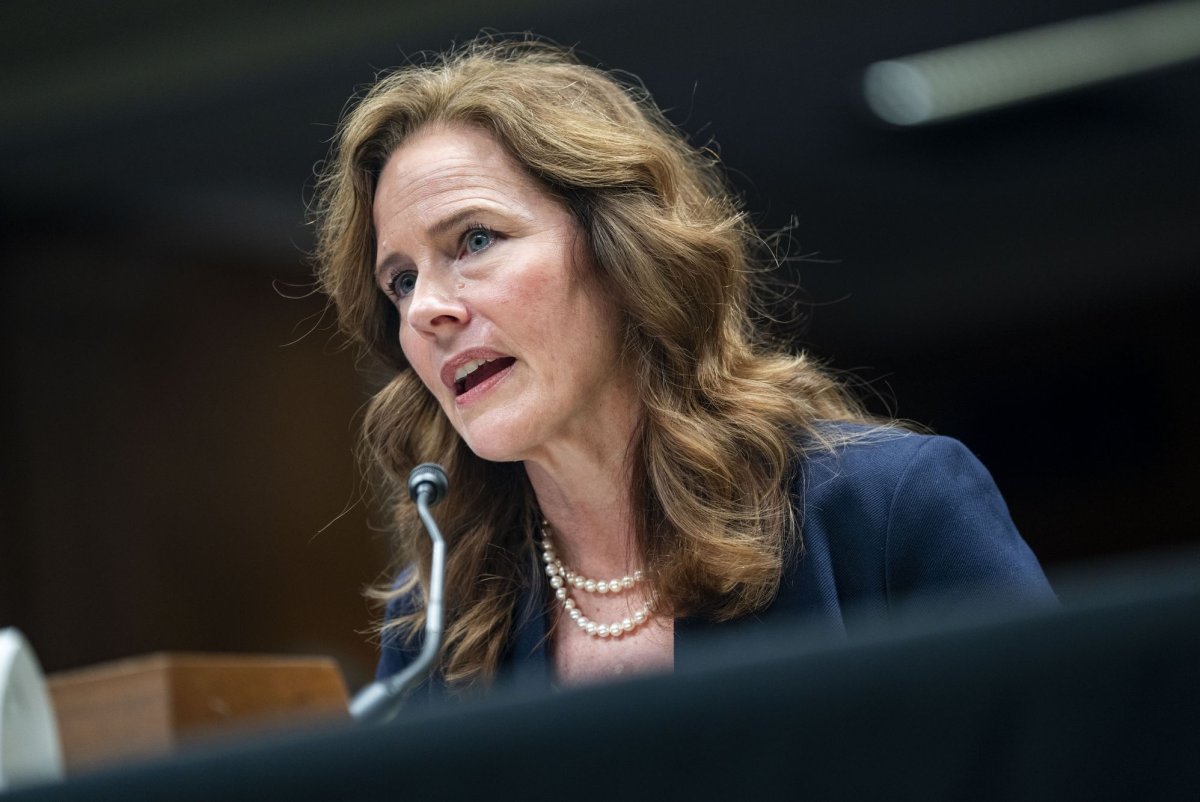
July 14 (UPI) — Supreme Court Justices Elena Kagan and Amy Coney Barrett testified before Congress Tuesday about the Court’s request for extra security funding amid growing threats.
The Supreme Court Justices told the Senate Appropriations Subcommittee on Financial Services and General Government that the threats they face “have come very close” and that they know they will continue. The high court is requesting a total $225 million budget.
Barrett detailed an incident that occurred in May when she was swatted by a 911 caller claiming to hear gunshots at her home.
“One of my teenage sons opened the door to go out with friends and saw in our street it was full of police cars who had responded to a false report of gunshots and raised voices,” Barrett told lawmakers. “I was very, very grateful that I had Supreme Court police outside my home because we were able to stop and meet with and explain to the county police that it had been a false alarm.”
In October, a woman was sentenced to eight years in prison for planning to kill Justice Brett Kavanaugh.
The Supreme Court’s request is a $16.6 million budget increase to improve security for the justices at work and home.
The budget increase requested is $20.6 million for fiscal year 2027. It asks for $14.6 million to give each justice six more security agents and 25 extra officers at the Supreme Court building, The Washington Post reported. The request also includes $2 million for a residential security office to coordinate home security.
Tuesday marked the first time Court justices have gone before Congress since 2019. The justices faced questions about the court’s code of ethics and its use of the emergency docket as well but much of the hearing was focused on the security funding request.
Kagan said that she would support a code of ethics that included an enforcement mechanism when asked about it by Rep. Rose DeLauro, D-Conn. Barrett said she is “less certain.”
“Every other body has that,” DeLauro said. “It’s just the Supreme Court that doesn’t.”
Conservative Justice Clarence Thomas drew attention to the court’s code of ethic in 2023 when reports that he failed to disclose multiple expensive gifts including luxury travel from a wealthy conservative donor.
Kagan said that while she supports the idea of some type of enforcement mechanism for the court’s code of ethics, she does not think the executive or legislative branches should have control over it.
Supreme Court justices regularly face personal attacks from politicians and the public who may be displeased with their decisions.
Chief Justice John Roberts spoke out in March against personal attacks on judges after President Donald Trump criticized the justices for striking down his tariffs.
“Personally directed hostility is dangerous and has got to stop,” Roberts said during a speech in Houston.
Sending justices to Congress has become rare. Until 2011, at least one justice had appeared before Congress every year. Since then, there have been only three appearances.
About the Author