Image: Volvo
BARCELONA, Spain-Smart seatbelts, smarter pricing, and… a crab bucket?
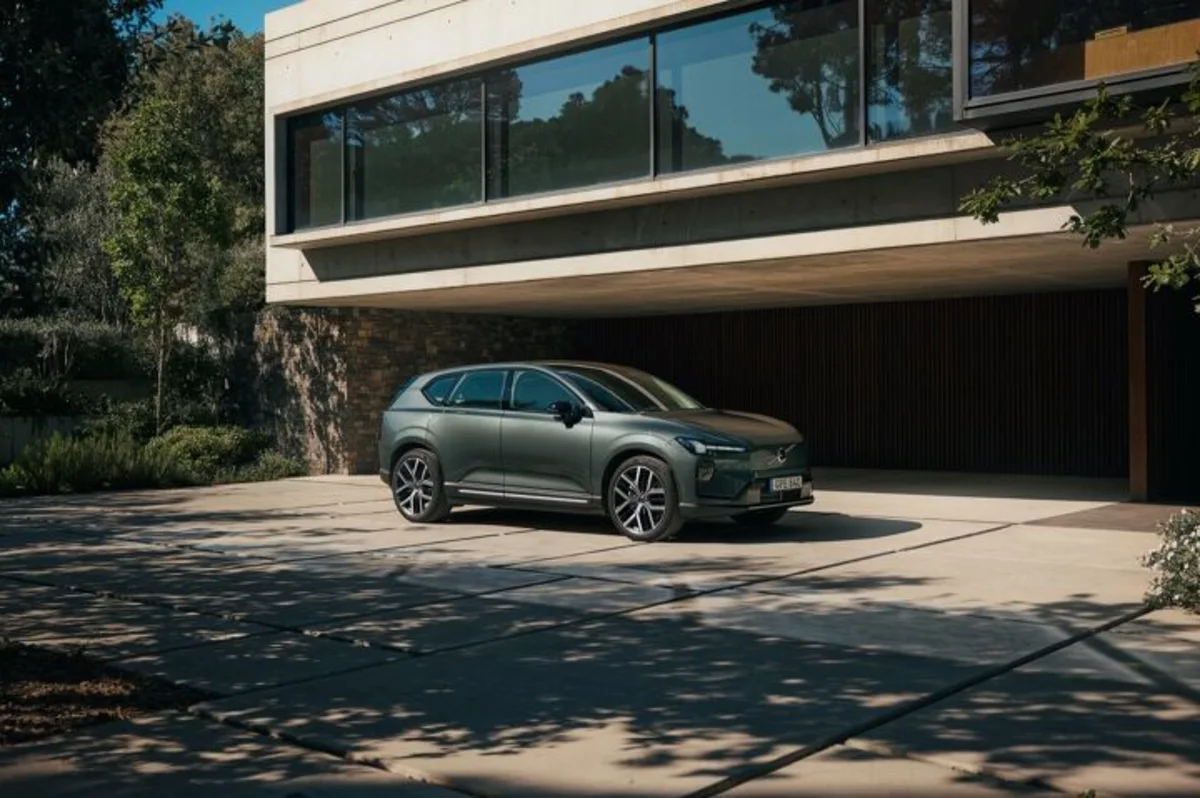
The 2027 Volvo EX60 is the brand’s latest all-electric SUV, and it will touch down this summer boasting a whole lot of cleverness. The brand that gave us the seatbelt has now upgraded it, and it arrives in a vehicle that boasts some of the best range and charging stats that the industry has seen. That it all comes in a package that’s priced right around the existing plug-in hybrid XC60 is impressive.
Advertisement
Advertisement
But it’s the humble crab bucket that possibly best defines the new model. Tucked under the 60/40-split folding load floor is a removable bucket with volume hashes lining its inside and charming crab cartoons. The Swedes enjoy a good day of fishing, we’re told. It’s this sort of down-to-Earth practicality that permeates the EX60, suggesting the brand’s latest SUV puts Volvo back on the path to success.
2027 Volvo EX60: All the Details
2027 Volvo EX60: All the Details
View Gallery
46 photos
Credit: Image: Volvo
Quick Take
Volvo’s latest EV has achieved price parity with its plug-in models, marking a major milestone for luxury crossovers. Beyond the numbers, this new model comes loaded with plenty of useful day-to-day features and the sort of easy-going seamlessness that has marked out the very best Volvo family vehicles.
What’s New for 2027:
Image: Volvo
Image: Volvo
Advertisement
Advertisement
Like BMW’s iX3, the Volvo EX60 is one of those rare examples in the industry where basically everything is new. The platform (dubbed SPA3) debuts here, and is expected to underpin numerous Volvo (and Polestar) EVs moving forward. The 800-volt architecture incorporates a unique cell-to-body construction process, directly integrating the battery’s cells into the floor design for less complexity and lower weight. The benefits are two-fold: the top EX60 P12 fits a 117.0-kilowatt-hour (gross) pack in a footprint smaller than the EX90, which carries a 111.0-kWh setup. Weight is only up 331 pounds (150 kilograms) over an XC60 T8, too.
Oh yeah, and the P12 boasts 670 horsepower along with 400 miles (640 kilometers) of range.
Image: Volvo
Image: Volvo
The P12 will arrive a little later, however. At launch, American and Canadian buyers will be able to pick up a P10, which also features a dual-motor, all-wheel drive setup but with a more reasonable 503 horsepower and 322 miles (514 km) of range. Volvo will also offer a rear-drive P6 model for US shoppers; Canada skips it.
Exterior Style:
Image: Volvo
Image: Volvo
Advertisement
Advertisement
Volvo isn’t in the habit of dramatic design changes, so the EX60 is still very much a familiar look-and size. It’s 3.7 inches (95 millimeters) longer than the gasser XC60, with a similar stretch in the wheelbase, yet the electric model is fractionally narrower and lower. On that canvas sit the familiar modern Volvo design cues, including the slimmed-down Thor’s Hammer headlights and tall taillights that wrap around the rear glass. Up front there’s no grille, but even the Volvo logo is helpful: the upper corner points to the frunk release. The flanks are exceptionally clean by dint of the EX60’s most controversial feature: pressure-sensitive winglets along the windowline in place of traditional door handles. They work well enough in sunny Barcelona, but winters may be a different story.
Rolling stock consists of 20-inch wheels as stock, with 21s and 22s optional. The color selection is typical Scandinavian: largely neutral tones with hints of warmth (the pinky glow of the P6’s Aurora Silver) or cool (the P10’s Forest Lake).
Powertrain and Fuel Economy:
Image: Volvo
Image: Volvo
Up first is the P10; yes, Volvo has had to dip into the double-digits to express the EX60’s power. With more power and more torque (524 pound-feet) than the lighter XC60 T8, the EX60 is just as quick if not more so in most day-to-day driving situations. In other words, more than quick enough. Responses are typical EV immediate too, though Volvo has (wisely) baked in some ramp-up to avoid low-speed jerkiness.
Advertisement
Advertisement
The P6 is a post-lunch highlight. With 369 horsepower heading directly to the rear wheels, it too offers plenty of muscle and-as I’ll cover in the next section-is the more satisfying drive. With the low center of gravity and wide 255-millimeter tires, the P6 puts down power without a fuss. It’s all the thrust most folks will need.
Image: Volvo
Image: Volvo
Most EVs ramp up power at the expense of range. Not so with the EX60: the P6 has an 83.0-kWh lithium-ion battery giving it a 307-mile range, while the P10 uses a 95.0-kWh pack. Charging rates can hit up to 370 kW if you can find that sort of setup-still a rarity in North America-meaning juicing from 10 to 80 percent can happen in as little as 16 minutes. A quick 19.2-kWh on-board charger means even “slow” charging can top up the battery in around five hours on the P10.
Handling and Drivability:
Image: Volvo
Image: Volvo
Advertisement
Advertisement
Like so many modern EVs, the EX60 has a squircle steering wheel. It’s small and electrically assisted, so weight and resistance are both light. Drivers can add more heft via the drive settings; it’s subtle, but appropriate given the EX60’s curb weight. No matter the setting the EX60 is measured and consistent in its responses. There’s little body roll as well.
The P6 is arguably the driver’s choice-an admittedly niche position for a family-focused, comfortable crossover. Unencumbered by a front motor, its lighter weight makes for more eager turn-in, while the steering is cleaner on the way out of corners.
Ride Quality and Comfort:
Image: Volvo
Image: Volvo
This is a Volvo: of course it’s comfortable. Even as every tester on the event rode on big 22-inch alloys, the EX60 quietly sailed over bumps and effectively flattened surface irregularities. The detailed aerodynamic work (a 0.265 drag coefficient) keeps highway wind noise at a minimum, too.
Advertisement
Advertisement
Seating is spacious and supportive in every corner of the EX60. The rear bench doesn’t suffer from that too-low feeling that can crop up in EVs, with genuine thigh support for adults. There is fractionally less rear legroom than in an XC60 but every other measure beats the gas sibling. Some of this is thanks to the big panoramic glass roof; go for the Ultra trim and it’s electrochromatic, frosting over at the touch of a button.
Image: Volvo
Image: Volvo
Front-seat comfort is superb, with a neutral hip point for easy access. The Nappa leather is very soft and the ventilation works well under the bright Spanish sun. Nonetheless, we’d still be tempted to sacrifice the cooling to have the very cool tailored wool seats.
Interior Style and Quality:
Image: Volvo
Image: Volvo
Advertisement
Advertisement
The EX60 continues Volvo’s approach of paring back physical controls, yet manages to maintain a level of warmth that keeps it from feeling austere. Only basic audio controls exist on the dashboard; everything else is in the screen. Volvo says the Bowers & Wilkins setup atop the dashboard is “seamlessly integrated;” we’d argue otherwise, but we’d also say that’s kind of the point.
Yes, there are four individual window switches now.
Image: Volvo
Image: Volvo
Yet more practical touches: the glovebox has been moved to the center for easier access, and there’s a cut-out for the USB ports for cleaner cable management. Like the EX30, the EX60 employs a sliding cupholder tray, giving folks the option of just how much center console they need to deploy. Perhaps best of all: optional integrated rear booster seats.
Tech and Safety:
Image: Volvo
Image: Volvo
Advertisement
Advertisement
Volvo’s infotainment systems have come in for complaints over the years. Based off the 15.1-inch setup found here, the brand has listened to the critics. The user interface is an evolution of what’s come before, with permanent climate controls along the bottom paired with contextual icons on the left-hand side, changing depending on the current situation. Few settings take more than two or three taps to alter, and the native Google navigation is naturally easy to use. These upgrades come courtesy of HuginCore, Volvo’s latest and greatest core system. Over-the-air updates will arrive approximately every quarter.
As standard, the EX60 comes with an ample 21-speaker sound system. The Ultra trim subs in the Bowers & Wilkins setup here, which is one of the best in the business.
Image: Volvo
Image: Volvo
This being Volvo, safety is paramount. The EX60 debuts the brand’s new mutli-adaptive safety belts, which use a combination of sensors in the seats and cabin to adjust belt tensioning based on the occupant’s height, weight, and body shape.
Value, Dollars, and Sense:
Image: Volvo
Image: Volvo
Advertisement
Advertisement
In America, the EX60 will start with the P6 RWD Plus trim, coming in at $59,795 including destination. That nets buyers the glass roof, 21-speaker audio system, triple-zone climate control, 20-inch alloys, and Nordico seating. The P10 AWD Plus is a small step up to $62,145. Both Ultra trims bring in the Nappa leather and B&W audio plus other goodies for an additional $6,600. An XC60 T8 Plus? $66,995.
Canada sticks to just the P10 AWD, in Plus ($80,600 CAD) and Ultra ($87,100 CAD) trims. There the XC60 very slightly undercuts the EV, only because of a smaller destination charge.
Final Thoughts: 2027 Volvo EX60 First Drive
Image: Volvo
Image: Volvo
Volvo’s first fully-electric SUV, the EX90, felt like a work in progress. There was serious promise, but teething issues held it back from greatness.
There’s none of that here. The 2027 Volvo EX60 is great right out of the box, being an excellent EV at a very aggressive price. Better yet, it succeeds at being an excellent Volvo: safe, calming, and stuffed with features to take the “grind” out of daily driving.
Become an AutoGuide insider. Get the latest from the automotive world first by subscribing to our newsletter here.
|
Specifications |
|
|---|---|
|
Motor: |
1x or 2x electric motors |
|
Output: |
369 hp, 354 lb-ft (P6) / 503 hp, 524 lb-ft (P10) |
|
Drivetrain: |
RWD/AWD |
|
Transmission: |
1AT |
|
Range: |
307 mi (P6), 322 mi / 514 km (P10) |
|
Starting Price (USD): |
$59,795 (inc. dest.) |
|
Starting Price (CAD): |
$80,600 (inc. dest.) |
About the Author