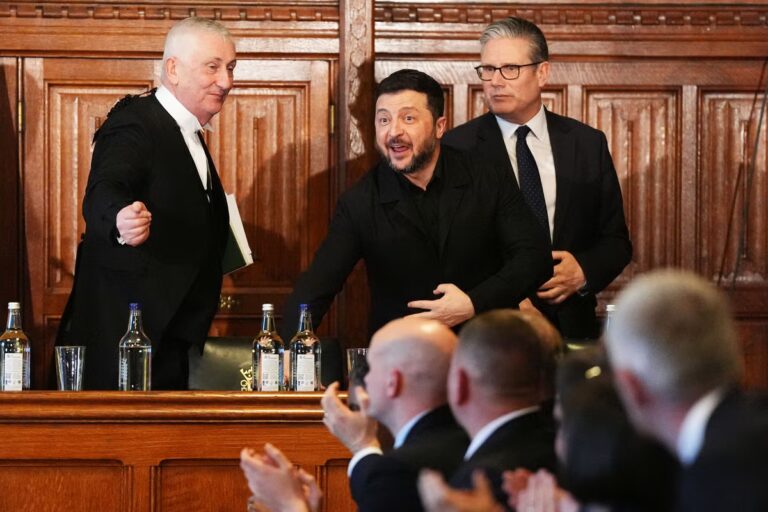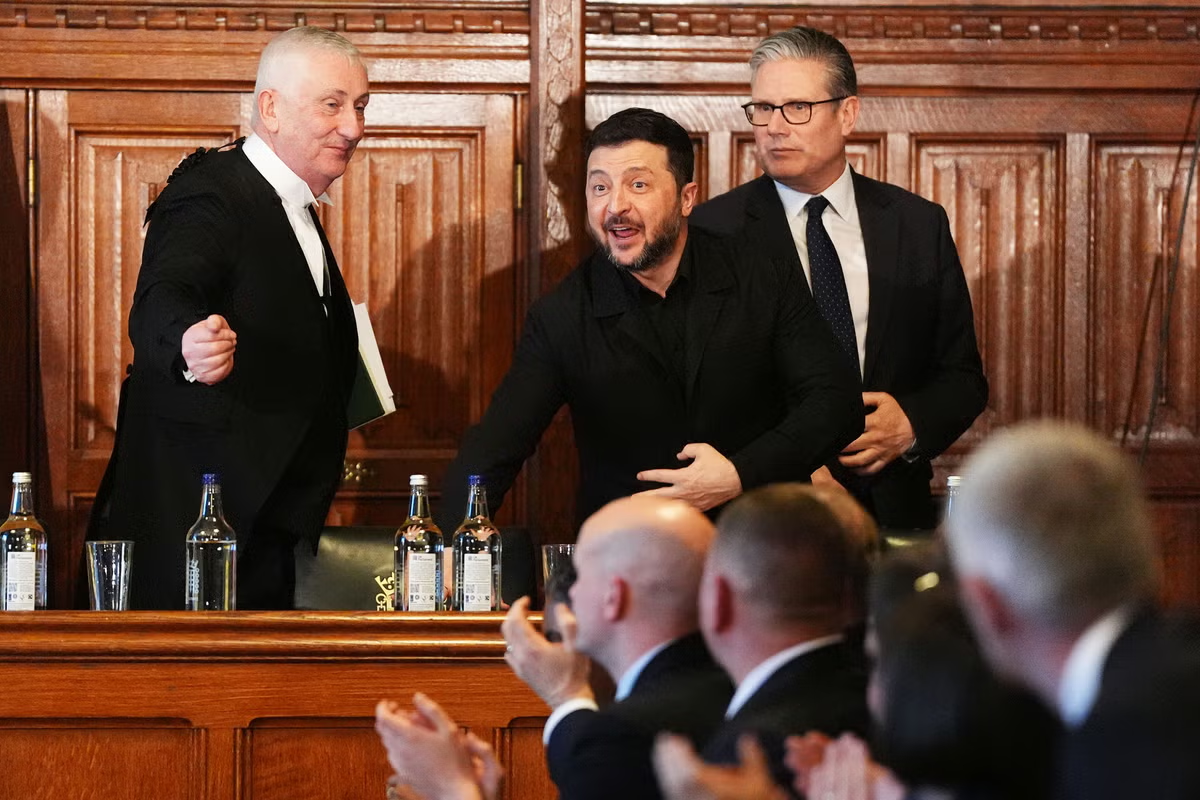
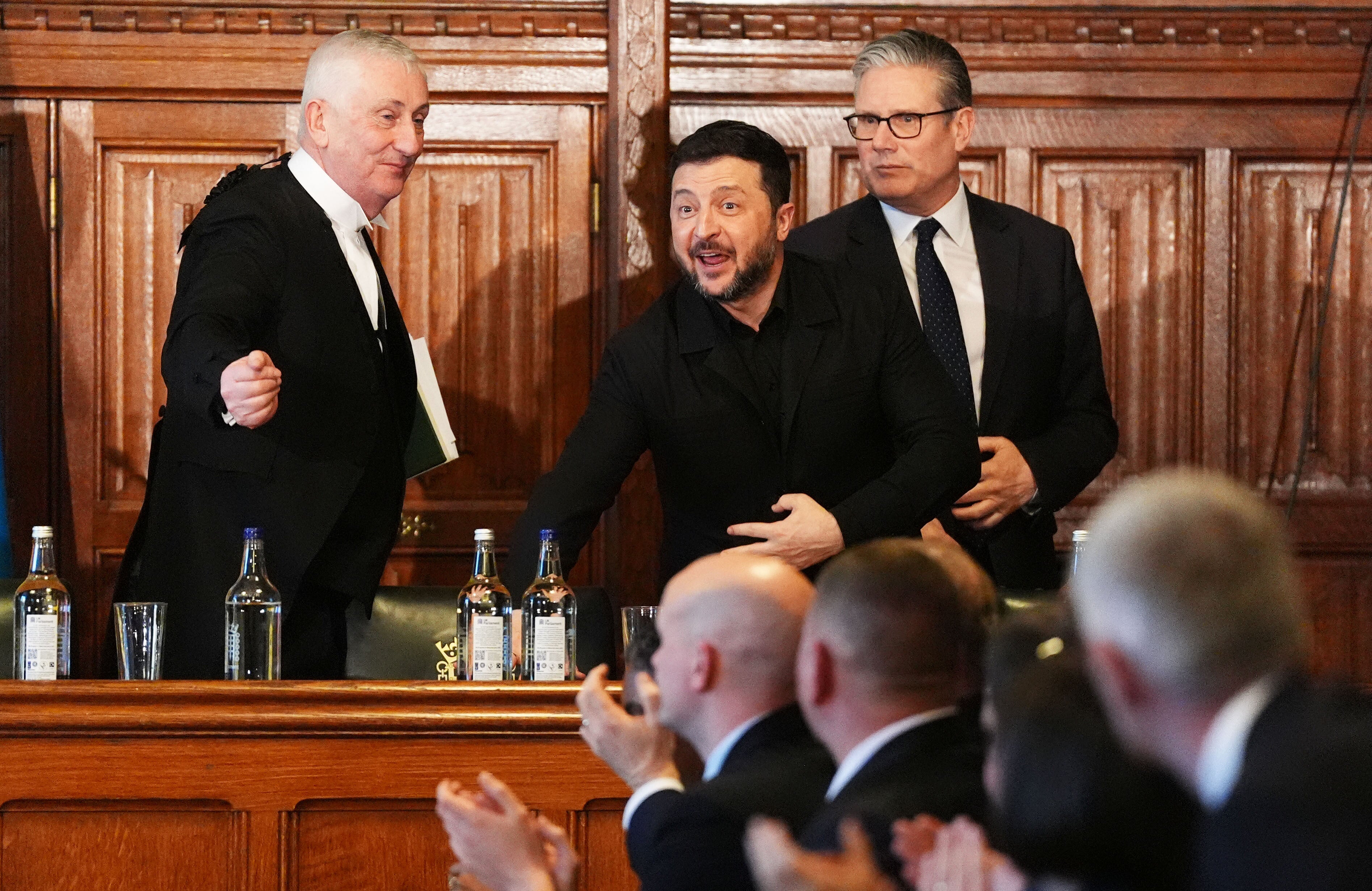
No longer the president of a victim nation, Volodymyr Zelensky came to London as a leader offering the West the tools for victory – building alliances while Donald Trump was simultaneously shattering them in Washington.
No longer simply pleading for help against the full-scale Russian war, Zelensky brought an iPad to Westminster to show real-time Ukrainian battlefield feeds. These enable his forces to shoot down “87-90 per cent” of drone and missile attacks, mostly with home-grown weapons.
Now many of his Ukrainian drone experts – 201 to be precise – are already operating in Bahrain, the UAE, Saudi Arabia and Qatar, with another 34 en route to Kuwait.
These Gulf nations are already benefiting from Kyiv’s wartime technology, specifically developed to deal with the missiles and drones fired at them from Iran.
His message was explicit: you need us just like we need you.
Top of his list for thanks was the UK which last year signed a 100-year cooperation agreement with Ukraine.
He gave an iPad with the top secret feed through which to view every drone kill, infantry manoeuvre, incoming missile strike and long range air attacks inside Russia to the King, before heading to parliament where he was greeted with a standing ovation.
Meanwhile, as he was on his way back from an audience with the monarch, America’s head of state was spreading bile and contempt for the United Kingdom and its prime minister, Starmer.
Not for the first time, the US president said he was “disappointed” by Starmer, who has refused to join the US-Israeli war in Iran and swiped at the UK’s immigration and energy policies.
He also accused the BBC of using AI in a documentary in which it has admitted to clumsy editing of one of Trump’s 6 January speeches shortly before his supporters launched an attack on the US Congress. The BBC did not use AI.
“I love Europe,” rambled Trump during a meeting with the Irish Taoiseach Micheal Martin. “I’ve spent a lot of time in Europe. It’s a different place. Bad things have happened here. Very bad things. And you better do something about immigration, and you better do something about energy.”
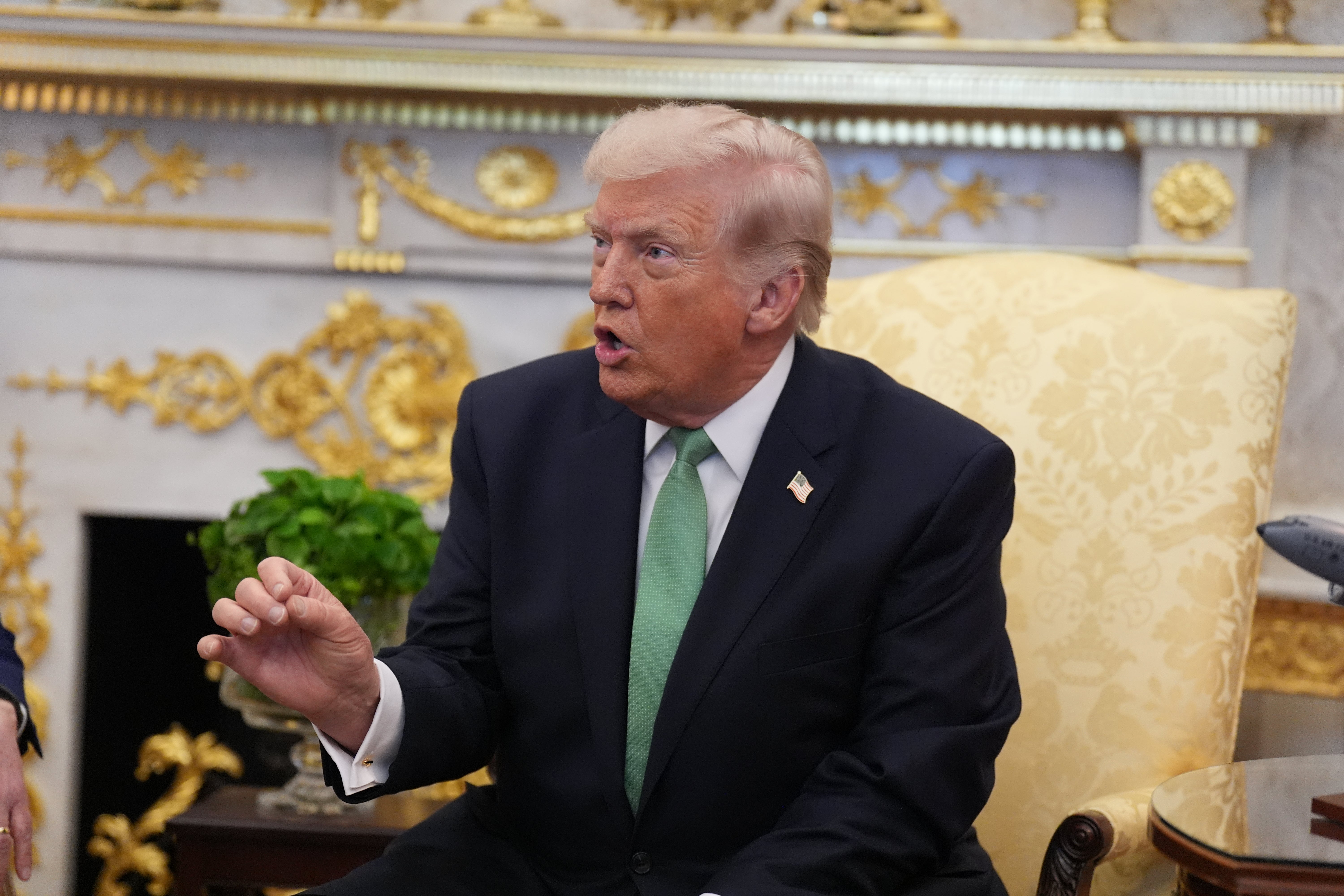
He repeated his criticism of Nato members taking no direct part in military action against Iran. And failed to acknowledge that many, including the UK, are in action defending Gulf nations against Iranian drone and missile attacks.
“I think Nato is making a very foolish mistake,” Trump went on. “Everyone agrees with us, but they don’t want to help. And we, you know, we as the United States have to remember that because we think it’s pretty shocking.”
As for whether he would retaliate against Nato allies for holding back, the US president said he had “nothing currently in mind”.
He is already seen as a mercurial and unreliable ally who has threatened to invade Canada and Greenland, a Danish territory. Both are in Nato.
He has also squeezed Nato members to buy US weapons for Ukraine and stopped all military aid to Kyiv which, from Nato’s perspective, is fighting on the alliance’s eastern flank against Russia, a threat to the rest of eastern Europe.
Trump has taken Russia’s side in so-called “peace talks” between Kyiv and the Kremlin.
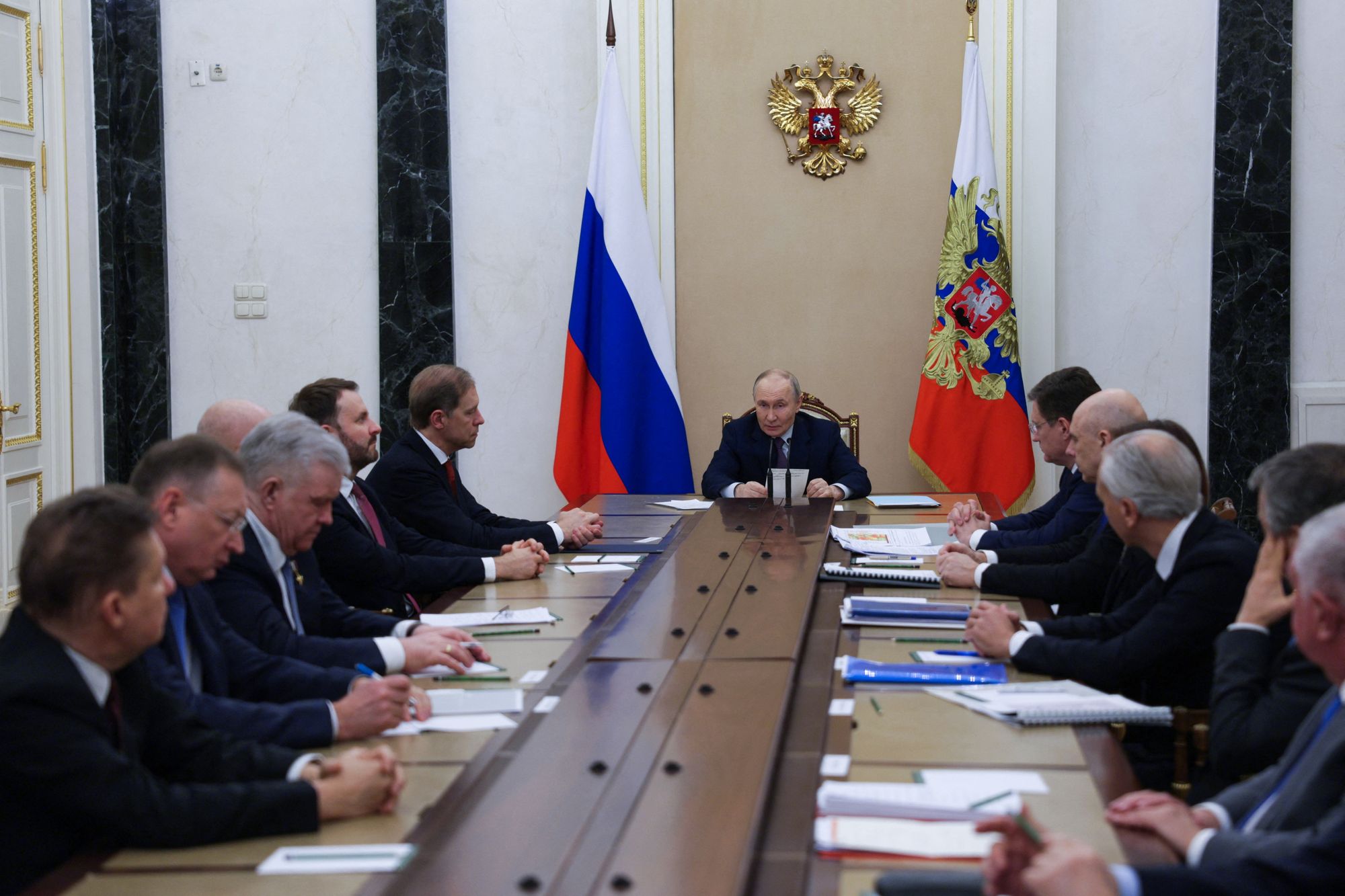
Vladimir Putin’s chief economic envoy, Kirill Dmitriev, has almost unlimited access to Trump’s envoy, Steve Witkoff, with whom he has been discussing future business deals in Russia.
In contrast, Zelensky offers a different picture: “It’s up to us to decide. And we are here in this great building of the British parliament, calm and safe, not in a shelter. On your way here, you saw tree branches over the streets, not protective nets against FPV drones.
“And all of us here worry a little about having fast mobile internet or wifi nearby. Not about whether strong mobile air defence teams are on duty close to us.
“This way of life, open space, normal streets, normal buildings, not underground, feels so simple, so familiar, as if it is, if it has always been there. It’s almost impossible to imagine it ending.
“But what guarantees that it will continue?” asked Ukraine’s president.
He then laid out how his country can help secure a future for its allies, describing it as a duty for the current generation of leaders.
“We must deliver real security, safety on the streets, safety at home, the protection of our culture and real respect for the rights and security of our people and national security proven by war.”
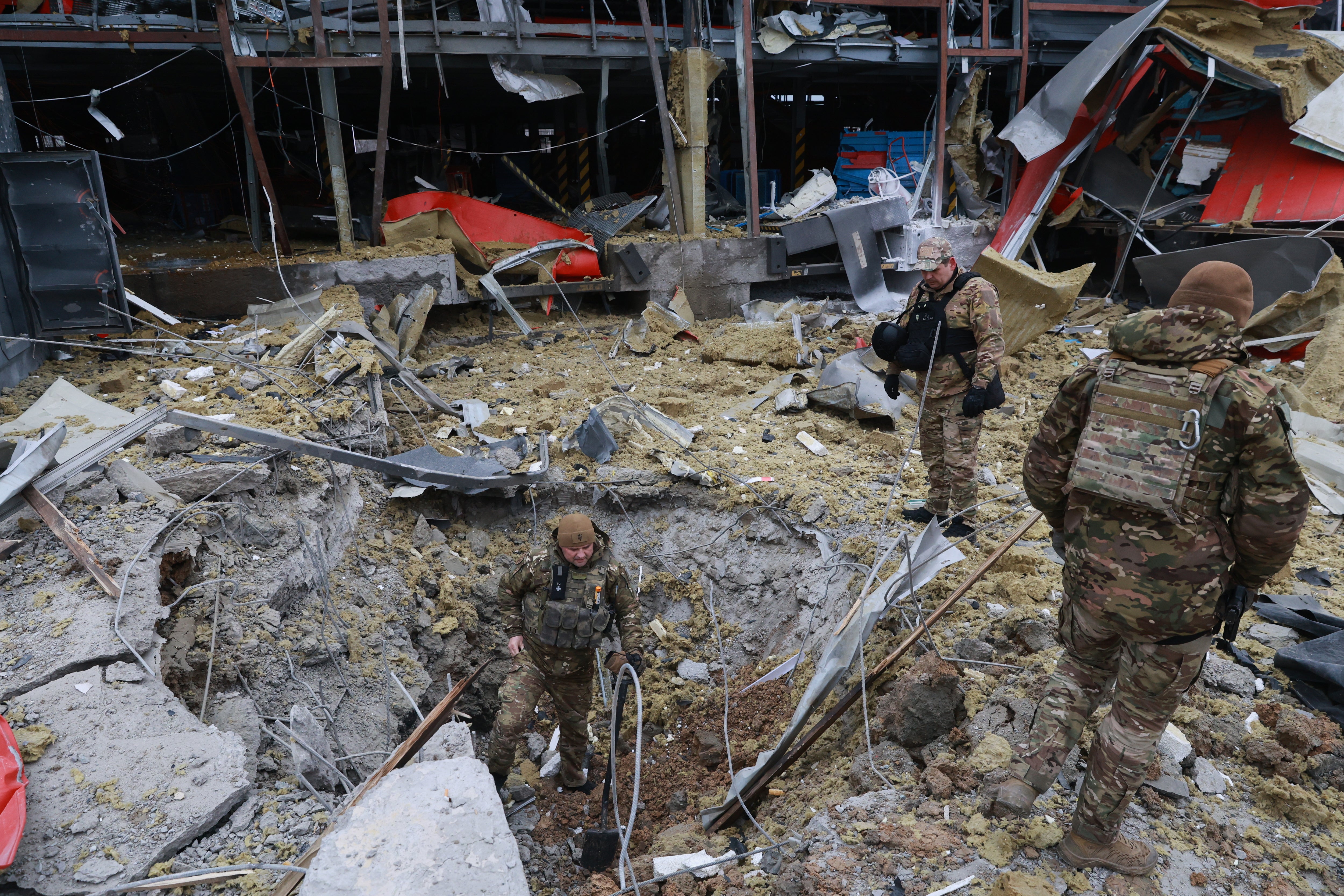
Trump has often said Ukraine matters little to the US and that America is separated from the European war by a big beautiful ocean.
Zelensky had an answer for that: “We do not believe we have the right to be indifferent, even if we are separated from human suffering or shared danger by an ocean.
“An ocean, however big and beautiful, or by anything else. Ballistic missiles can strike at thousands of kilometres. Drones can do the same. But if evil wins, the evolution of war will cross any distance to us.”
Ukraine, he said, wanted partnerships with Middle Eastern nations and Europe to continue to build its drone defences and to fund its anti-missile batteries, which use Patriot and THAAD missiles to shoot down ballistic weapons.
Trump has dismissed Ukraine’s offer of drone experts, but Zelensky insists Kyiv has much to contribute.
“If together with partners in the Middle East we build a system like Ukraine, they will be able to track attacks from Iran or from the Houthis in real time, analyse them, keep improving their defence, giving people critical infrastructure and trade routes real security.”
A statesman, giving real world solutions, while his US counterpart sulks.
About the Author