
After repeatedly threatening to pull out of the alliance over the last several months, Donald Trump’s administration now claims NATO “turned their backs” on the U.S. after its partners refused to join the president’s war in Iran.
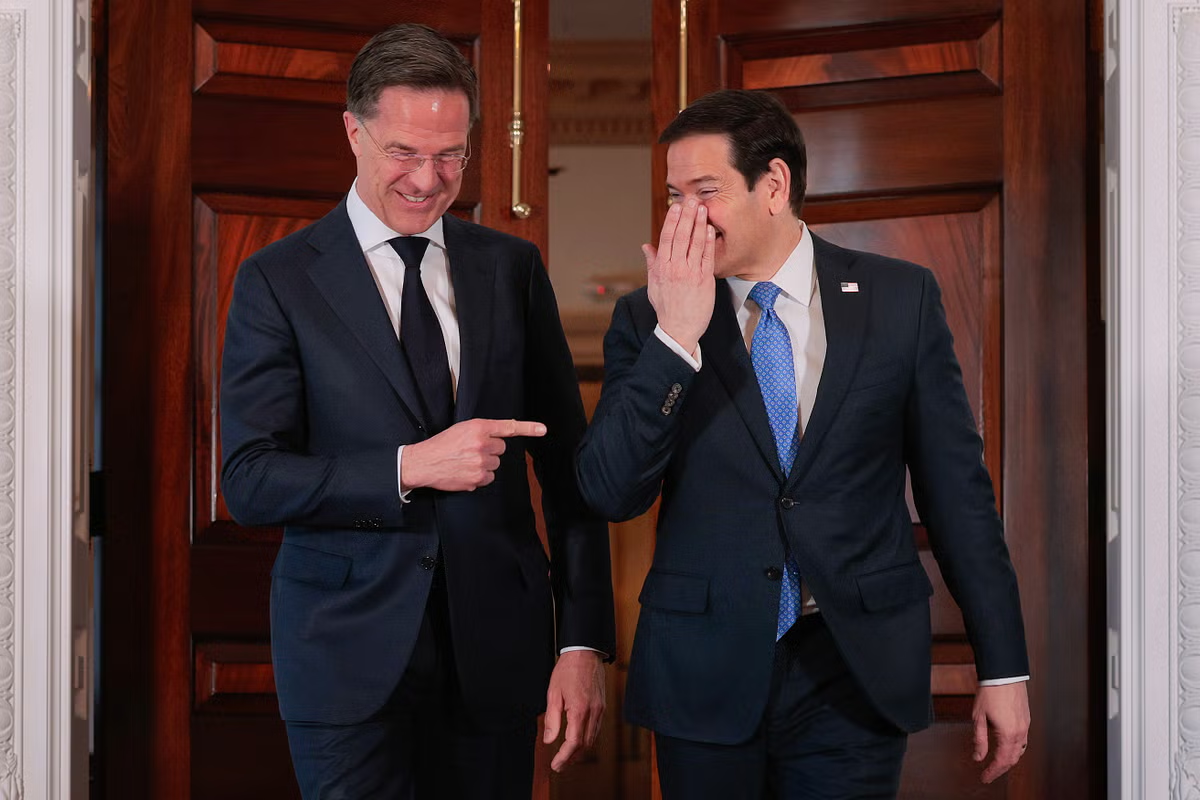
While the alliance contends with a possible future without the U.S., NATO’s secretary general Mark Rutte — who has spent a year fawning over Trump in an apparent attempt to diplomatically stroke the president’s ego — is tasked with keeping the president close.
Rutte, who referred to Trump as “daddy” and sent him a swooning text message that the president posted on Truth Social, mounted a charm offensive last year to maintain a frail alliance that Trump has hollowed out with calls to war and insults directed to European allies who dared criticize his actions.
Rutte is now caught between a president who threatens to abandon the alliance and NATO members who have clashed with his own public statements supporting the U.S.-Israeli campaign and public appeals for Americans to get behind their president.
“I’ve seen the polling, but I really hope the American people will be with him,” Rutte told CBS last month. “He is doing this to make the whole world safer.”
European allies are questioning whether Rutte’s approach is working, according to Bloomberg, citing people familiar with the matter who spoke anonymously to describe private conversations.
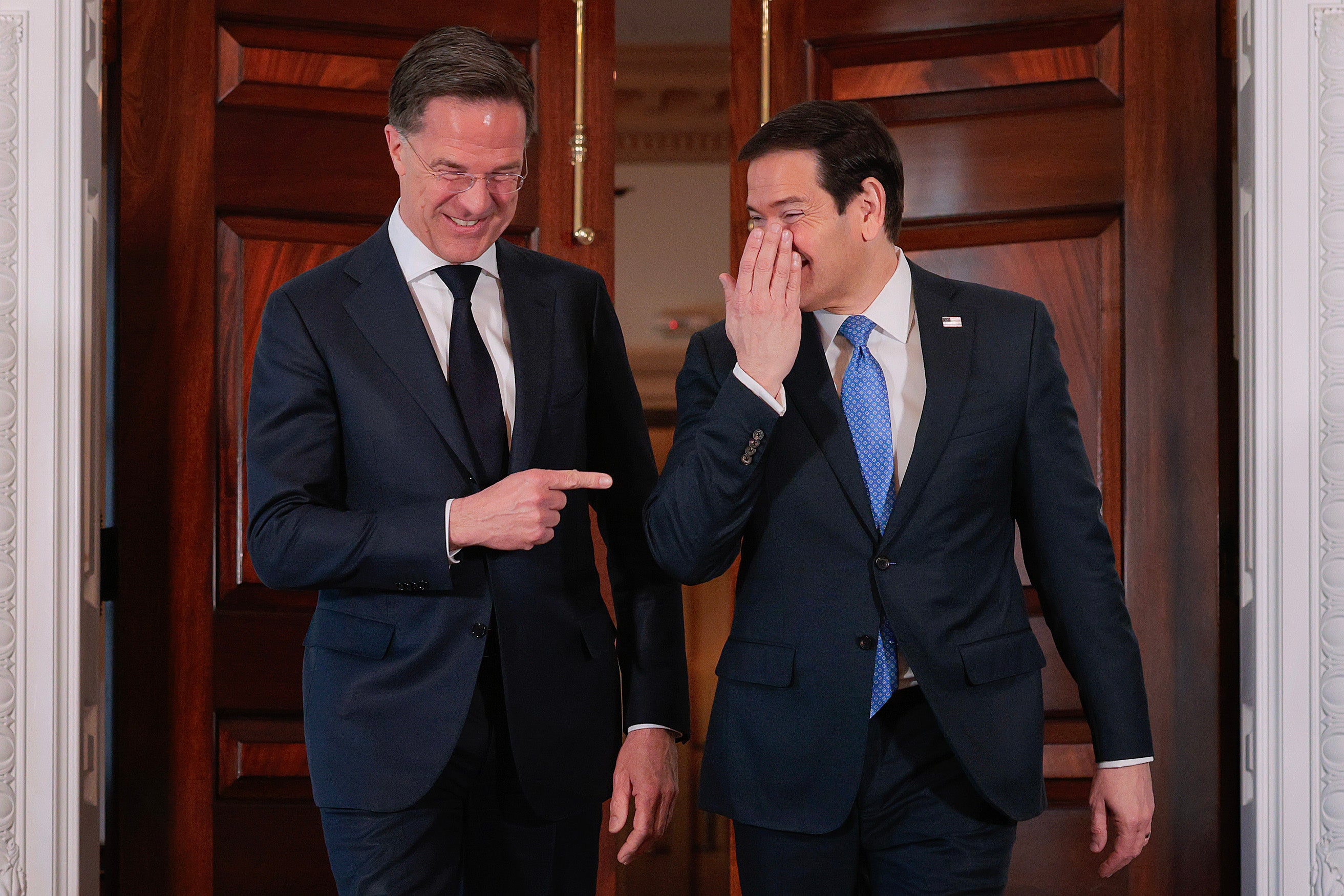
Despite his “Trump whisperer” reputation, Rutte hasn’t been able to rally Trump to Ukraine’s aid, negotiate a trade agenda that has shocked global markets, or stop a military campaign that has killed hundreds of Iranians while choking off fuel supplies.
Trump, meanwhile, threatened to send Iran “back to the stone ages” and promised to wipe out a “whole civilization” in a country of more than 90 million people.
Last week, following Trump’s address to the nation on the status of the war, France’s President Emmanuel Macron unloaded on Trump’s contradictory and violent rhetoric. “When we’re serious, we don’t say every day the opposite of what we said the day before,” he told reporters. “And, maybe, one shouldn’t speak every day.”
German Chancellor Friedrich Merz has repeatedly urged for diplomacy, while Germany’s president Frank-Walter Steinmeier was more blunt, calling the war a “disastrous mistake” that breaches international law.
After Trump announced plans for a two-week ceasefire hours after stating that a “whole civilization will die,” Spain’s Prime Minister Pedro Sánchez said his government “will not applaud those who set the world on fire just because they show up with a bucket.”
Before Trump’s Wednesday meeting with Rutte in Washington, D.C., White House press secretary Karoline Leavitt delivered a message on the president’s behalf about NATO: “They were tested, and they failed.”
“It’s quite sad that NATO turned their backs on the American people over the course of the last six weeks when it’s the American people who have been funding their defense,” Leavitt said.
The president “has discussed” U.S. withdrawal from the alliance, she said.
Europe — bracing for the possibility of a United States that refuses to defend its allies — is “exactly” what NATO’s enemies want to see, former NATO spokesperson Oana Lungescu told Bloomberg.
The financial and political blowback from a potential U.S. withdrawal would be devastating, leaving European leaders on the hook for more than $1 trillion in defense support on top of their already-climbing defense budgets, according to a study from the International Institute for Security Studies.
Congress in 2023 passed a law that prevents any U.S. president from withdrawing from the 32-member alliance, which was founded in the aftermath of World War II to counter threats from the Soviet Union.
At the core of the alliance is a mutual defense agreement that stipulates that an attack on one member is considered an attack on all. It has been invoked only once, in 2001, after the September 11 terror attacks in New York and Washington, D.C.
Twenty-five years later, that alliance is “broken,” according to Ivo Daalder, former U.S. ambassador to NATO under Barack Obama.
Europe’s distance from the Iran war is a “reflection of the fact that NATO is deeply damaged,” he told Germany’s Deutsche Welle.
“It reinforces the fundamental reality that Europe no longer trusts the United States, believes the United States is an unreliable ally, and therefore is no longer willing to participate in these kind of operations,” he added. “That is why this is the worst crisis of NATO.”
About the Author