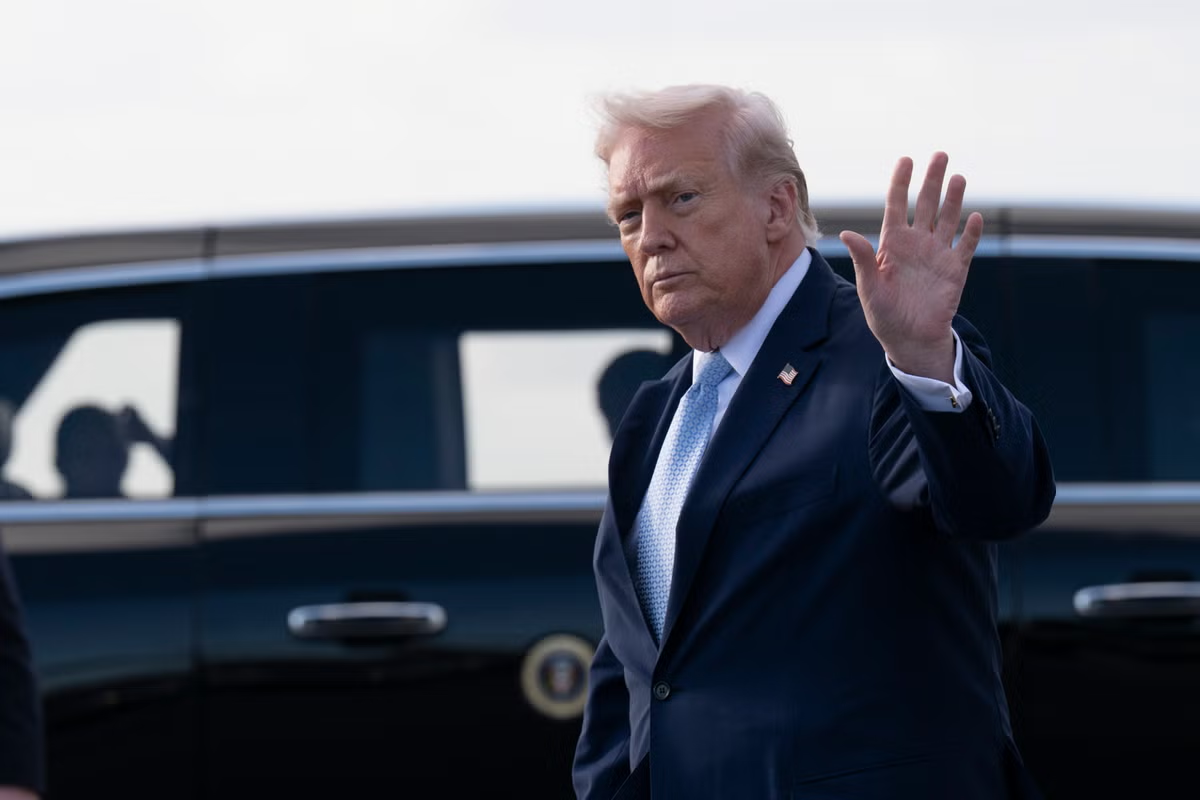
President Donald Trump on Monday backed off his threat to have U.S. warplanes strike Iranian power plants, citing what he described as “productive conversations” with Tehran.
In a post on Truth Social, Trump said he was “please [sic] to report” that the U.S. and Iran had “very good and productive conversations” about a “complete and total resolution of our hostilities in the Middle East” over the last two days.
“Based on the tenor and tone of these in depth, detailed, and constructive conversations, witch [sic] will continue throughout the week, I have instructed the Department of War to postpone any and all military strikes against Iranian power plants and energy infrastructure for a five day period,” he said.
Trump added that the five-day pause on the planned airstrikes was “subject to the success of the ongoing meetings and discussions.”
It was not immediately clear what sort of talks the president was referring to.
The president had suggested last week that Tehran had been ready to participate in negotiations with the U.S., but Iranian Foreign Minister Abbas Araghchi denied any interest in negotiations in an interview with Time in which he said Tehran was “not seeking a cease-fire because we do not want this scenario to be repeated again after some time.”
He also said at the time that the U.S. “must be held accountable” for having started the war, with Washington bearing responsibility for “all the consequences of this war, human and financial, whether for Iran, for the region, or for the entire world.”
Trump’s announcement came with less than a day remaining on a 48-hour deadline he’d set for Tehran to “fully open” the Strait of Hormuz to commercial shipping “without threat.”
In a Truth Social post issued Saturday evening after he’d enjoyed a round of golf during a weekend visit to his Palm Beach, Florida home, Trump threatened to “hit and obliterate” Iranian power plants, “starting with the biggest one first” if Tehran did not stand down from threats against commercial shipping.
The president has been increasingly irate in recent days over Iran’s effective closure of the strait, a key choke point through which approximately one fifth of the world’s oil passes each year.
Oil prices have surged since the start of the U.S.-Israeli war due to the ongoing bottleneck, though Iran has said it would permit ships not affiliated with the U.S. or Israel to pass.
More follows…
About the Author