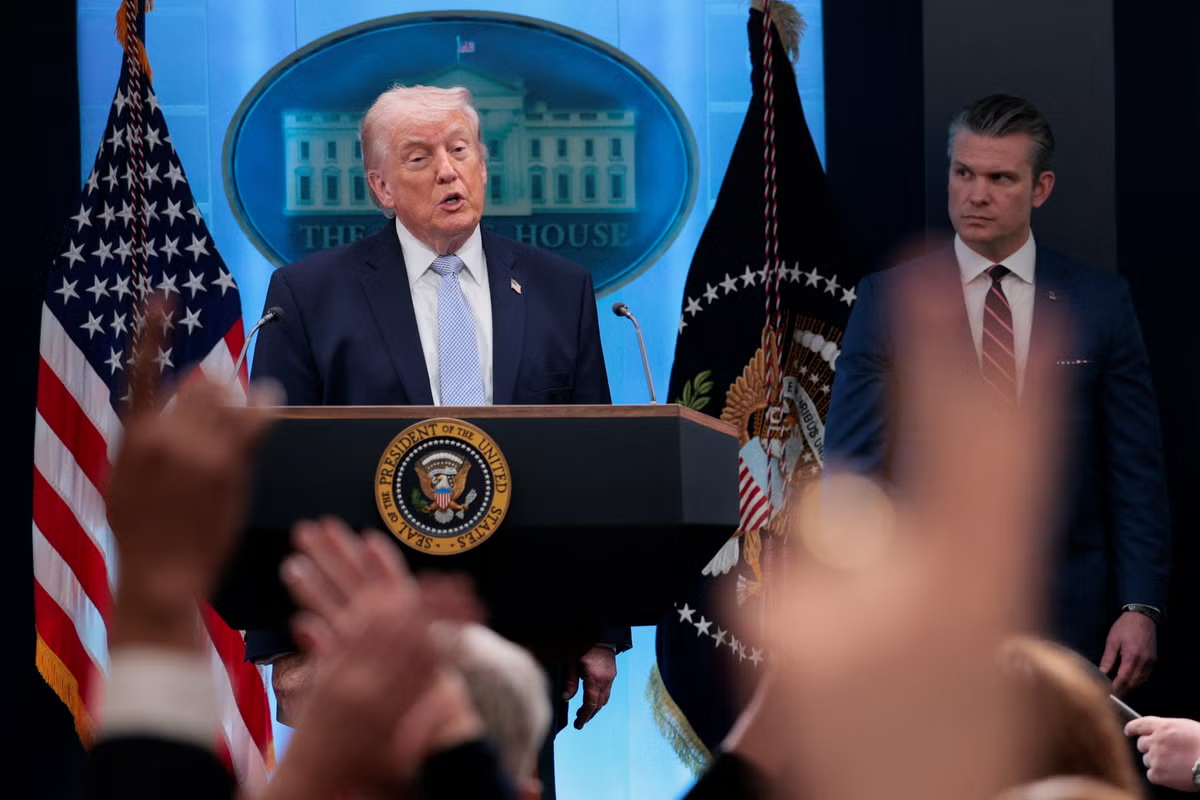
What was meant to be a presidential victory lap to mark the successful rescue of a downed American airman over the weekend became yet another stage for President Donald Trump to threaten blatant war crimes against Iran, upending nearly a century of American adherence to international treaties governing armed conflict between countries.
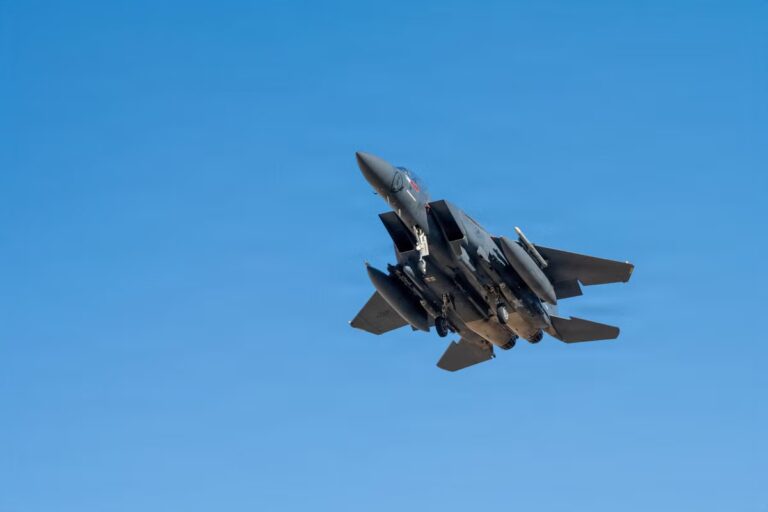
He was not yet five minutes into a stem-winding set of remarks on the Iran War from inside the White House briefing room on Monday when he inexplicably threatened journalists with prison terms for reporting last week that an American F-15 fighter had been brought down by Iranian fire, necessitating a high-stakes rescue mission to bring back one of the aircraft’s two pilots who was at large in enemy territory.
“We’re looking very hard to find that leaker … they basically said that we have one and there’s somebody missing,” said Trump, who claimed that Iran hadn’t known there was a downed pilot to search for until being made aware by reporting in the American press.
There was just one problem — it wasn’t the American press who broke the story. It was an Israeli journalist, whose initial report of the crashed fighter cited Iranian state media sources that had posted photographs of the wreckage and an empty ejection seat.
Trump’s press conference got weirder from there.
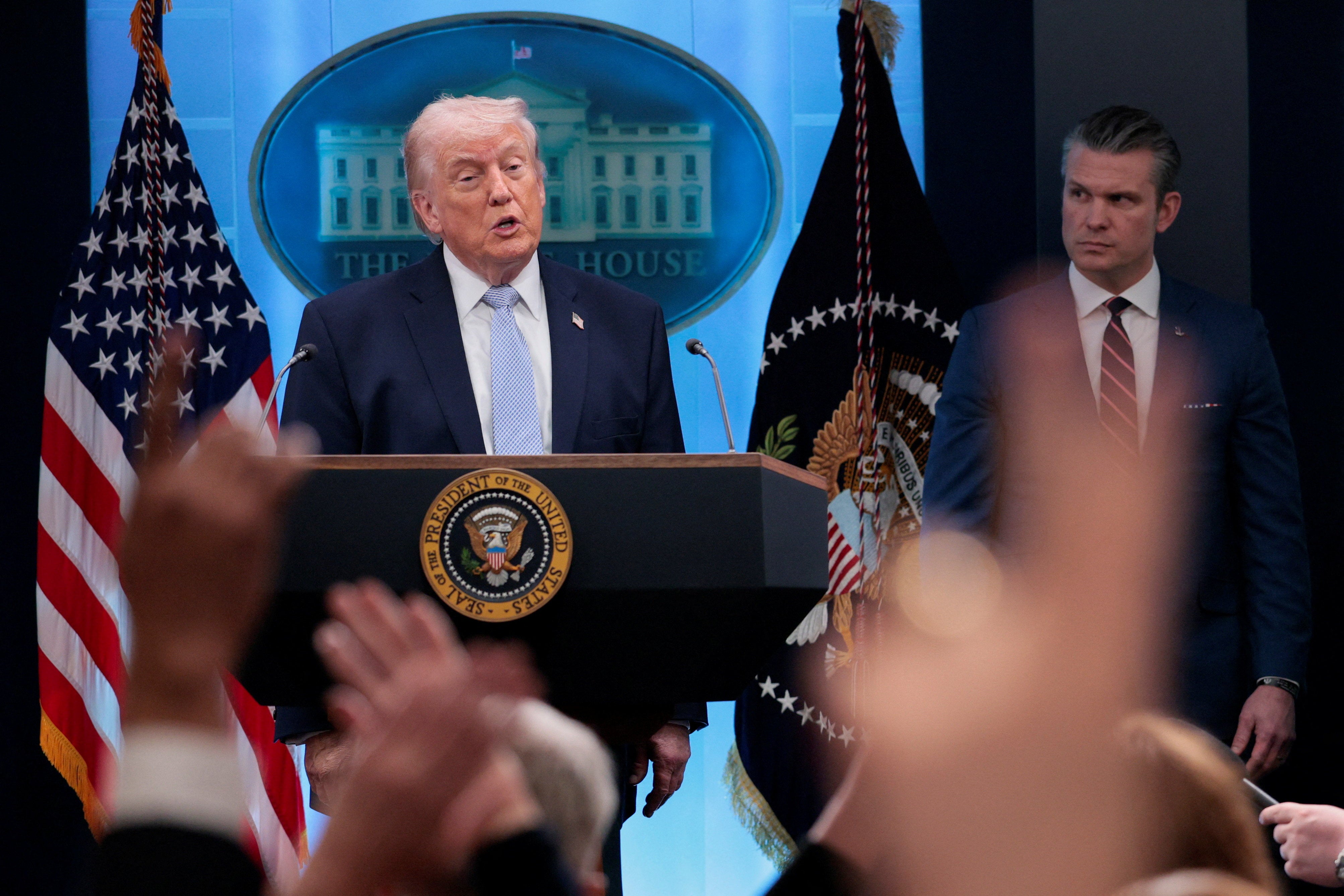
As the president ceded the floor to CIA Director John Ratcliffe and Secretary of Defense Pete Hegseth, both went out of their way to praise him for having ordered the very rescue mission which American forces train for regularly as if it were an extraordinary task for the U.S. to expend efforts to recover pilots whose training cost millions of dollars and prevent their capture.
Hegseth went even further, calling the threat to the downed pilot from Iran “impotent” and claiming that whatever airstrikes are being sent downrange into Iran today is the “largest volume” of munitions dropped on that country since the war began.
It’s a claim he’s made numerous times before from the Pentagon briefing room during one of his rare appearances there.
Eventually, Trump returned to the center of everyone’s attention as he began taking questions, including one query from a reporter who asked him to elaborate on comments he’d made earlier in the day when he claimed Iranians want him to keep dropping bombs on their neighborhoods to ultimately weaken and collapse the theocratic regime that has controlled the country since 1979.
“They would be willing to suffer that in order to have freedom,” he said as he claimed that the U.S. has intercepted communications from within Iran urging American forces to keep going.
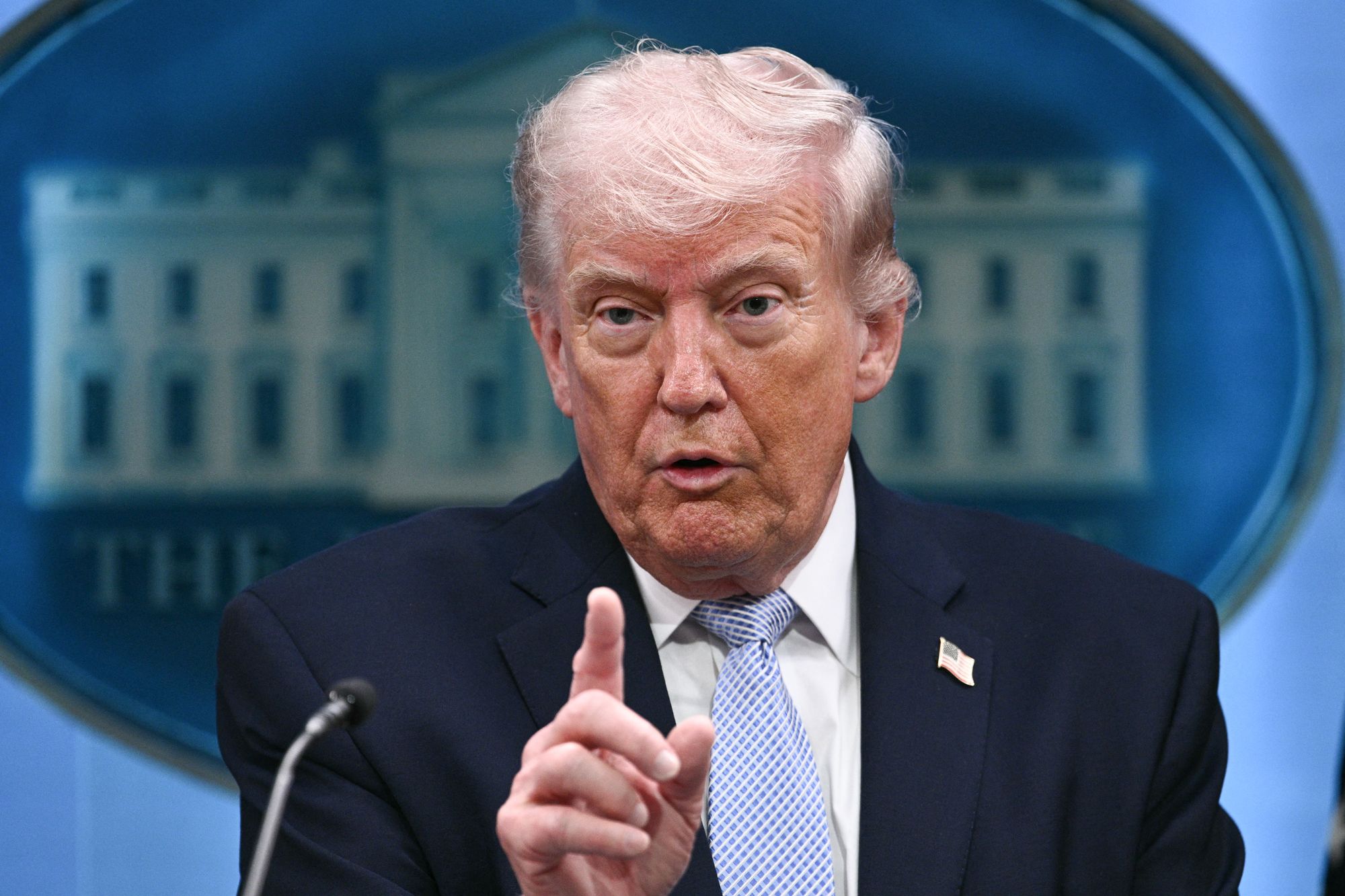
The president’s comments come just over a day before a self-imposed 8 p.m. Tuesday deadline, after which Trump has threatened to launch wholesale attacks on civilian infrastructure throughout Iran, including bridges, power plants and desalinization plants that supply the country’s population with fresh water.
He reiterated those threats from the briefing room podium, telling reporters: “After that, they’re gonna have no bridges, they’re gonna have no power plants,” he said. “Stone ages.”
But when pressed specifically about the fact that attacks on civilian targets would violate law-of-war agreements authored and ratified by the United States after World War II, Trump was dismissive and attacked the reporter who asked the question for having the temerity to be employed by The New York Times, citing long-held grievances over the paper’s election coverage.
“I hope I don’t have to do it,” he said, moments after responding “no” when asked about whether he was at all concerned about violating longstanding prohibitions against war crimes.
He also suggested that the U.S. could start charging “tolls” for shipping through the Strait of Hormuz, citing his contention that the U.S. had “won” the ongoing war.
His bizarre claims came just after Iranian officials said they’d rejected a U.S. ceasefire proposal even as Tehran reviews a Pakistani-authored plan for an immediate pause in hostilities sent ahead of Trump’s deadline.
Esmaeil Baghaei, a spokesperson for Iran’s foreign ministry, said Iran had formulated its positions and demands in response to the proposals, adding that negotiations were “incompatible with ultimatums and threats to commit war crimes”.
“Iran does not hesitate to clearly express what it considers its legitimate demands and doing so should not be interpreted as a sign of compromise, but rather as a reflection of its confidence in defending its positions,” Baghaei said in a press conference earlier in the day.
He added that that would release its response “in due time.”
About the Author