Now that Donald Trump has fired Pam Bondi, the search for a new attorney general will begin – and the president could be in for a fight over his pick.
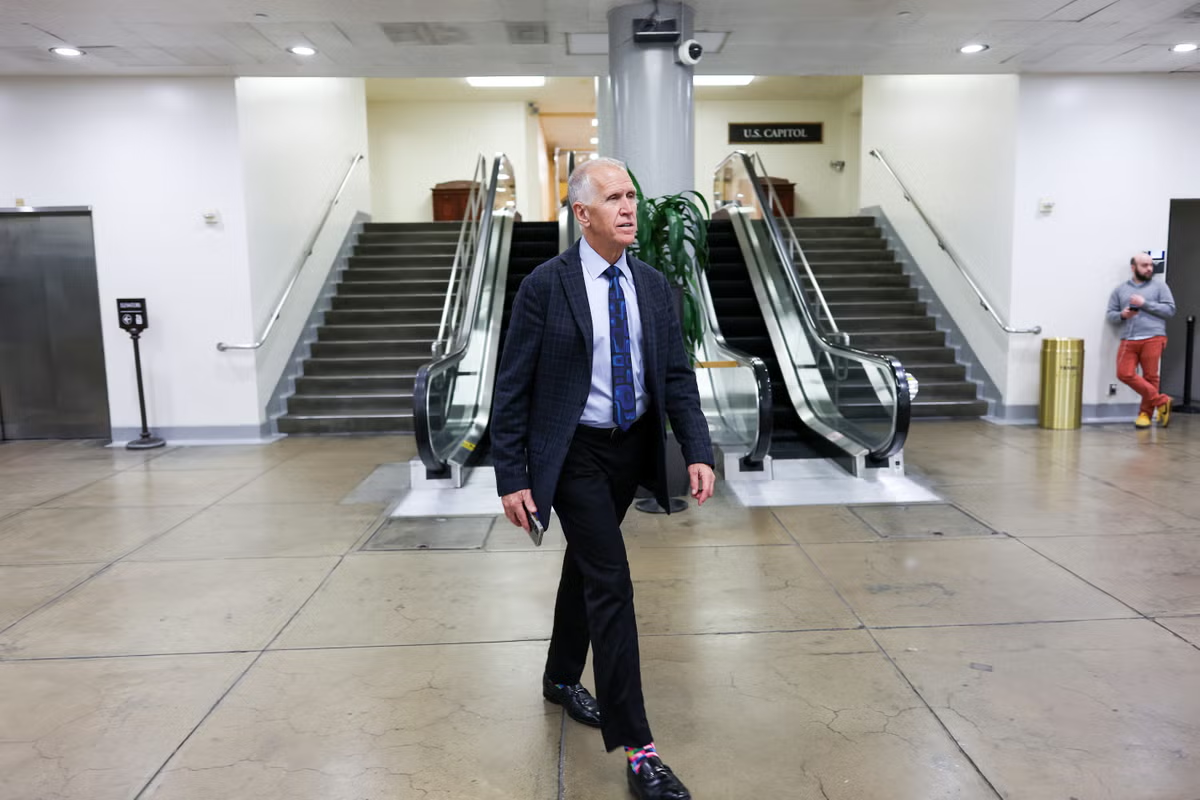
Trump will need to act quickly, given that the midterm elections are around the corner and Democrats look increasingly likely to flip the Senate. That will give them a majority and the ability to stop extreme nominees. Until then, Trump’s biggest challenge to nominate a new top cop for the Department of Justice might not come from Senate Democrats, but rather from Sen. Thom Tillis, the retiring Republican from North Carolina, who has been on a tear against many members of the Trump administration before he leaves at the end of the year.
As noted in a profile of Tillis last month, he’s tried to thread the needle of not directly criticizing the president, while also criticizing the actions of his closest advisers. As a member of the Senate Judiciary Committee, which is split 12-10, he has a unique ability to veto a potential attorney general in committee.
Last week on CNN, Tillis laid out his red line for an attorney general.
“The threshold for somebody following Pam Bondi ends the moment I hear they said one thing that excused the events of January 6,” he told host Katilan Collins. “I’ve been very clear on that. So, I hope whoever they have in mind to follow General Bondi is very clear-eyed on my position on January 6th.”
And Tillis has shown he’s willing to wield his considerable leverage. When Trump nominated Ed Martin to be the U.S. attorney for the District of Columbia, Tillis opposed him because of Martin’s push for lighter sentences for January 6 defendants. That ultimately sealed Martin’s fate and caused Trump to pull his nomination.
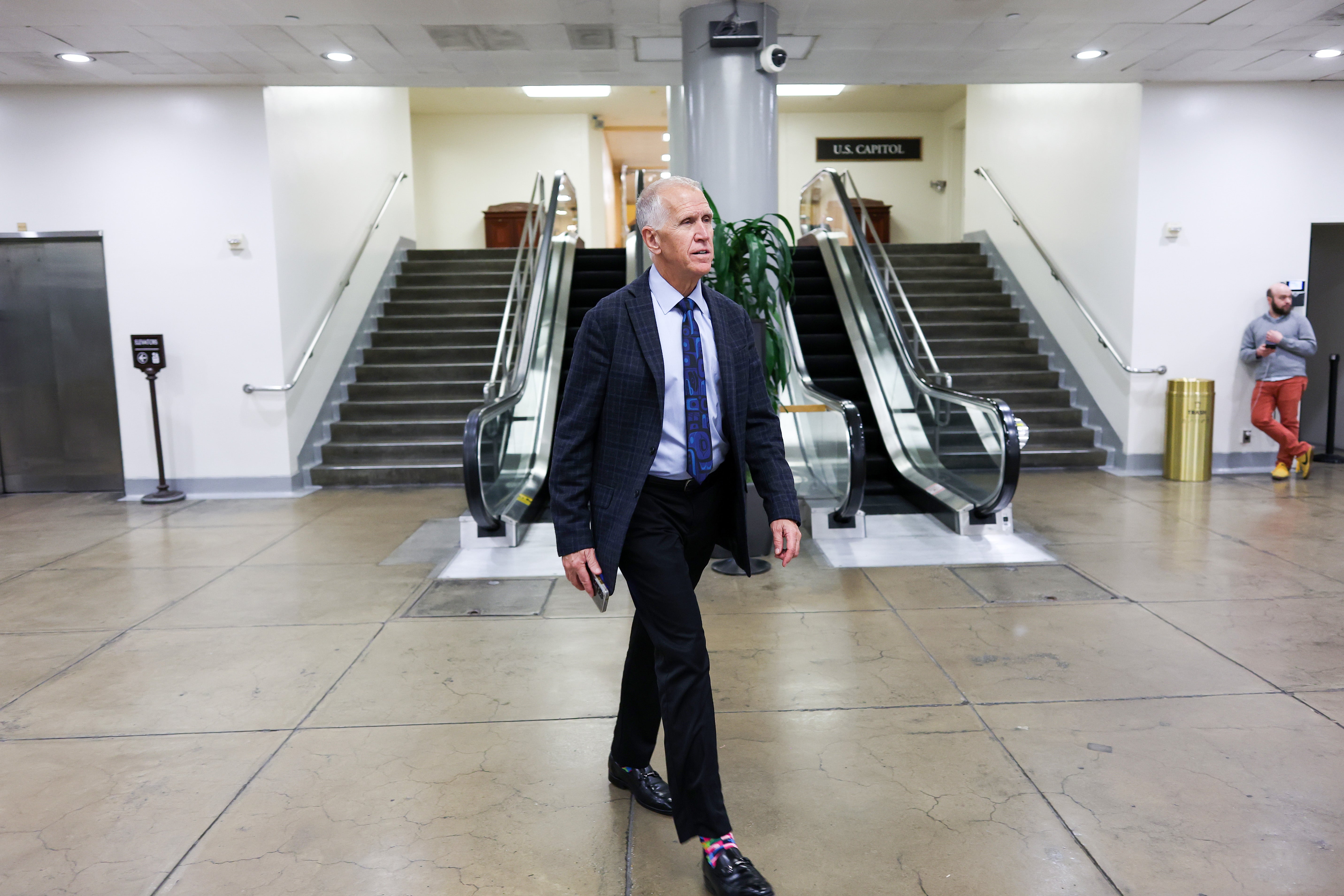
Along with the Judiciary Committee, Tillis sits on the Senate Banking Committee, giving him the power to block one of Trump’s most consequential decisions: who to nominate to replace Jerome Powell as chairman of the Federal Reserve.
But as the Justice Department has investigated Powell, Tillis has pledged he would not support any nominee for the central bank. Despite his praise for Trump’s choice to succeed Powell, Kevin Warsh, he’s continued to say he would oppose Warsh’s nomination, leaving it in limbo.
Tillis was not always this way. Before he announced last year that he would not seek re-election, he played coy when Trump nominated Matt Gaetz to be attorney general, saying it would be a “popcorn-eating confirmation.” He shocked many when he voted in favor of Pete Hegseth as Secretary of Defense.
He also voted to confirm Robert F. Kennedy Jr. to be Health and Human Services Secretary and Tulsi Gabbard to be Director of National Intelligence. He shepherded Kash Patel’s nomination to be FBI Director through the Judiciary Committee.
That all came when Tillis was still weighing whether to run again. He faced a double-bind considering he likely would face a primary challenger if he did not toe the line with Trump, but given North Carolina’s down-the-middle nature, he risked a tough general election challenge against a Democrat.

But, to borrow from Janis Joplin, freedom’s just another word for nothing left to lose. And now, oftentimes, Tillis serves a weathervane for where the rest of the Republican conference might be, but they are simply too afraid to voice their opinions.
Even before an Immigration and Customs Enforcement officer shot Renee Good in Minneapolis, Tillis had staged a block on Homeland Security nominees because of Kristi Noem’s refusal to testify before the Judiciary Committee.
After Customs and Border Protection Officials shot and killed Alex Pretti, he and Sen. Lisa Murkowski, another occasional Trump critic, called for Noem to resign, which infuriated Trump.
When Noem finally testified before the Judiciary Committee, he openly criticized her for her stewardship of Homeland Security and brought up her shooting her dog, Cricket. A few days later, Noem was out of a job.
It’s not clear how Tillis will scrutinize a potential attorney general nominee. And he’s not an automatic “no” on nominees, since he voted to confirm Noem’s successor Markwayne Mullin.
But it reveals that Trump is in a very unique spot than he was in 2025. Back then, he could wield his 2024 victory as an overwhelming mandate to steamroll any potential objections to his nominees.
Now, even some Republicans feel like they have room for dissent – and Tillis is happy to be the megaphone.
About the Author