In the immediate lead-up to the first bombs being dropped on Iran last month, President Donald Trump met with a small group of advisers to discuss options. He made it clear that he wanted to launch a military campaign alongside Israel, multiple sources familiar with the matter told CNN.
It was at that moment, before an operation, that prior defense secretaries would typically stress to the president that there were potential downsides to such a move. In the case of Iran strikes, those would include the likely economic fallout should Tehran retaliate by closing the Strait of Hormuz and the limits of a military air campaign when it comes to destroying the country’s stockpile of highly enriched uranium or in fomenting regime change.
But Defense Secretary Pete Hegseth not only validated the president’s idea to move forward, he also downplayed the inherent risks of the conflict spiraling out of control, according to three sources familiar with the matter. Nobody in the room during that critical meeting emphasized the potential risks of starting the war.
Sources insisted that Hegseth didn’t push the war on Trump, but once it was clear what the president was going to decide, Hegseth served as one of the biggest cheerleaders.
“Once the president made the decision, [Hegseth] was the No. 1 supporter of it, as he should be,” one senior White House official told CNN. “He’s still responsible for making sure it’s a success.”
Both behind the scenes and in front of cameras Hegseth has been unerringly enthusiastic about the execution of the war. Most of the military planning and strategy discussed in meetings with Trump come from Chairman of the Joint Chiefs of Staff Gen. Dan Caine, according to the sources, with Hegseth largely vocalizing his confidence in military might.
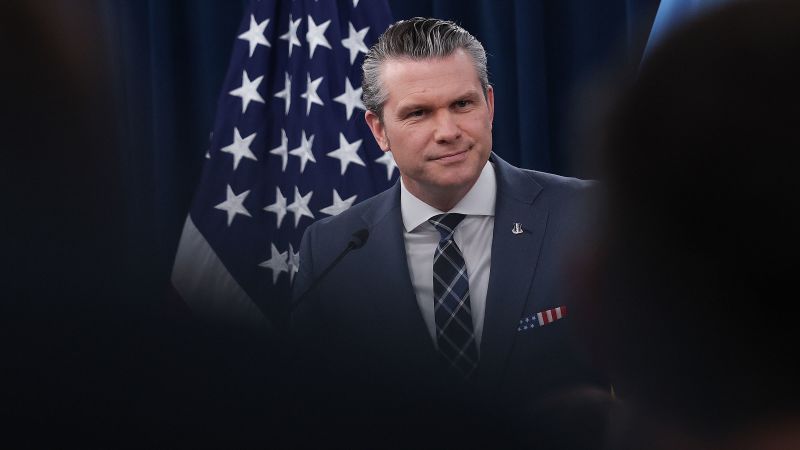
Trump has turned to Hegseth to carry that positive assessment to the public, serving as one of the faces of the campaign in a series of press briefings where the defense secretary has leaned into his combative posture with reporters while repeatedly declaring military successes. He’s criticized coverage that suggests anything has caught military planners by surprise or that has pointed to the costs of the campaign, going so far as to argue the coverage of service members killed in action was primarily for the purpose of making “the president look bad.”
One month into the war, multiple sources tell CNN that Hegseth’s most critical role during the conflict has been to effectively serve in the job that Trump hired him to do: be the face of the Pentagon.
“If CNN is writing a story about Secretary Hegseth being a cheerleader for the US military — then absolutely yes. And President Trump is equally as proud to serve as commander in chief,” White House press secretary Karoline Leavitt told CNN.
The Pentagon did not reply to a request for comment for this story.
Trump chose Hegseth as secretary of defense in part because of his looks and his ability to comport himself on television, multiple sources told CNN at the time. Many people in Trump’s orbit were caught by surprise by his decision, particularly given Hegseth’s lack of experience in military leadership, the sources said.
When Trump decided to launch combat operations, the White House wanted the Pentagon to serve as the administration’s primary communicator — a decision based, in part, on Hegseth’s credentials as a former Fox News anchor and his typically bombastic demeanor while defending the president’s actions. Hegseth has remained very involved from a military perspective — along with Caine — but has been less vocal than others in advocating for policy, another source told CNN.
“The president wants Pete to be who he is, which is his combative, patriotic and outspoken nature,” a senior White House official told CNN. “The president appreciates that about him and wants him to keep doing that.”
The staunchly loyal former television host standing alongside Caine at a series of briefings, telling the story of the war to American taxpayers, was a consistent theme of the war’s first four weeks. During those briefings he has attacked press outlets, touted military progress in destroying Iran’s military hardware, and reference his Christian faith including offering prayer.
The two men have dramatically different styles; while Hegseth is bombastic, Caine is reserved.
“They’ve done those briefings together, which we felt have been very good for feeding the narrative and getting the facts out on military operations,” a White House official said of the briefings.
But ultimately, justifying the conflict has proved to be an increasingly difficult task, according to two sources familiar.
One month into the war, the US military campaign is at a critical crossroads. Iran has effectively shut off the Strait of Hormuz, and Trump faces a rapidly shrinking window before global energy markets reach a “crisis” level, according to a senior oil shipping broker. Trump continues to weigh the use of ground troops, either to pressure the Iranian regime or to take control of Iran’s highly enriched uranium, despite the risk of a large number of US casualties and the potential of drawing the US into another long-term war in the Middle East. Diplomatic talks to find an end to military operations appear to be in their infancy.


Relatively speaking, acting as the primary public-facing messenger for a war with Iran has been a boon for Hegseth — who multiple sources previously told CNN had been relegated to the “back bench” of Trump’s Cabinet at times.
Since the start of the conflict, Hegseth has held more press briefings at the Pentagon than he had previously during his entire tenure, largely doing what he was hired for: performing for an audience of one.
It has helped bolster Hegseth’s standing, as his tenure has included several self-inflicted missteps, such as his use of Signal to discuss war plans, that have created persistent headaches for the White House, multiple US officials said.
That turmoil has contributed to what multiple sources described as Hegseth’s evolution from a staunch critic of foreign wars to promoter of the Iran campaign — peaking in the weeks before US bombs started falling on Iranian targets.
“He’s very trigger happy,” one source familiar with Hegseth’s current mindset told CNN, adding that he believes “blowing sh*t up” is the best way for him to keep his job.
The senior White House official pushed back on the notion that Hegseth would be concerned about his job.
“The president is very pleased with him, and was before the Iran situation,” the source said.
Trump himself has suggested that Hegseth has been keen on continuing the Iran war.
“You know, the only two people that were quite disappointed, I don’t want to say this, but I have to,” Trump said during an event in the Oval Office on March 24. “I said, ‘Pete and Gen. Razin’ Caine, I think this thing’s going to be settled very soon.’ They go, ‘Oh, that’s too bad, right?’ Pete didn’t want it to be settled.”

The self-assured style that Hegseth has taken with the press and in meetings with Trump is different from how he’s approached lawmakers.
During classified briefings on Capitol Hill about the war, Hegseth has largely avoided deviating from what multiple sources, including Republicans and Democrats, described as a prepared script. Other top administration officials who have briefed lawmakers alongside Hegseth — including Secretary of State Marco Rubio and CIA Director John Ratcliffe — have more directly addressed questions from lawmakers about the conflict and the administration’s intentions and objectives.
In his public press briefings, Hegseth has largely declined to discuss details of war plans, citing operational security needs, and has dismissed questions about long-term strategy. But he has been consistent with delivering a message Trump himself has repeated about successes despite press coverage pointing to potential problems.
“To the patriotic members of the press, nobody can deliver perfection in wartime,” he said March 19. “This building knows that more than anyone, but report the reality. We’re winning decisively and on our terms.”
About the Author