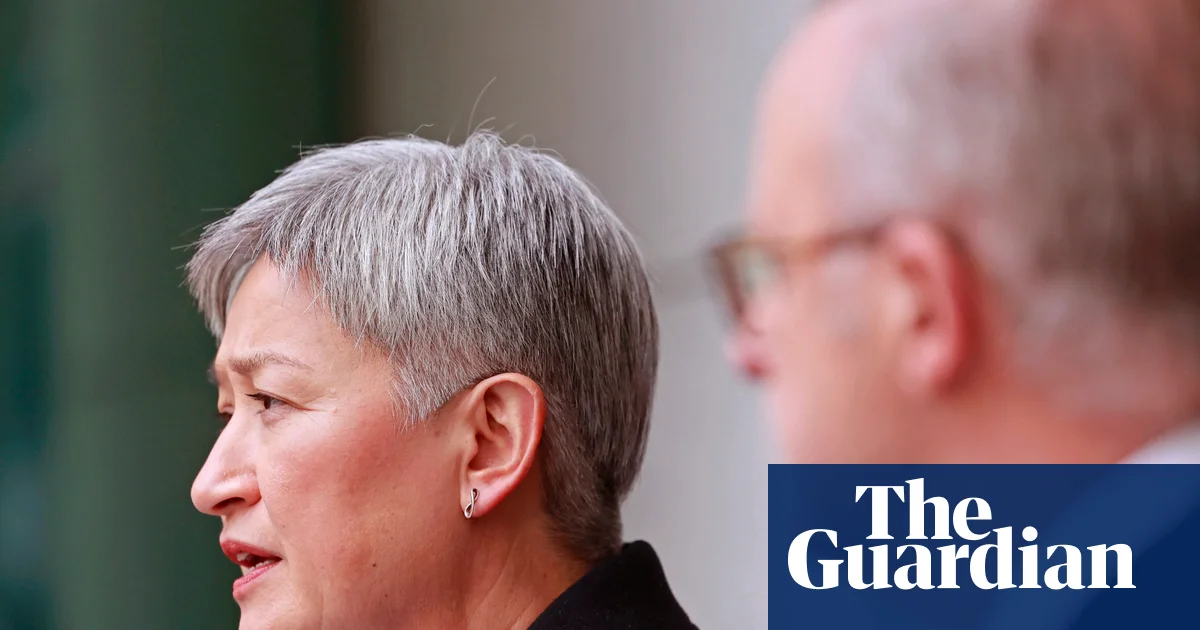
Penny Wong will represent Australia at an international summit on efforts to reopen the strait of Hormuz, with UK prime minister, Keir Starmer, promising to explore “all viable diplomatic and political measures” to end the blockade of oil shipments.
Starmer will host the talks, set to be attended by 35 nations, from about 10pm Thursday night, AEDT.
A federal government spokesperson said the foreign minister would attend, welcoming the meeting “to advance freedom of navigation and maritime security in the strait of Hormuz”.
“We all want to see safe passage of vessels through the strait, a critical waterway that is being held hostage by the Iranian regime,” they said.
Donald Trump has criticised European nations for not backing his war and said it would be up to other countries to reopen the strait if the US ceases its attacks on Tehran.
The talks follow Australia signing up to a UK-led statement condemning Iran’s attacks on commercial vessels and civilian infrastructure in the Gulf.
Speaking at the National Press Club in Canberra, the prime minister, Anthony Albanese, restated his calls for a de-escalation of the crisis, warning it would have a long-lasting effect on the Australian economy, even if fighting stopped immediately.
“I want there to be a recognition as well, greater clarity, about how this ends,” he said.
“I have been pretty consistent about this as well, that we need to account for what the endpoint is here and what the objectives are, and that the objectives that were originally put forward by President Trump I think have largely been realised.”
Earlier the defence minister, Richard Marles, said Australia wanted to work with the UK and France on reopening the strategic waterway.
“All of those countries, and very much Australia, have an interest in seeing the straits of Hormuz opened as soon as possible. We will look to what Australia can do,” he told ABC radio.
“It’s also important to note that we have him in the region our E7-A Wedgetail, which is playing a really important role in providing for the defence of the countries of the Gulf, but specifically the UAE.”
The 35 nations include the UK, France, Germany, Italy and the Netherlands, as well as Japan, Canada, South Korea, New Zealand, the United Arab Emirates and Nigeria.
It commits the countries to a “readiness to contribute to appropriate efforts to ensure safe passage through the strait”.
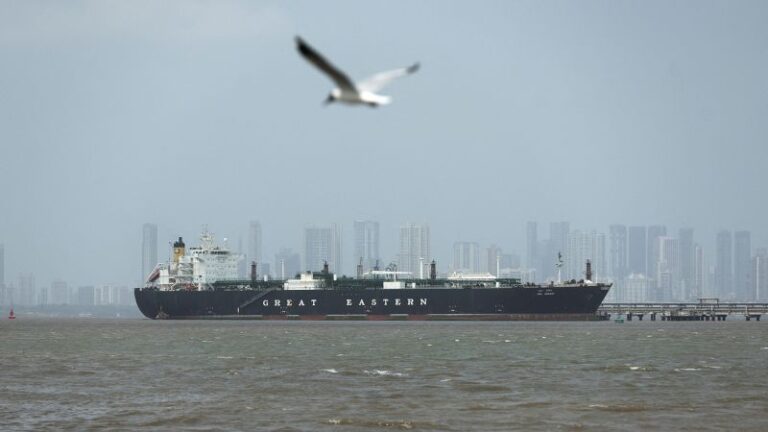
About 1,000 ships and thousands of civilian sailors have been stranded in the strait by Iran’s partial blockade in response to the US and Israeli strikes. Twenty per cent of the world’s oil and gas supplies were carried through the strait before the conflict, constraining global fuel supplies and swelling prices.
The opposition leader, Angus Taylor, said any request for Australia to contribute should be given “full consideration” but questions the country’s capability to provide support.
“We certainly support opening up the strait of Hormuz … Any reasonable requests made of us should be given absolute fair consideration, and we are willing to be part of that consideration,” Taylor told Sky News.
“The first question is what has been asked of us. I think that’s unclear at this point … We haven’t got clarity on what capability the government might have to help with that exercise.”
About the Author