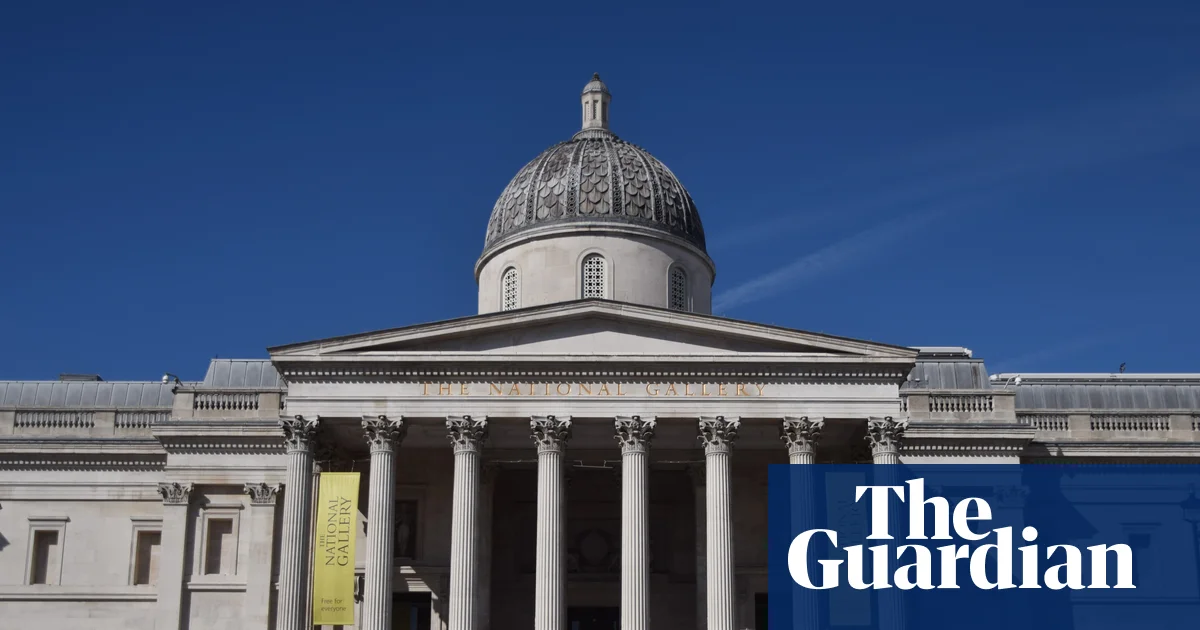
The National Gallery has announced that its largest and most significant transformation in its 200-year history will be designed by the Japanese architect behind Tokyo’s Olympic stadium.
The new wing will be designed by Kengo Kuma as part of Project Domani, the gallery’s expansion into art from the 20th and 21st centuries. Its completion will make the National Gallery the only museum in the world that exclusively displays paintings where visitors will be able to view the entire history of painting in the western tradition.
The gallery has traditionally not collected many paintings made after 1900 because of an agreement with Tate, which in turn collects only modern art. Industry insiders previously said tearing up the agreement could create “bad blood” and a situation in which the two galleries are “at each other’s throats”.
The National Gallery launched an international architectural competition for its new wing and said a total of 65 submissions were received, with six architects shortlisted to take part in a design competition.
The jury panel found the design submission from Kengo Kuma and Associates alongside BDP and MICA “exemplary” and awarded it the highest available score. They beat practices led by Norman Foster, Renzo Piano, Farshid Moussavi and Annabelle Selldorf.
John Booth, the National Gallery’s chair of trustees and jury chair, said Kuma had created a “beautiful design inside and out, sensitive to our existing Grade I exteriors and distinctive gallery spaces”. He said the new building would also “help to unite two of London’s most important outdoor spaces – Leicester and Trafalgar Squares – by creating enticing new public realm between them.”
Kuma, 71, also designed V&A Dundee, which opened in 2018. One of his designs became the subject of controversy this month when his idea for a new porch for a 1,000-year-old cathedral in western France was described by critics as a “wart”. The €5.5m construction in Angers will open on Thursday.
The National Gallery’s new wing will be built on a site bought by the gallery 30 years ago that houses a hotel and an office complex. It is part of a £750m campaign that the organisation says will redefine it for the next century.
The gallery has already raised £375m for Project Domani, including the two largest ever publicly reported cash donations to a museum or gallery globally.
Crankstart, the charitable foundation of Michael Moritz and his wife, Harriet Heyman, pledged £150m, as did the Julia Rausing Trust. A further £75m has been contributed by the National Gallery Trust, Booth and other anonymous donors.
The money will be used to buy post-1900 works of art and to provide an endowment fund. However, the gallery is facing an £8.2m deficit that will lead to job losses and potentially fewer exhibitions, higher ticket prices and reduced international borrowing of artworks.
The National Gallery’s original choice in 1982 for what is now known as the Sainsbury Wing was scrapped after the then Prince Charles denounced it as “a monstrous carbuncle on the face of a much-loved and elegant friend”.
On Tuesday, the jury said of Kuma’s new wing: “The design is both innovative and beautiful, meeting the ambition and sensitivity required for an international gallery commission. It is respectful of the Sainsbury Wing galleries … and the approach to the public realm and roof garden creates a generous presence, enhanced by trees and greenery.”
About the Author