Minnesota officials are asking a federal judge to force the Trump administration to share evidence it collected after the fatal shootings of Renee Good and Alex Pretti, as well as the shooting of Julio Cesar Sosa-Celis, during the administration’s immigration enforcement operation.
State authorities said in the lawsuit, filed Tuesday in a D.C. federal court, that they have been stonewalled while trying to access the information after the deadly shootings that sparked angry protests across the nation.
The fatal shootings garnered international attention, in part because federal officials offered a different account from what videos of the incidents, posted online, captured.
In the cases of Good and Pretti, both 37-year-old U.S. citizens, Department of Homeland Security officials insisted that both protesters posed a direct threat to law enforcement officers when they were fatally shot. However, witness accounts and videos suggested otherwise.
In the case of Sosa-Celis, a Venezuelan man who was shot in the leg but survived, at least two Immigration and Customs Enforcement officers are under investigation after being suspected of lying about the events leading up to the shooting.
“At stake is not only Plaintiffs’ access to evidence central to these shootings but also a fundamental principle of our constitutional system: that the States retain the sovereign authority—and responsibility—to investigate crimes committed within their borders,” the state said.
The Independent has asked the Justice Department and Department of Homeland Security for comment.
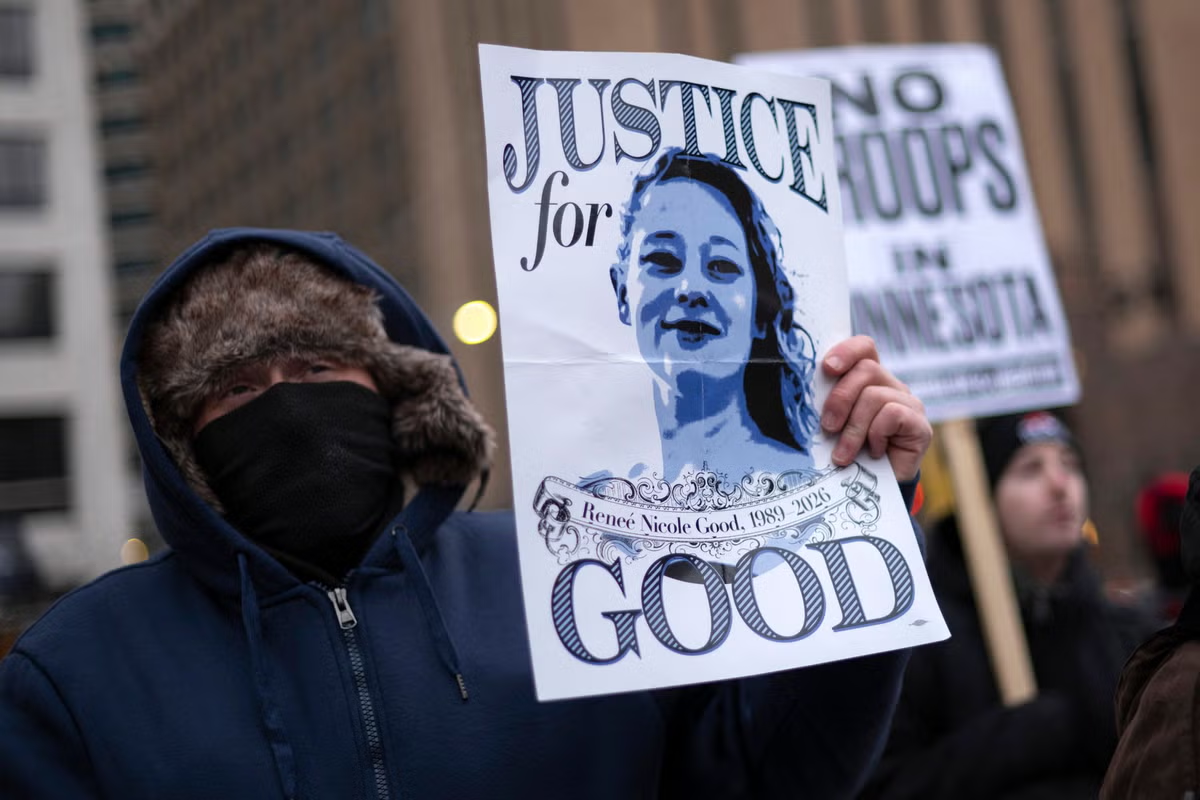
Good, a mother of three, was fatally shot by an ICE agent on January 7, as she was maneuvering her vehicle in Minneapolis during the initial surge of immigration enforcement in the state.
Although videos of the encounter appeared to show Good trying to avoid hitting federal agents as they attempted to enter her vehicle, DHS officials branded Good a “domestic terrorist.”
Minnesota officials said in the lawsuit that federal investigators initially agreed to collaborate with the Minnesota Bureau of Criminal Apprehension on the investigation but later refused access to evidence collected at the scene. That includes the firearm used and shell casings.
The lawsuit alleges state investigators were also barred from being present during an interview with the federal officers involved in the fatal shooting – and that later, they were refused basic information, such as the names of those officers involved.
Minnesota said not only were state investigators shut out from collaboration, but later the federal government ceased the investigation into Good’s killing.

“The federal government’s decision not to investigate the killing of Ms. Good ignores evidence suggesting that the shooting may have violated federal law; the decision is thus inconsistent with a longstanding federal practice to conduct criminal investigations under such circumstances, even if it is the prerogative of the federal government to make that decision,” plaintiffs said in the lawsuit.
Sosa-Celis was shot in the leg on January 14 after being confronted by federal immigration agents. Again, Minnesota alleges, the FBI refused to collaborate with the Minnesota Bureau of Criminal Apprehension by refusing to allow state investigators to take part in witness interviews or access to evidence.
Initially, federal officials charged Sosa-Celis with assaulting the federal agent who shot him. But later, the case was dismissed after new information revealed that the agents involved in the shooting lied during testimony.
While state investigators said they were able to access some pieces of evidence with a warrant, they have still been unable to obtain the handgun used in the shooting, the vehicle used during the incident, as well as names and statements from the federal agents involved.

Pretti, an intensive care unit nurse for the Department of Veterans Affairs, was killed by federal agents on January 24 while protesting.
White House officials quickly branded Pretti a “domestic terrorist” trying to “assassinate” federal officials, despite video showing federal agents removing Pretti’s legally-owned firearm before shooting him.
Minnesota officials said federal immigration officers “physically blocked investigators of the Minnesota Bureau of Criminal Apprehension from accessing the scene.” That obstruction allegedly continued even after state officials obtained a judicial warrant authorizing access.
When state investigators attempted to coordinate with federal investigators on Pretti’s death, Minnesota officials were told they would be required to share evidence with the Justice Department – but that the Justice Department would not do the same for Minnesota investigators.
“Based on the sequence of events and the involvement of senior federal officials such as the U.S. Attorney, it is apparent that this decision was made at the highest levels of DOJ,” the lawsuit alleges.
The lawsuit filed by Minnesota, Hennepin County Attorney Mary Moriarty and Minnesota Bureau of Criminal Apprehension Superintendent Drew Evans names the Justice Department, Attorney General Pam Bondi, the Department of Homeland Security and outgoing Secretary Kristi Noem.
About the Author