Restaurant and hospitality associations across India have warned that disruption to liquefied petroleum gas (LPG) supplies due to the US-Israeli war against Iran could lead to widespread closures of businesses.
The National Restaurant Association of India (NRAI) warned that the industry was heavily dependent on commercial LPG cylinders for daily operations.
LPG, produced during crude oil refining and natural gas processing, is India’s main cooking fuel. It’s widely supplied in cylinders, making it easy to transport, including to areas without pipeline access.
“The restaurant industry is predominantly dependent on commercial LPG for its operations,” the NRAI said in a statement shared with The Independent.
“Any disruption therein will lead to a catastrophic closure of the majority of restaurants.”

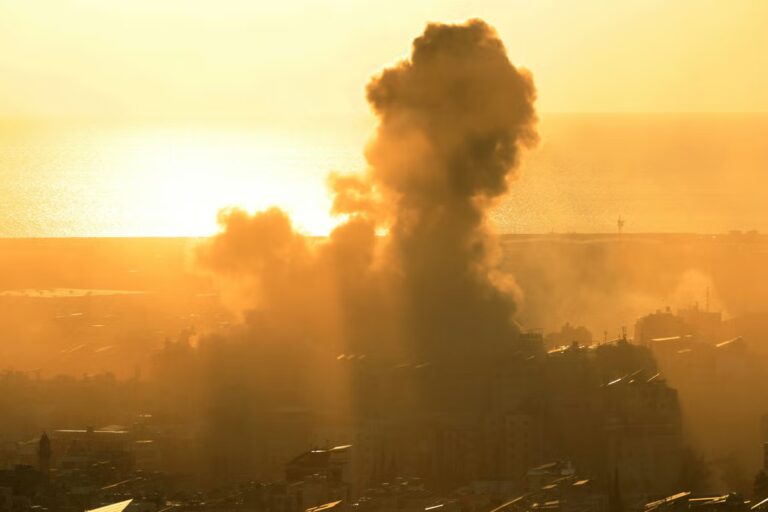
The warning comes as India moves to tighten fuel availability due to the escalating war in the Middle East. The war has halted shipping through the Strait of Hormuz, a vital corridor for global oil and gas supplies, raising concerns about energy shipments to Asia.
India relies heavily on imported LPG, much of which normally travels through the strategic waterway linking the Gulf to global markets.
The Indian government has ordered refineries to increase LPG output and prioritise household supplies after disruptions linked to the conflict caused shortages for restaurants and businesses.
“In light of current geopolitical disruptions to fuel supply and constraints on supply of LPG, the ministry has issued orders to oil refineries for higher LPG production and using such extra production for domestic LPG use,” the petroleum ministry said on X.
“Non-domestic supplies from imported LPG are being prioritised to essential non-domestic sectors such as hospitals and educational institutions.”
Authorities have extended the interval between domestic LPG cylinder bookings from 21 to 25 days and directed oil marketing companies to prioritise household connections over commercial users.
A three-member committee comprising executive directors of state oil marketing companies has been formed to review requests for LPG supply from restaurants, hotels and other non-domestic sectors.
Officials said these steps were aiming to prevent hoarding and stabilise supply.
India, one of the world’s largest LPG consumers, uses about 31.3 million tonnes of LPG each year and imports roughly 62 per cent of that demand, according to The Hindu.
Much of those imports normally travel through the Strait of Hormuz, which carries around a fifth of the world’s oil supply and a similar share of global liquefied natural gas (LNG) trade.
Energy analysts say a prolonged disruption to the route could tighten LPG supplies across Asia, which depends heavily on imports.
“Iran alone accounts for just under 8 per cent of global waterborne LPG supplies,” Ciaran Tyler, lead research analyst at the energy analytics firm Kpler, tells The Independent.
“Moreover, 27 per cent of global LPG flows move through the Strait of Hormuz.”
He adds that any prolonged disruption would tighten supplies in Asia, which depends heavily on imports.
“Indeed, Asia is significantly reliant on LPG imports for its demand and 41 per cent of the region’s total waterborne LPG needs are barrels that move through the Strait of Hormuz,” he says.

Muyu Xu, senior research analyst for crude at Kpler, says the same shipping route is also vital for regional gas supplies.
“Approximately 27 per cent of Asian LNG imports transit the Strait of Hormuz, underscoring its strategic importance for regional gas supply as well.”
India has begun exploring alternative LPG supply partnerships with countries like Algeria, Australia, Canada and Norway to ease pressure on domestic markets, according to officials quoted by Business Today.
Petroleum minister Hardeep Singh Puri said India remained in a “comfortable position”.
“Energy imports into the country are in full flow from all non-Hormuz routes. The energy requirements of our citizens are being fully met,” he said.
The oil ministry has invoked the Essential Commodities Act to ensure domestic supply and directed refineries and petrochemical units to maximise LPG production. Energy companies have also been asked to divert key hydrocarbon streams towards LPG output.
India’s largest private refiner, Reliance Industries, said it was maximising LPG production and diverting locally produced natural gas to priority sectors.
Industry groups say this policy shift has already disrupted restaurant operations. The NRAI wrote to the petroleum minister saying suppliers across the country had indicated that commercial LPG supplies to restaurants could stop after a government order prioritised domestic consumption.
In a subsequent letter, the association said the industry was facing operational challenges because of supply disruption.
It also pointed to a letter circulated to distributors that “has wrongly categorised the restaurant industry as non essential commercial establishments”.
Sagar Daryani, president of NRAI, warns that recent government directives on liquefied petroleum gas (LPG) are severely disrupting restaurant operations nationwide.
“Basically, the government circular that came on 5 March and again on 9 March recommended that the majority of LPG cylinders should be diverted towards domestic consumption,” Daryani tells The Independent.
“It nowhere mentioned that there was a ban on LPG cylinders for commercial purposes. However, yesterday afternoon the LPG Distributors Association issued an advisory to its members asking them not to supply LPG cylinders to restaurants. Since Saturday night, none of our members have been getting supplies. NRAI represents over 500,000 restaurants across the country.”

Hospitality associations in several cities have reported shortages as well.
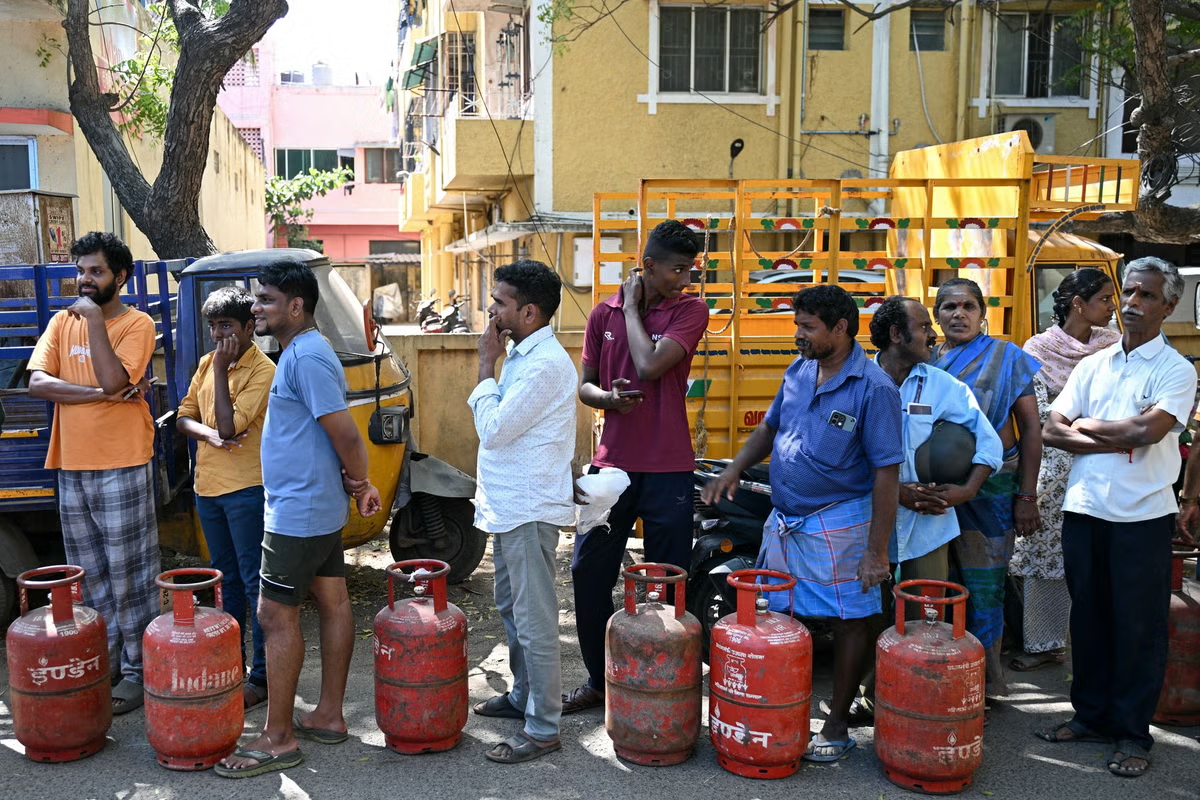
In Bengaluru, small restaurants limited services to tea and coffee after gas dealers said commercial cylinder refilling had not taken place since 7 March.
Only 10-15 per cent of establishments using piped gas from the public-sector supplier GAIL have continued operating without disruption.
In India’s financial capital Mumbai, about 20 per cent of hotels and restaurants have already shut down. The figure may soar to 50 per cent within two days if supplies do not improve, the Indian Hotel and Restaurant Association, the apex body for the hospitality trade in Maharashtra, says.
Sundar Singaram of the South India Hotels and Restaurants Association tells The Independent that the industry is seeking priority access to LPG while supporting the government’s efforts to manage the crisis.
“We are requesting the government to consider the hotels and restaurants as an essential service and give some priority allotment within the available supplies,” he says.
Daryani emphasises that restaurants are a critical part of urban food supply. “During Covid we were categorised as essential services. The idea of diverting LPG to households is so people can cook their daily meals, but many people depend on restaurants for food including those living alone, in hostels or PG accommodation, and urban workers,” he says.
“We are also an essential service and cannot afford supply disruptions.”
-cy.jpeg)
Singaram warns that shortages will not just impact the industry but disrupt food access more widely. “There will be public hardship in accessing cooked food, affecting everyone from small roadside tea shops to a mess, a large restaurant or a five-star hotel,” he says.
“Hospitals do not usually do their own catering. So when we do not have supply for these units, even a patient will face a challenge getting cooked food.”
Explaining the impact on the wider economy, he says, “There will also be supply chain disruption. For example, it will affect farmers, food suppliers, dairy products, fishermen and small vendors who depend heavily on the hospitality sector. If restaurants do not consume vegetables, milk or other perishable commodities, they will go to waste. So the chain reaction will go all the way to the root level, even to farmers.”
“There will also be loss of employment and income across a large ecosystem of workers such as cooks, helpers, delivery staff like Zomato and Swiggy, suppliers and transport operators,” he adds.
Switching fuels quickly is difficult because most commercial kitchens are designed for LPG and alternatives such as electric cooking systems will require significant investment and time.
“Based on all this, the only alternative is electric cooking burners, but it will take a lot of time for custom fabrication because nothing is available off the shelf. It will take a long time to switch to electrical facilities,” Singaram says.
Firewood-based cooking, another possible substitute, is largely impractical for most establishments.

At Wow! Momo, Daryani’s restaurant chain, 60 per cent of outlets run on electricity but 40 per cent still depend on LPG. Indian cooking largely depends on LPG because induction ranges are small, he explains.
“Even commercial induction units cannot match the size or pressure needed for large kitchens or buffets. LPG remains the most practical fuel. Piped natural gas would solve many problems, but it is available mainly in malls and some commercial establishments, and more developed in Delhi-NCR than elsewhere,” he says.
Industry bodies have advised restaurants to conserve fuel while exploring limited alternatives.
“We have advised them to use energy judiciously. Many restaurants are also minimising menus,” Singaram says, adding that some establishments are trying to use small electrical ovens where possible.
The reliance on LPG in commercial kitchens reflects the nature of Indian cooking itself.
“It is very simple. Indian cooking depends more on real flame and fire. Even many leading biryani shops advertise that they still cook on firewood. That brings a different taste. Indian cuisine needs flame,” he says. “LPG is therefore the best available option to generate fire energy.”
Elsewhere, small restaurant owners in Delhi say delays in supply have forced them to buy cylinders from the black market at far higher prices.
The price of LPG cylinders rose nationwide last week, with domestic cylinders becoming dearer by Rs60 and commercial cylinders by Rs114.5 per 19kg unit.
About the Author