

Israel has threatened to take Lebanese land and to expand its military operations, after launching the heaviest night of bombing on Beirut since the conflict with Hezbollah began 10 days ago.
Aircraft roared above Lebanon’s capital and fiery explosions lit up the sky overnight, with Israel saying it struck nearly a dozen locations in the southern suburbs in half an hour alone.
At least 12 people were killed and 28 wounded in a separate salvo along the capital’s iconic waterfront, where displaced families forced to flee their homes were sleeping rough. Later Israeli jets bombed busy Bachoura neighbourhood of the city multiple times it said targeting Hezbollah infrastructure.
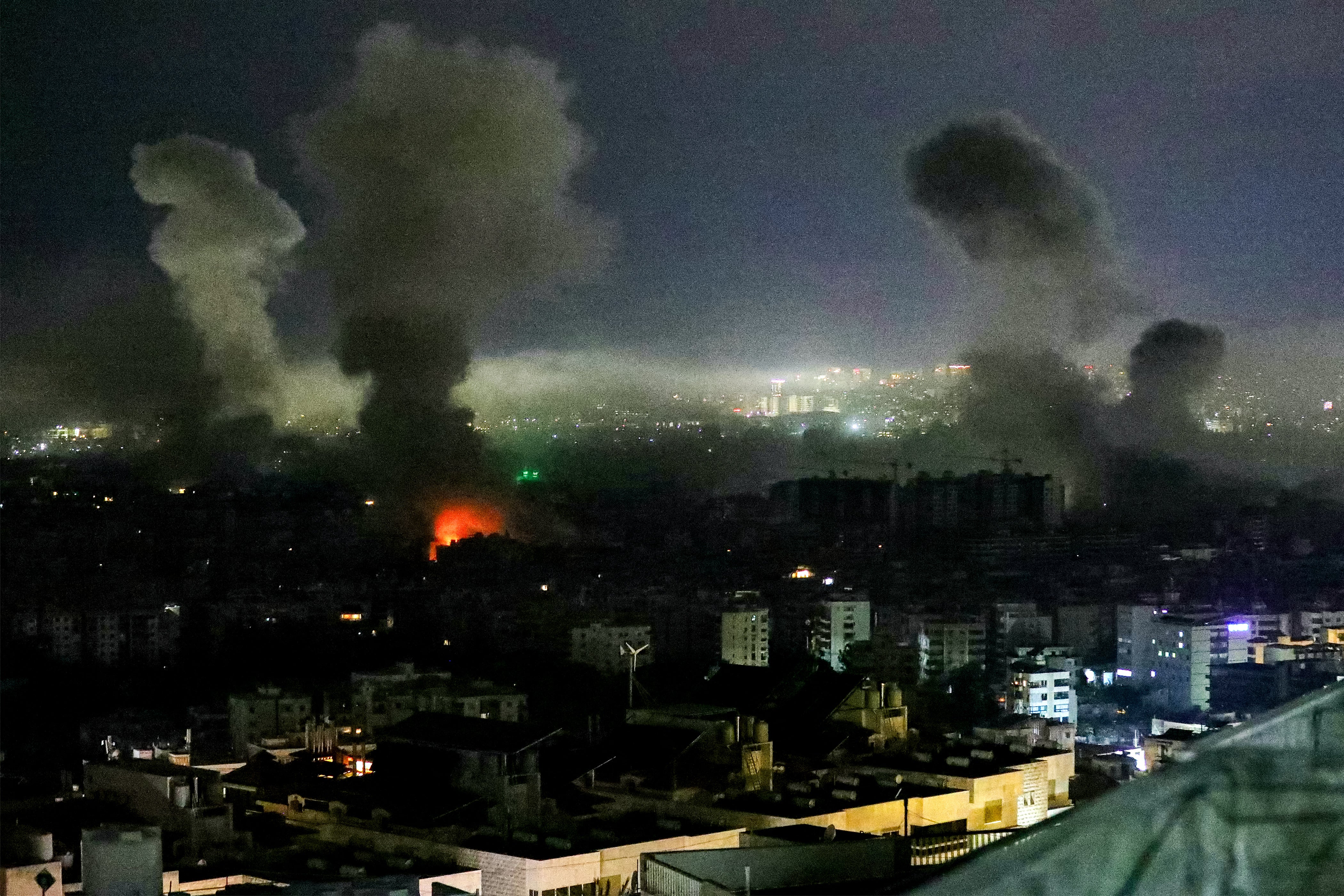
It followed a hefty barrage of rockets from Iran-backed militant group Hezbollah, which said it launched dozens of rockets and drones on northern Israel as part of a “series of operations”.
Lebanese president Joseph Aoun had sought urgent talks with Israel to halt the strikes and the spiralling conflict. More than 810,000 people in Lebanon have already been uprooted, a quarter of them children, and 630 have been killed.
But Israel defence minister, Israel Katz, announced on Thursday that after Hezbollah’s attacks, the army would expand its operations into Lebanon, threatening further escalation. The military later doubled the zone Israel said residents should leave in the south of the country: forcing residents to move up to the Zahrani river. It also ordered an evacuation of a central Beirut neighbourhood, before pounding it with air strikes.
“I warned the Lebanese president that if the Lebanese government does not know how to control the territory and prevent Hezbollah from threatening the northern settlements and firing at Israel, we will take the territory and do it ourselves,” Katz added.
In Dahiyeh – in the south of Beirut – smoke and dust rose above piles of snarled rebar and concrete: all that was left of the building in the crowded neighbourhood, which is a sweeping Israeli evacuation orders.

Fatima, 48, a mother-of-six and Syrian refugee, was sleeping under tarpaulin just metres away from the strike on Beirut’s waterfront.
She told The Independent her family had been forced to camp on the streets for the last week, after fleeing Dahiyeh, as they had nowhere to go and no money.
“First, we heard the drones circling so low, it was deafening. And that is when they bombed twice in seconds,” she said, breaking into tears.
“There were bodies thrown in the air, we saw severed limbs. One man, a displaced Syrian who I know, was on the ground. Shrapnel had cut him up, there was so much blood.
“All the people were screaming and were terrified. There was so much blood and smoke and fire. It lit up the skies.”

Lebanon was dragged into the regional conflict earlier this month when Hezbollah, Iran’s ally, fired at Israel after massive strikes that killed Iran’s supreme leader.
The Israeli military said it fired 200 munitions from the air and sea during Wednesday night’s raid, targeting Hezbollah infrastructure, headquarters, as well as leaders of Palestinian Islamic Jihad, Hezbollah and Lebanon’s unit of Iran’s Islamic Revolutionary Guard Corps.
Later in the day the military bombed two buildings in heart of Beirut that Israel said were Hezbollah infrastructure.
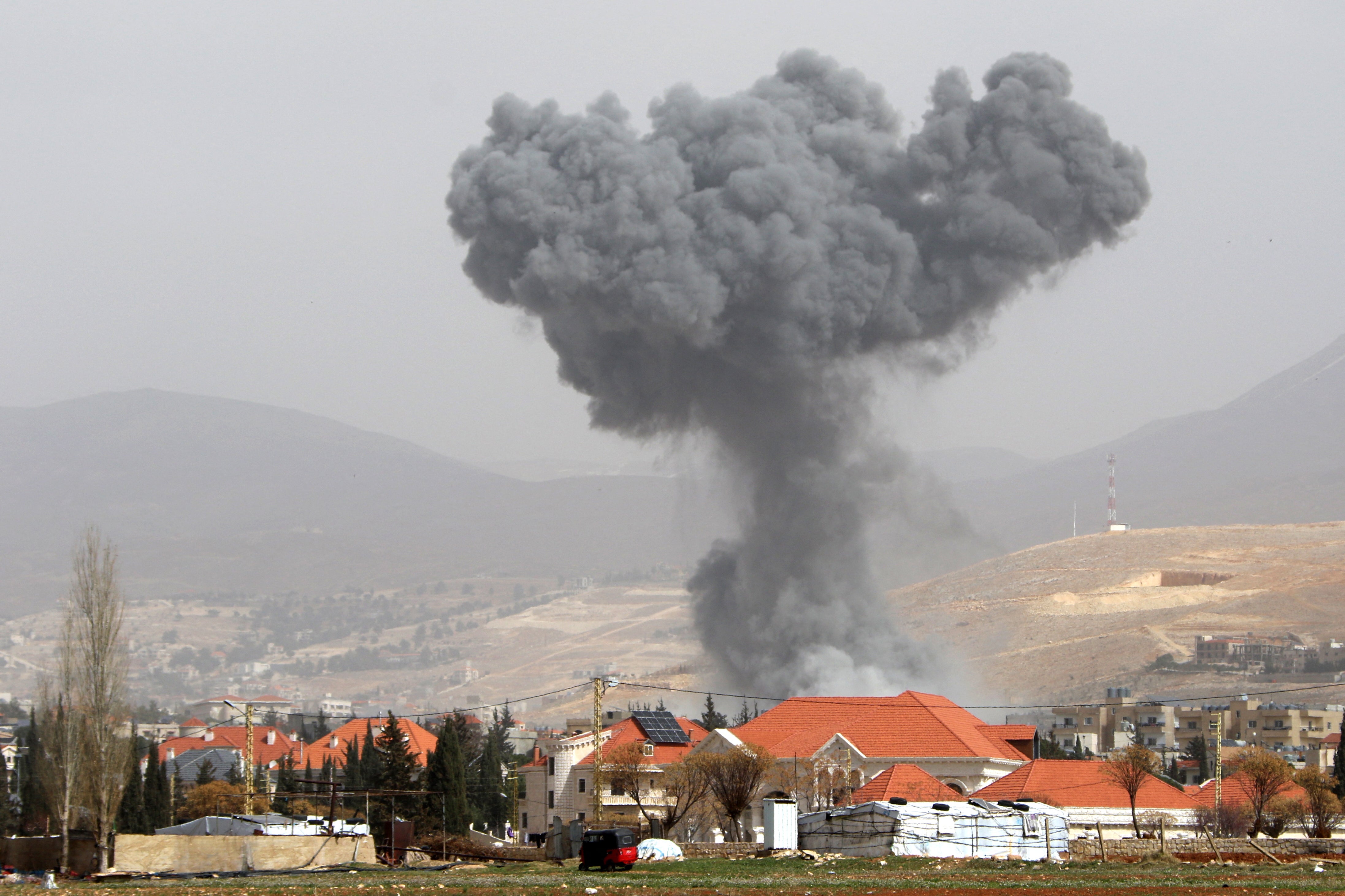
Since 2 March, Israel has killed 100 members of Hezbollah and its linked groups as well as 60 command and control centres, it said.
Hezbollah said earlier it fired a “salvo of rockets” at northern Israel and a squadron of drones, promising further strikes.
In a statement the groups said “the intense confrontation today opens a new path”.
They said it marked “the beginning of a countdown toward liberation from domination and the rise of a serious determination to shape our own destiny.”
The concern now is that even if US president Donald Trump winds down his operations in Iran, the war between Israel and Hezbollah has only begun.
On Thursday the Israeli military ordered Lebanese citizens to leave Bachoura neighbourhood in the heart of Beirut, shortly afterwards bombing two buildings .
A second order, meanwhile, nearly doubled the zone Israel said residents should flee in the south of the country. The new zones, marked in red in a map published on X by a military spokesperson, mean that the Israeli military has now ordered people out of 10% of Lebanese territory.
Dr Hanan Balkhy, regional director of the World Health Organisation, told The Independent this came as Lebanon was struggling amid an unprecedented financial collapse, damage from the last war in 2024 and limited medical supplies.

She said in Lebanon, there have been 25 attacks on health care, resulting in 16 deaths and 29 injuries.
Back at the waterfront, Mohamed, a Lebanese father living in his car after he was displaced from the border regions with Israel, said many feared there was no end in sight.
“The bombing was deafening,” he said of the latest attacks. “We have no idea when this is going to end.”
*Additional reporting by Rana Najjar
About the Author


