Israeli airstrikes and ground operations over the last month have largely cut off southern Lebanon from the rest of the country, depopulating dozens of towns and damaging key public services that are a lifeline for the residents that remain.
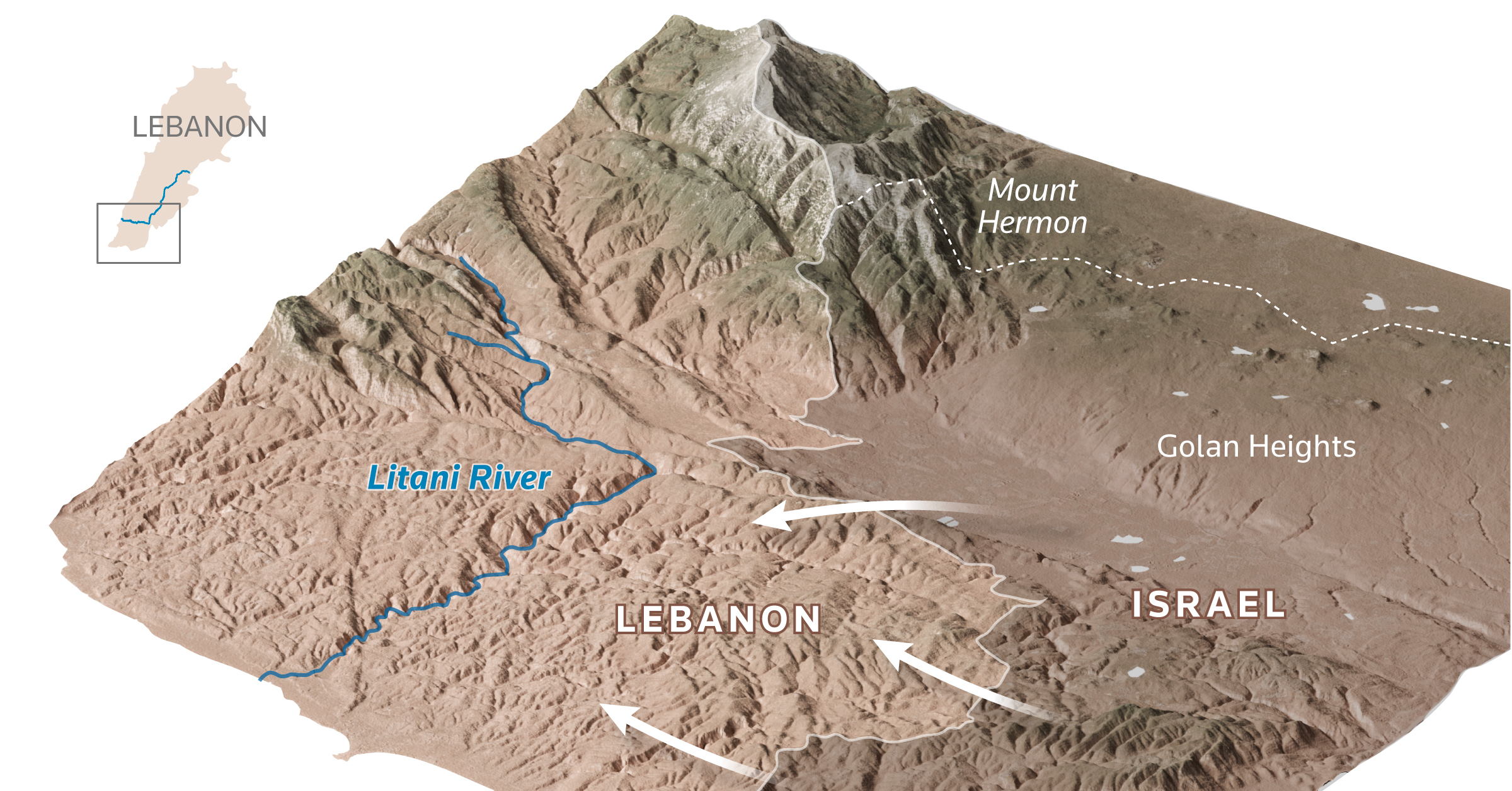
This week, Israel said it would seize southern Lebanon up to the Litani River to create a “buffer zone” against Lebanese armed group Hezbollah, which pulled Lebanon into the regional war by firing on Israel on March 2 in solidarity with its patron Iran.
The announcement has triggered deep fears of a prolonged Israeli occupation of the south, which was occupied by the Israeli military for more than two decades until the year 2000.
The Israeli military had already ordered the entire population of the south — nearly a tenth of Lebanese territory where hundreds of thousands of people live — to head north in Israel’s largest evacuation order yet for Lebanon.
Across Lebanon, Israeli air strikes have killed more than 1,100 people, according to the Health Ministry, and evacuation orders have displaced well over a million.
Israel says it is targeting facilities used by Hezbollah, accusing the Iran-backed group of putting civilians at risk by installing military hardware in populated areas. It says it takes precautions by warning civilians to leave the area ahead of time. Hezbollah has denied using public infrastructure as military installations.
As the war enters its second month, a sense of despair has settled over some Lebanese who fled their southern hometowns.
“Once they separate the Litani from Beirut, that’s it – how will the people go back to their homes?” said Samar Jawlani, a 50-year-old woman displaced from the historic southern port city of Tyre.
The south’s isolation began less than two weeks into the war, when Israel began striking bridges on the Litani River that it said were being used by Hezbollah to shuttle weapons to southern frontlines.
Since then, at least seven bridges in southern Lebanon have been destroyed or seriously damaged in Israeli strikes – six of which lie directly on the Litani.
The United Nations has said that the destruction of bridges has left tens of thousands of people isolated in southern Lebanon, out of reach for humanitarian convoys seeking to deliver essential aid.
Ramzi Kaiss, Lebanon researcher at Human Rights Watch, told Reuters that international law prohibits strikes on infrastructure if the harm to civilians is excessive – even if the infrastructure was being used for military purposes. He warned of a “humanitarian catastrophe” if the south becomes fully isolated from the rest of Lebanon.
Diana Moukalled, a Lebanese journalist, said she used to cross the Qasmiyeh coastal road bridge to visit her village in southern Lebanon. It was hit twice by Israel on March 22.
“Bridges are not just cement and iron; they are the memory of a road and a silent link between us and the places we love,” Moukalled wrote on X.
“Bombing bridges doesn’t just cut off a road; it shatters that simple feeling that there is always a way back.”
As the war dragged on, healthcare and energy infrastructure began going offline.
In the south, four hospitals have sustained partial damage in the war, according to the World Health Organization. Two are entirely closed. An Israeli strike on a primary healthcare centre in the southern town of Borj Qalaouiya on March 13 killed 12 doctors, paramedics and nurses, according to Lebanon’s Health Ministry.
In total, Israeli strikes have killed more than 40 healthcare workers, many of them in southern Lebanon, the ministry said.
“Frontline responders, health workers, and civilian infrastructure including any healthcare centres are all protected by international humanitarian law,” said Imran Reza, the United Nations’ humanitarian coordinator for Lebanon. “We are seeing unacceptable loss.”
The war has put two key power stations in southern Lebanon out of commission – one of which was hit by an Israeli strike on March 19 and another which is unreachable due to Israeli ground operations in the area, according to Lebanon’s electricity authority. Two water stations in the south are also out of service, according to the South Lebanon Water Establishment – one damaged by an Israeli strike and another left unreachable due to Israeli ground operations.
While energy infrastructure may, in limited circumstances, be a legitimate military target, strikes can also violate international law in cases when they have an intended or foreseeably disproportionate impact on civilians, legal scholars have said.
In the current Middle East conflict, “there appears to be an open intent to target vital civilian supply facilities, and thereby severely damage or break national and international economic interests. In turn, this will have a consequential harmful impact on civilians. It is neither a direct, necessary, or proportionate military objective, and therefore illegitimate,” said international criminal prosecutor Nigel Povoas KC.
The systemic damage to key infrastructure and impact on civilians mark “one of the most severe escalations since early March and raises growing concerns about the risk of prolonged occupation,” the WHO warned this week.
Even before the war, Lebanese public infrastructure had been severely underfunded and suffered from chronic neglect. Lebanese fear that what is being destroyed now could take decades to rebuild.
But the deep attachment that southern Lebanese feel towards their land is hard to erase.
Ammar Mazeh, a local official from the town of Barish just south of the Litani, told Reuters he was sheltering in eastern Lebanon but would find his way home no matter what.
“There are a lot of ways into the village. We’ll swim there if we have to.”
Nazih Osseiran, Anthony Deutsch, Emilie Madi
Jon McClure, Sharon Singleton
About the Author