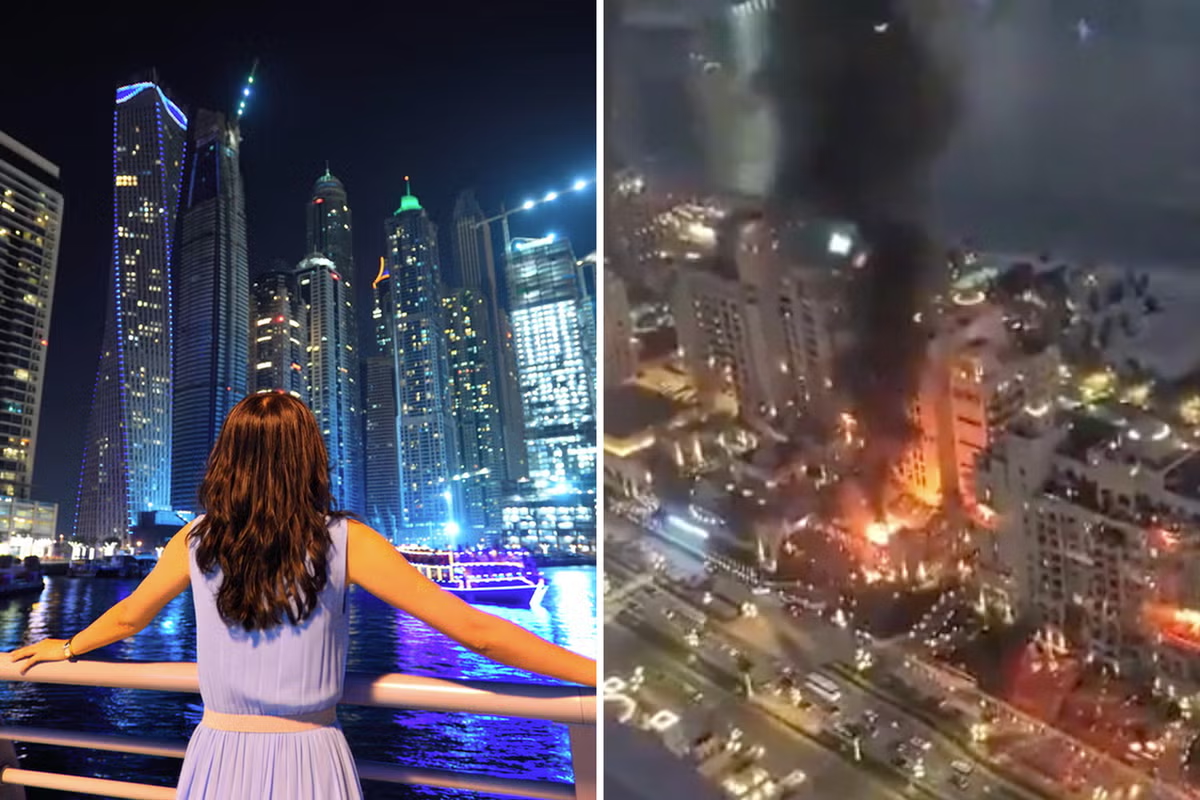
It was the influencer capital of the world, a photogenic playground for the young, glamorous and wealthy. But as Iranian missiles fall on Dubai, the largest and most ostentatiously luxe city in the United Arab Emirates, the facade seems about to crack.
The city once touted as one of the safest places in the world is no longer a peaceful haven. And the UAE government has rushed to try and control the narrative, prompting a huge crackdown on anyone sharing photos of missile attacks and their aftermath. Instead, content creators have been posting uncannily similar photos and videos full of praise, parroting buzzwords about the city’s strong, stable leaders.
How can influencers continue to portray the “Dubai dream” online, when the whole world knows that the city has been mired in conflict? And what about the ordinary people who are being detained for sharing photos and videos that go against the official line?
Radha Stirling is the founder and CEO of Detained in Dubai, the organisation that provides legal assistance to foreigners dealing with legal injustice and travel bans. The authorities, she says, are “arresting first, asking questions later” in a way that feels unprecedented.
“We’ve never seen, I think, people rounded up as they have in this current climate, where you happen to be in the vicinity of an explosion and the police turn up at your doorstep the next day and say, ‘You were around this explosion yesterday. Can I have a look at your phone please?’”
The case that Stirling is alluding to made headlines earlier this week, when three people who survived a drone strike on their apartment building were allegedly arrested after privately sharing a photo with family members, simply to confirm that they were alive.
“They scroll through your messages, see that you sent a photo to your mum or something like that, and suddenly you’re arrested,” Stirling says. “That’s not down to national security. Plus, those images [of strikes] had already been in the international media, so there’s a lot of confusion.”
It is a situation she describes as “really Orwellian – when you’ve got survivors of drone strikes being taken into custody and treated in that way, when there’s obviously no ill intent”.
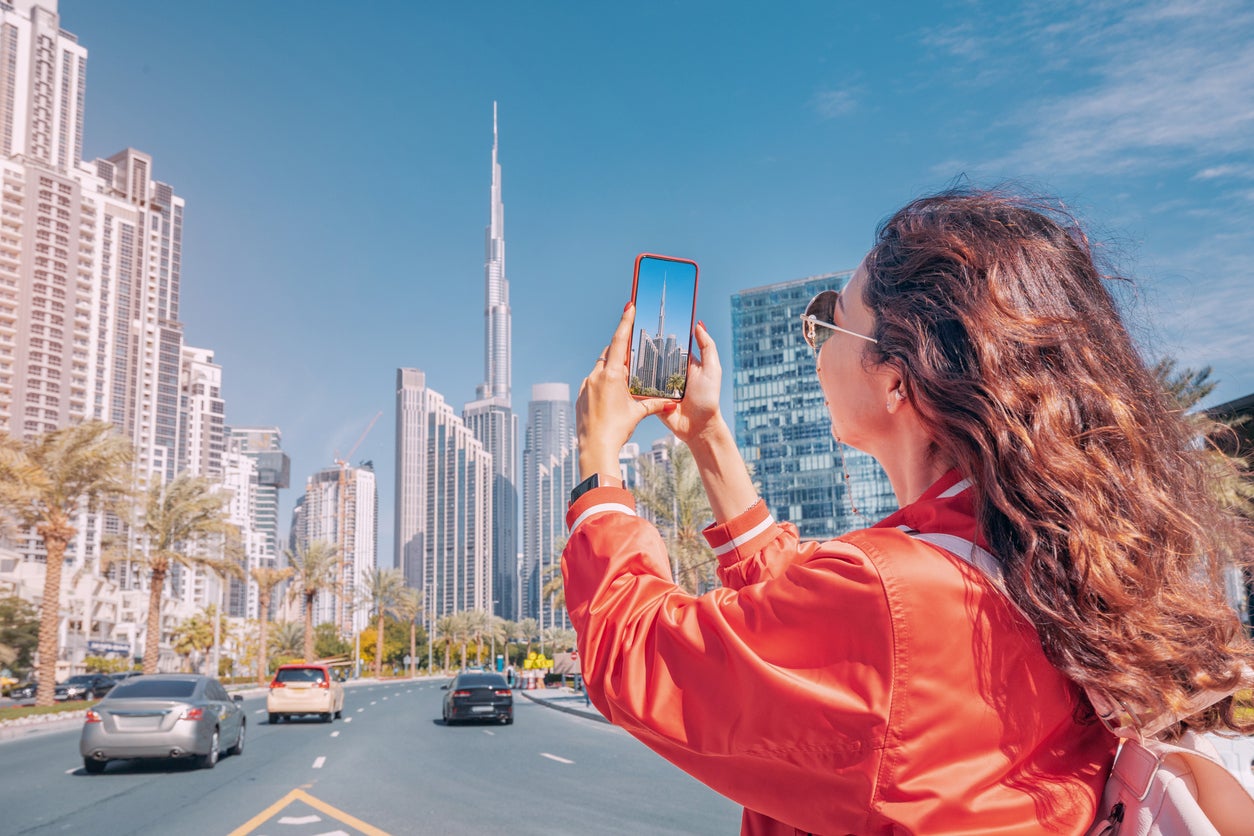
A 60-year-old British tourist has also been charged under cyber crime laws after allegedly filming Iranian missiles over the city; he was one of more than 20 people charged together, according to Detained in Dubai.
In cases like these, Stirling says, often “people are grouped together after just interacting with something that’s been published by someone else”. Something as seemingly innocuous as forwarding a video or interacting with an Instagram post could result in detention. “You see a picture of a hotel on fire, you press reshare and suddenly you’re a criminal as well,” Stirling says.
Despite wanting to attract western visitors, UAE has some of the world’s strictest laws around freedom of speech and expression. While it may feel like an anathema to someone brought up in a democratic country, there, any criticism of the government, state policies or the royal family is strictly prohibited. Cyber crime legislation effectively criminalises the posting or sharing of any content seen to harm the state’s reputation.
The rules are also notoriously “broad, grey, subjective and open to any interpretation”, Stirling argues. “I think they’re designed that way to give maximum freedom and flexibility to the authorities to charge [people with] whatever they want.”
In 2023, for example, Craig Ballentine, a man from County Tyrone in Northern Ireland, was arrested upon arriving at Abu Dhabi airport after posting a negative Google review about a former employer in Dubai. Ballentine was accused of slander and faced jail time, but was eventually allowed to return home a few months later.
Cases like these have drawn international media attention to the UAE’s stringent regulations around social media and free speech. And yet, prior to this latest conflict in the Middle East at least, this doesn’t seem to have put off migrants: in 2024, relocation firm John Mason International Movers revealed that over the previous five years, it received a 420 per cent increase in enquiries from British nationals hoping to move to Dubai.
Many Brits are “willing to overlook” these measures “for the advantages that the UAE seems to offer”, Stirling says, like the sunny weather, the lack of income tax, and the image of “a very safe society”. Many expats, she notes, will “have persuaded themselves, ‘well, if you don’t do the crime, you won’t do the time’”, or that the cases that end up in the press “must be special” somehow. “They don’t think it will happen to them.” Glossy influencer posts, too, help to sweeten the deal.
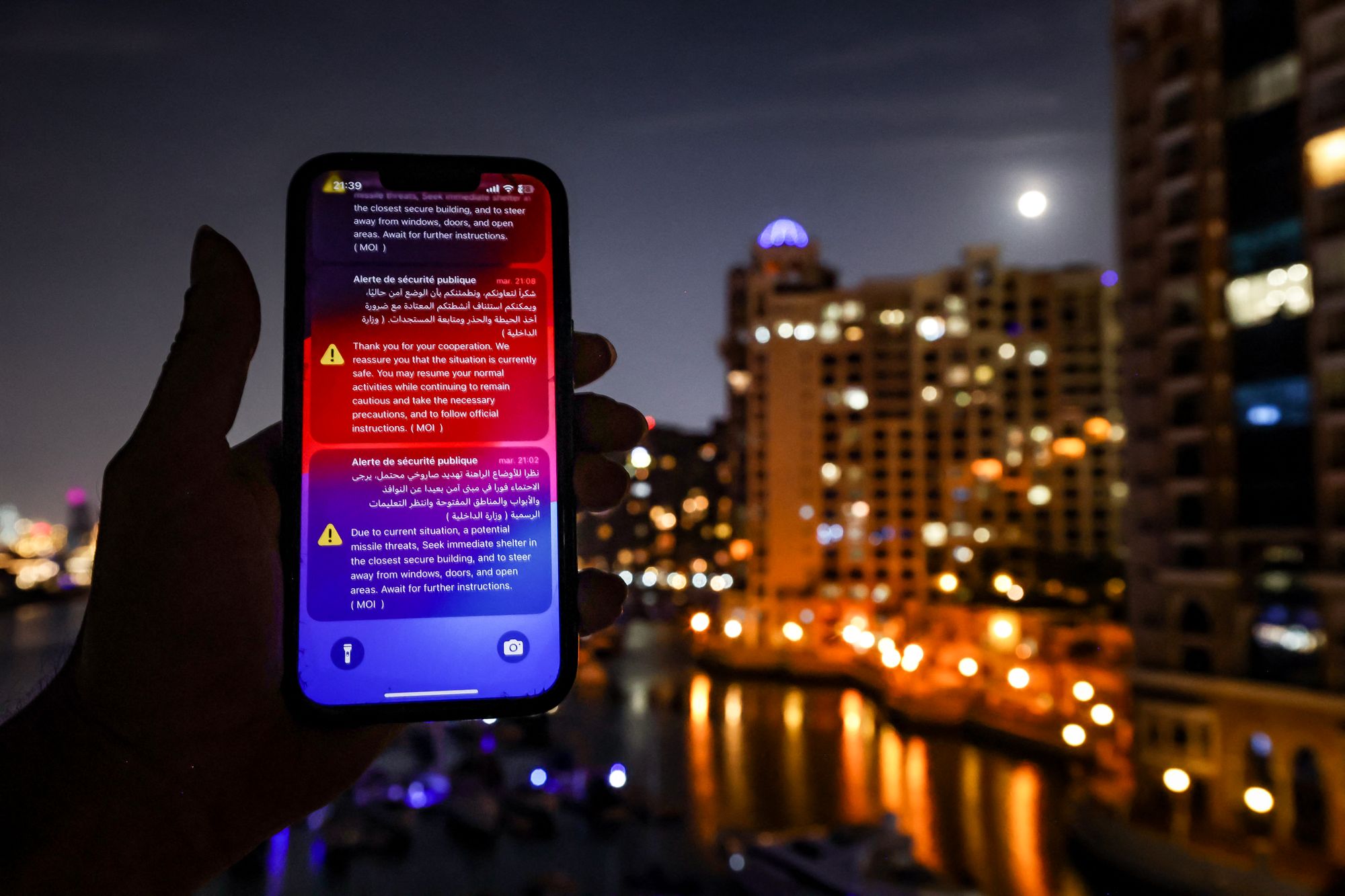
The “vast majority” of the people impacted by the social media crackdown, Stirling says, “are long-term workers and expats, and they’re really patriotic about the UAE”. Many of them will simply have been unaware that they were breaking any rules.
In the past week or so, the UAE government has warned against spreading content “intended to incite public disorder and undermine general stability”; the British Embassy in the UAE has also cautioned Brits against taking photos or sharing images of missiles.
But Stirling says that the authorities are “still going back and arresting people for things done before those big warnings were put out”. Sometimes, she claims “they are waiting seven to nine days before they turn up at someone’s house to arrest them. I haven’t seen it as widespread and draconian as this, and I think that environment is creating a lot of fear for people”.
High-profile influencers and celebrities, Stirling explains, are “not going to get into any trouble”. Instead, they are far more likely to receive special treatment from the government; they will not be the ones detained in a jail without a lawyer. “The problem is these influencers are being nurtured as though they’re members of the government. They’re being treated as government staff, and they’ve got all the privileges of that”.
In fact, influencers are so important to the government that the tourism department recently launched an “influencer academy” designed to lure creators to the region (who will in turn draw followers in with their glamorous portrayal of the city). Turning on them would risk undermining this strategy.
I haven’t seen it as widespread and draconian as this, and I think that environment is creating a lot of fear for people
Radha Stirling
Essentially, it’s a “one rule for them, another for the rest” situation. When top-tier influencers “posted videos of the explosions and the drones and the missiles”, Stirling says, it’s likely that they were “asked politely by the police to come down to the station, asked to delete that video and then go on to make a replacement video saying ‘please make sure not to share these kinds of things. They don’t get into any trouble at all. They’re protected, and this is quite a problem – it always has been”.
Earlier this week, it was reported in French media that the influencer Maeva Ghennam had been arrested after sharing footage of Iranian missiles, and telling her three million followers that her “stomach [was] in knots” and her knees were “shaking” with fear. The 28-year-old, however, denied this, and said that she had been summoned to talk to the police about a separate case relating to her make-up brand.
And there are others who have emphasised to their followers just how safe they feel, only to leave the city soon after. The Apprentice star Luisa Zissman, who moved to Dubai late last year, told her Instagram fans that “I do have faith that UAE defence will keep us all safe”, before later heading back to the UK. She has insisted that the return was a planned one. Now she is set on flying her six horses home, a process that the Daily Mail estimates could cost around £25,000, and has offered a free private jet flight to anyone willing to bring back her dog Crumble, who remains in Dubai.
Since missiles started landing in the Emirates late last month, a slew of eerily similar posts have cropped up on platforms like Instagram and TikTok, featuring near-identical phrases. The videos tend to start with an image of the influencer, overlaid with the question: “You live in Dubai, aren’t you scared?” They then cut to footage of Sheikh Mohammed, accompanied with the ostensibly reassuring words: “I know who protects us.”
But for outside observers, there is nothing particularly reassuring about seeing social media flooded with identikit videos singing the praises of strong leaders, not least in a country with notoriously stringent restrictions on freedom of speech. Earlier this month, the BBC analysed 129 posts from Dubai-based influencers in the first days of the conflict, and found that many contained language stressing “stability”, “safety” and “strong leadership”. Many of these posts, the BBC discovered, had been uploaded within minutes or even seconds of each other.
Of course, it is difficult to know whether clips like these are genuine expressions of patriotism or the result of some sort of co-ordinated government effort.
Stirling notes that it is “definitely the case historically that the government has had their communications office basically instruct the newspapers what to say”. If they had a particular message they wanted to amplify, she adds, “they’d send a notification out” to state-owned media outlets.
This, she says, “appears to absolutely be what they’re doing now, just continuing with that same directional media control” but for the social media generation. “I guess on TikTok or whatever, a trend can happen, so they’re hoping to market it as a trend rather than a government propaganda ad.” The Independent has contacted the Government of Dubai Media Office for further comment.
And even if the top tier of influencers are being directed or perhaps paid to spread these messages, Stirling says, “that filters down”. There’s incentive for aspiring content creators “to also play the game, amplify the message, get on the bandwagon” and essentially have a chance to upgrade their status.
The usual modus operandi for the UAE, she adds, “is they try to pretend something bad that they’re doing is not happening”, bolstered by this influencer army. But, she cautions, “it usually doesn’t work – it actually backfires. I don’t think that does very well for the country, when you’ve got people just outright lying that it’s totally safe here. No, it’s not.”
About the Author