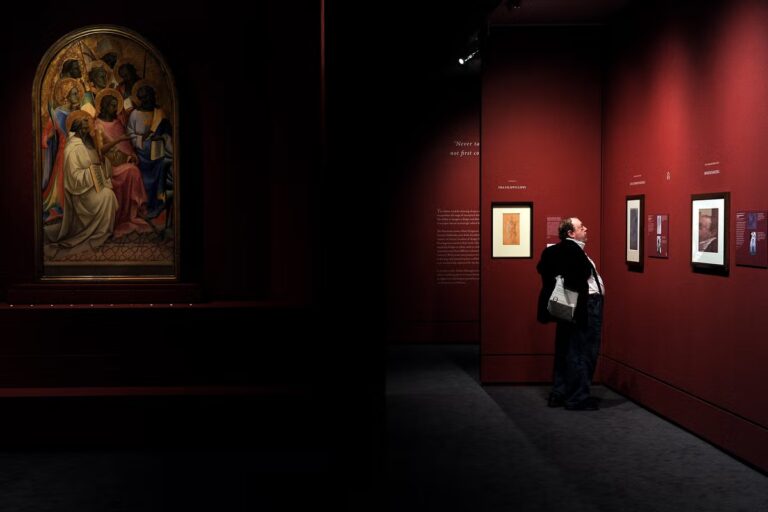
The heirs to the Bic pen fortune are fighting to regain possession of a 15th-century Fra Angelico masterpiece they claim was stolen two decades ago by the family chauffeur, according to court filings obtained by The Independent.
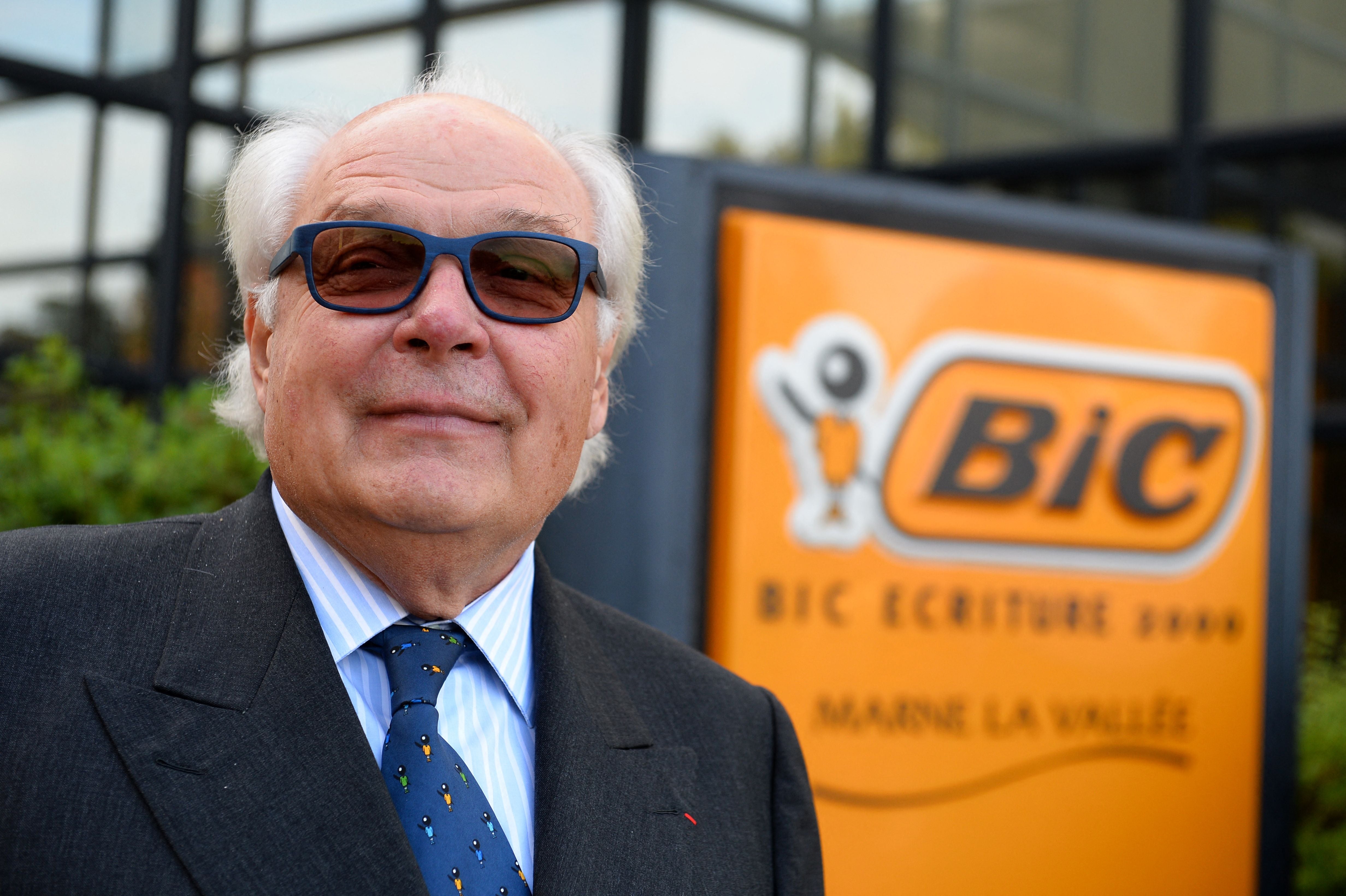
The 500-year-old painting was then “funneled into the art market through a series of illegal and reckless transactions,” and eventually auctioned off for $5.4 million to a South American billionaire who has since refused to return it, say Gonzalve, Charles and Guillaume Bich, whose aristocrat grandfather, Baron Marcel Bich, founded the ballpoint pen, razor and disposable lighter empire that bears an abbreviated version of the family name.
At the center of the saga is “Saint Sixtus,” a tempera-on-panel piece circa 1454 that is believed to be among the last works Fra Angelico created.
Fra Angelico, born in or around 1395, was a Dominican friar and painter active during the early Florentine Renaissance. He created a series of frescoes for the city’s Convent of San Marco, under the patronage of Cosimo de’ Medici. “Saint Sixtus” was originally meant to be the left wing of a triptych; another panel was acquired by the Fogg Art Museum in Cambridge, Massachusetts.
Fra Angelico died in 1455. He was beatified in 1982 by Pope John Paul II, the final step before sainthood.
Saint Sixtus, the subject of the painting in question, converted to Christianity as an adult before serving as a deacon in Rome. He was consecrated as Pope on August 30, 257 A.D., but was beheaded less than a year later, becoming a saint immediately following his martyrdom. Sixtus’s feast day is celebrated on August 7.
Attorney Luke Nikas, who is representing the Bich sons, declined to comment on the record and referred The Independent to the complaint as filed.
A source with knowledge of the case says the Bich family uncovered the painting’s whereabouts via extensive document analysis and then demanded it back, which is when the statute of limitations began tolling. The Bichs now have at least three years, and possibly as many as six, to fight their case.
On December 6, 1972, Marcel Bich purchased “Saint Sixtus,” a “unique and irreplaceable” artwork, for £130,000 at Sotheby’s “Important Old Master Paintings” sale, according to the Bich family’s complaint, which was filed Thursday afternoon in New York County Supreme Court.
Bich’s “popularization of the ball-point pen, the disposable razor and the disposable lighter created some of the most powerful symbols of 20th-century ingenuity,” his 1994 obituary read.
“If the mass-market had a patron Saint it would be Bich: for mere pennies the ordinary man can write more clearly, shave more closely and have more reliable access to fire than a Renaissance prince,” it said.
After Marcel’s death in 1994, his son Bruno inherited “Saint Sixtus,” and placed it in trust for his three sons, plaintiffs Charles, Gonzalve and Guillaume, who live in New York City, Westport, Connecticut, and Fremont, California, the complaint continues. Although Bruno was married at the time, his wife Veronique had no ownership interest in the painting, pursuant to a post-nuptial agreement the couple had signed, according to the complaint.
“Saint Sixtus” hung in Bruno’s Upper East Side apartment until 2006, when it vanished, the complaint goes on, saying that Charles, Gonzalve and Guillaume “recently learned” that the family’s driver, Roy Morrow, stole the work “either when it was displayed at 960 Fifth Avenue or when the Bich family moved to a new apartment at 935 Fifth Avenue.”
It’s unclear if there was ever a criminal investigation into Morrow, who has since died, Nikas said.
“Bruno did not know the work had been stolen,” the complaint states. “He only knew that the work had disappeared. For years, he repeatedly asked Veronique, his wife, where the work had gone; each time, she evaded his questions or provided inconsistent explanations… Bruno never gave up pursuing the work. He died in 2021 without knowing the fate of the work or its location.”
The family never publicized the painting’s disappearance for security reasons, according to the complaint.
Unbeknownst to the Bichs, Morrow had years earlier approached renowned art dealer Richard Feigen to sell “Saint Sixtus,” but had no paperwork or proof of ownership to go along with it, according to the complaint.
“Morrow’s appearance at the gallery should have set off alarm bells,” the complaint states. “He was a company chauffeur with no art-collecting background, no documented means, and no plausible explanation for possessing a multimillion-dollar masterpiece.”
The transaction “could not have been more suspicious,” the complaint contends.
“Yet, Feigen offered Morrow $3 million for the work,” it says.
He then insured it for $8.5 million, nearly three times what he had paid, according to the complaint, which claims Feigen intentionally overlooked the fact that “the price made no sense.”
“Feigen should have known Morrow could not possibly be the rightful owner,” the complaint alleges. “Feigen should have known the obvious: the work was stolen. But Feigen was willfully blinded by dollar signs [and] disregarded the need for basic due diligence because [he] wanted to turn a profit.”
In 2018, Feigen, who would die of Covid three years later, consigned “Saint Sixtus” to Christie’s, which subsequently sold it to Colombian industrialist Alvaro Saieh and his wife for $5.4 million, the complaint states.

Bruno Bich died in 2021, never having been able to locate the missing painting, according to the complaint.
In 2023, Bruno’s sons learned that “Saint Sixtus” had “resurfaced in the possession of Saieh,” according to the complaint. At the end of 2024, after hiring investigators to piece together what happened, the complaint says the Bichs demanded the painting’s return from Saieh.
“Despite being informed that the work had been stolen and that no one in its chain of possession… ever obtained good title, Saieh and [his wife] refused to surrender the painting,” the complaint states.
They also sent a demand letter to Feigen’s widow and the executor of his estate, Isabelle Harnoncourt-Feigen, seeking the proceeds of the sale, to no avail, according to the complaint. It says the Bich sons then tried to work out a settlement with both parties, but that their attempts fell short.
“As soon as the settlement negotiations failed, Plaintiffs filed this lawsuit,” the complaint concludes.
With art, the source with knowledge of the case told The Independent, one side always risks coming away with nothing. If the two sides agree to settle, there are various potential outcomes at play, including a buyout at a discount, or, in certain instances, an agreement to sell the work and share the profit.
In the end, former FBI agent Robert Wittman, who founded the bureau’s Art Crime Team, said everyone involved with a piece of stolen art, even a good-faith buyer, becomes a victim.
“The couple who bought the Fra Angelico here, they are victims of the theft,” Wittman, who is not involved in the Bich case, told The Independent. “They paid good money for something they can’t own. Christie’s then also has to try to get their money back, all the buyers have to rewind their transactions. That’s the insidiousness of stolen art.”
The Bich family has been embroiled previously in other art-related lawsuits, including against one another. In 2020, Bruno Bich, father of Gonzalve, Charles and Guillaume Bich, sued his ex-wife Veronique – their mother – for the return of 28 works he claimed she wouldn’t give up, including a collage by Jean Dubuffet and a portrait by Pablo Picasso. Veronique Bich has also hauled her sons into court multiple times over control of the family fortune.
The three Bich brothers are now asking the court to force Saieh to return “Saint Sixtus” to them, to order Harnoncourt-Feigen and the Feigen estate to disgorge any profits they made from the painting’s sale, plus compensatory and punitive damages to be determined at trial. Christie’s and Morrow are not named as defendants in the suit.
Harnoncourt-Feigen and Saieh were unable to be reached.
About the Author