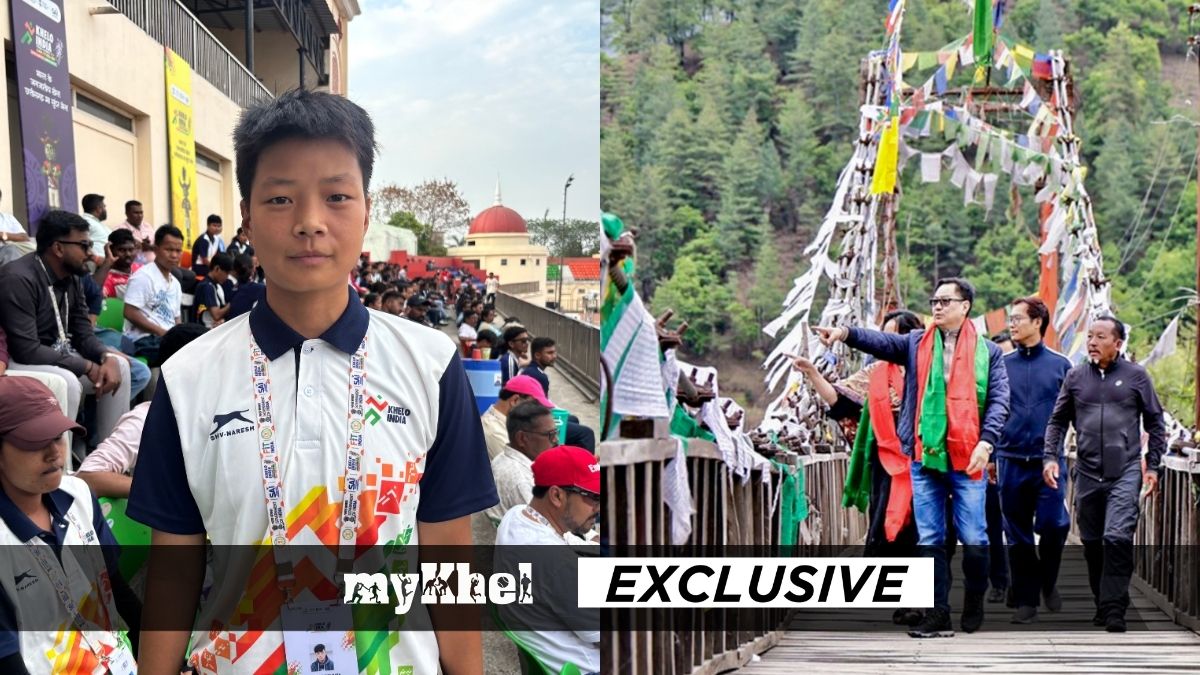
New Delhi, April 11: Giani Ramching Mara has played in the Indian Women’s League (IWL). She has represented Arunachal Pradesh at two Khelo India competitions in the space of three months. At 20, she is one of the most accomplished women footballers her state has produced.
And she has a message for Union Minister Kiren Rijiju, who also served as a Sports Minister in the past.
“If Rijiju sir speaks up – if he asks why there is no women’s league in Arunachal, why women’s football is being ignored – it will make a huge difference,” Giani tells myKhel. “For players like us, if our minister raises his voice, it will mean a lot.”
It is a direct appeal, and not without reason. Arunachal Pradesh has not held a women’s state football league since 2018. Seven years. In that time, the state’s women footballers have done everything in their power to bring laurels, and sent players to IWL clubs like East Bengal, Sethu FC and Kerala Blasters.
In the recent past, these girls have won bronze at the Khelo India Beach Games, bronze at the Khelo India Tribal Games, all in a space of three months. The talent is clearly there. The infrastructure, the fixtures, the basic support system – almost entirely absent.
Two Medals, One Coach, No Physio
The Khelo India Tribal Games 2026 in Raipur brought the Arunachal Pradesh women’s football team another bronze medal – their second in three months, following a bronze at the Khelo India Beach Games in December 2025. For that competition, with no proper beach football facility available, the state federation dug a pit on the banks of a river to train the girls.
For the Tribal Games, Head Coach Targ Sumpi arrived in Raipur as the team’s only official. No physio. No manager. No assistant coach. Just Sumpi – handling tactics, warm-ups, logistics, and injury management simultaneously.
“During practice, when I was warming up the playing eleven, the goalkeeper had nobody to train with,” she tells myKhel. “When the players went inside, there was nobody watching the substitutes.”
She had flagged this before the tournament. The response she received: the hotel would not allow only one team official to stay. “I was thinking – at a national-level event, how is it possible that there is no physio, no manager?” she says. “It should be mandatory.”
The contrast with other state delegations was stark. Chhattisgarh, Odisha, Meghalaya – all arrived with full support staff. Coaches, assistant coaches, managers, physios. Arunachal sent one person.
“Sometimes you start questioning yourself,” Sumpi admits. “But then you realise we are doing our best. The question is whether those above us want us to just participate – or actually want us to win.”
She is careful not to directly blame the federation. “A lot needs to be done. The state government needs to look into it seriously.”
Giani’s Journey
Giani grew up in Itanagar, the second-last of six siblings in a family where both parents hold state government jobs. She started playing football the way many girls in the region do – informally, with boys in her colony, alongside her brother. No academy. No coach. Just the game.
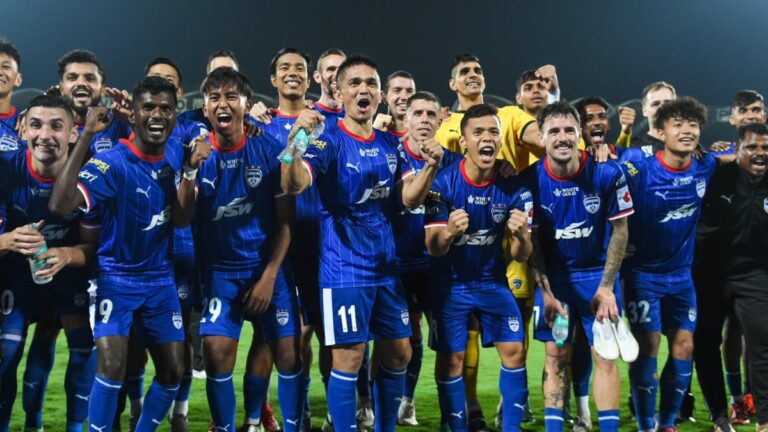
Eventually, the game took her places. She played for East Bengal in 2023, Sports Odisha in 2024, and Sethu FC in the 2024-25 IWL season. Her teammate Lali is also playing in the IWL this season. Between them, they represent a tiny but significant breakthrough – Arunachal women in national club football.
This season, Giani is not playing. An ankle injury has sidelined her and the recovery has turned complicated. The club wanted her to undergo surgery. Her mother refused, opting for local treatment instead.
“The local doctor said surgery could cause more damage,” Giani says. “I told the club, and they dropped me.”
She has been managing the injury through traditional methods and says there is currently no pain. But the professional consequences are real – a club that recommended surgery and was turned down is unlikely to welcome her back easily.
It is a situation that exposes a wider gap: players from remote northeastern states, without proper medical guidance or institutional support, navigating high-stakes professional decisions largely alone.
No League, No Pathway
Football in Arunachal Pradesh is not short of enthusiasm. The state has international-quality turf grounds. It has hosted South Asian Football Federation matches. When tournaments are held, stadiums fill up. Men’s football runs district-level competitions almost year-round.
Women’s football has had none of that since 2018.
“There is no tournament for girls,” Giani says. “No district tournament. No proper coaching. Nothing.”
The Hangpan Dada Memorial Trophy – the one open-age tournament that did exist for women – has had its age limit progressively cut, first to under-17, then to under-16. Senior women players now find themselves too old for junior competitions and without any senior ones to play in.
“We already had only one tournament,” Sumpi says. “Now that has also been taken away.”
The Asmita League exists but targets the under-13 age group, leaving a significant gap for players in their late teens and early twenties. Without regular competition, development stalls. Parents see no pathway, no income, no visibility – and their support fades.
“If a league is held, at least 90 to 120 players will come out just from participation alone,” Sumpi says. “That is how pipelines are built. Right now, there is no pipeline.”
The Rijiju Question
Kiren Rijiju – currently a Minister of Parliamentary Affairs and Minister of Minority Affairs and formerly Union Sports Minister – is Arunachal Pradesh’s most prominent political voice at the national level. His interest in sport is well documented. His advocacy for India’s sporting ecosystem has been visible and consistent.
Giani’s appeal is simple: turn that attention homeward.
“Boxing gets the most medals for our state, so it gets the most attention,” she says. “Football is growing, especially men’s football. But women’s football is falling. There is no tournament, no league, no coaching support. If Rijiju sir asks why – that question alone will create pressure and bring change.”
Sumpi frames it as a matter of basic equity. “Boys have district tournaments running the whole year. Girls have nothing. We go to a national tournament, win a medal, come back – and then there is silence. No information about the next camp. No planning. Nothing.”
Both are clear they are not asking for special treatment. They are asking for what the men already have.
The Dream, and the Doubt
Giani is a central attacking midfielder who models her game on Bruno Fernandes – a player who can pick a pass and strike from distance. She knows her pace needs work. She knows her strength is in feeding the wingers and reading the game. At 20, she has time.
She has not let go of her India dream. “If we work hard, we believe we can reach that level,” she says.
But the doubt has crept in. Without a state league, without consistent football at home, without a clear support system, she is not sure how long she can keep going. “There seems little scope in the state,” she admits.
Sumpi puts it plainly. “The talent is here. It always has been. These girls have won medals at Beach Games, at Tribal Games. Imagine what they could do with a physio, a manager, a proper league, and a federation that plans ahead.”
Two bronze medals in three months from a state with no women’s league since 2018. That is either a remarkable story of resilience – or a damning indictment of what has been left unbuilt.
For Giani and her teammates, it is both.
Get breaking news alerts.
Allow Notifications
You have already subscribed
About the Author