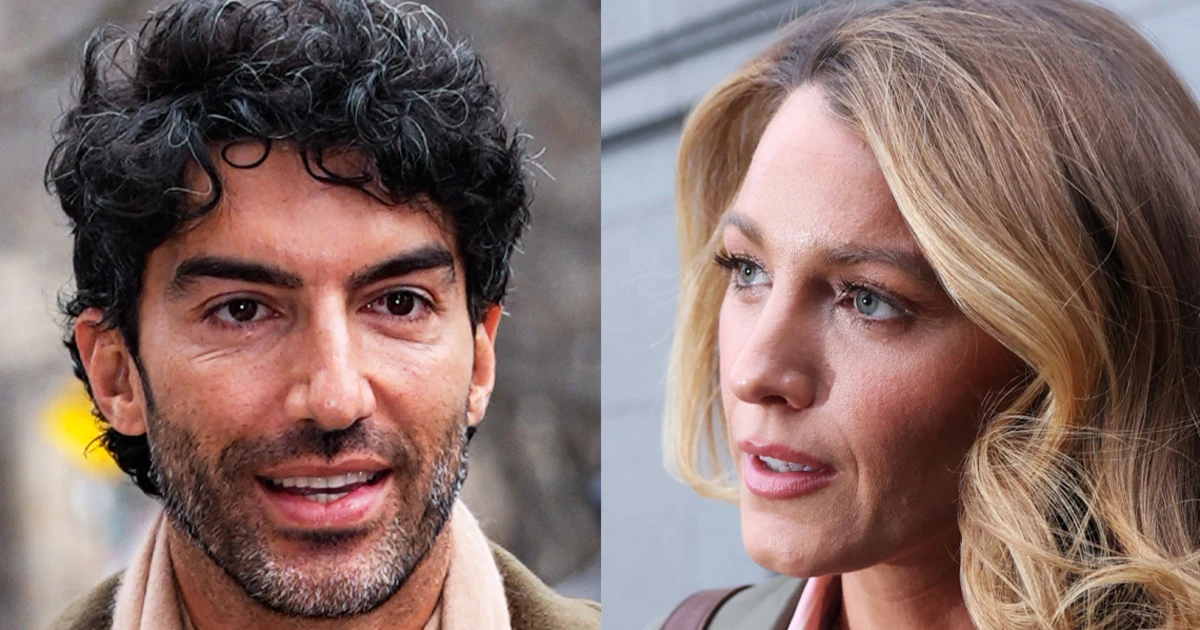
The legal battle between “It Ends With Us” co-stars Blake Lively and Justin Baldoni took an unexpected turn this week when a federal judge dismissed her sexual harassment claims against him, significantly narrowing the scope of the case.
Subscribe to read this story ad-free
Get unlimited access to ad-free articles and exclusive content.

Lively has accused Baldoni of sexual harassment during the production of the 2024 movie “It Ends With Us,” which he directed. Lively has also alleged that Baldoni’s production company, Wayfarer Studios, retaliated against her after she complained about alleged misconduct on the set of the film, a drama about domestic abuse based on a novel by Colleen Hoover.
Baldoni has vehemently denied Lively’s claims.
In a 152-page ruling Thursday, U.S. District Judge Lewis Liman tossed out 10 of Lively’s 13 claims against Baldoni. The three claims he left intact will be the subject of a jury trial scheduled to begin May 18 — unless the parties reach a financial settlement before then.
Here’s what you need to know about the legal saga.
Lively’s allegations
Lively went public with her allegations in December 2024, roughly four months after “It Ends With Us” debuted in theaters. She initially lodged a complaint with the California Civil Rights Department, then filed a federal lawsuit.
The suit accused Baldoni of sexual harassment and creating a hostile work environment. In an amended complaint filed this February, Lively’s lawyers alleged Baldoni made inappropriate comments about her appearance, “inserted improvised gratuitous sexual content,” kissed her without her consent, and discussed his pornography addiction.
Lively’s lawyers also alleged that Baldoni and Wayfarer Studios orchestrated a “carefully crafted, coordinated, and resourced retaliatory scheme to silence her, and others, from speaking out.” Lively has alleged that the smear campaign, waged on social media platforms and in the press, proved “devastating for her reputation and career,” as Liman noted in his Thursday ruling.
The suit centered on 13 claims, including sexual harassment in violation of Title VII of the Civil Rights Act of 1964, a landmark law that bars employment discrimination based on gender and other grounds. She sought unspecified compensatory and punitive damages.
Baldoni’s response
Bryan Freedman, Baldoni’s lead attorney, has described Lively’s allegations as “categorically false.” The other individual defendants, including Wayfarer chief executive Jamey Heath, have denied any wrongdoing.
In January 2025, Baldoni countersued Lively and her husband, “Deadpool” actor Ryan Reynolds, for defamation and extortion. He argued that Lively and Reynolds attempted to wreck his reputation and accused her of using her grievances as a way to “seize control” of the movie, which was co-produced by Wayfarer and the Sony-owned Columbia Pictures.
Baldoni also lodged a defamation suit against The New York Times over an article headlined: “‘We Can Bury Anyone: Inside a Hollywood Smear Machine.”
Liman tossed out both suits last year.
Liman’s ruling
In his sweeping opinion, Liman dismissed most of Lively’s claims against Baldoni, setting the stage for a contentious trial that will nonetheless be more limited in focus.
Perhaps most notably, Liman determined that Lively was an independent contractor, not an employee, on the set of “It Ends With Us.” Therefore, he wrote, Lively was not entitled to bring sexual harassment claims under Title VII.
Liman wrote that Lively’s sexual harassment claims against Baldoni — including an instance when he allegedly kissed her and “caressed” her without consent — should be viewed in the context of the creative process behind the movie.
“There is no question that this conduct might support a hostile work environment claim ‘if it occurred on the factory floor or in the executive suite,’” Liman wrote. However, he added, Baldoni was “acting in the scene.”
“At least in isolation, the conduct was directed to Lively’s character rather than to Lively herself,” Liman wrote. “Creative artists, no less than comedy room writers, must have some amount of space to experiment within the bounds of an agreed script without fear of being held liable for sexual harassment.”
Liman allowed three of Lively’s claims to proceed to trial: breach of contract, retaliation and aiding and abetting in retaliation. He ruled that jurors could weigh whether the defendants “impermissibly and materially altered” Lively’s career fortunes.
“Certain conduct at least arguably crossed the line,” Liman wrote.
What’s next?
In a statement, Sigrid McCawley, a member of Lively’s legal team, said the actor “looks forward to testifying at trial and continuing to shine a light on this vicious form of online retaliation so that it becomes easier to detect and fight.”
“This case has always been and will remain focused on the devastating retaliation and the extraordinary steps the defendants took to destroy Blake Lively’s reputation because she stood up for safety on the set and that is the case that is going to trial,” McCawley said.
Alexandra Shapiro and Jonathan Bach, two of Baldoni’s attorneys, said they were “pleased” with Liman’s dismissal of the sexual harassment claims.
“These were very serious allegations, and we are grateful to the Court for its careful review of the facts, law and voluminous evidence that was provided,” Shapiro and Bach said. “What’s left is a significantly narrowed case, and we look forward to presenting our defense to the remaining claims in court.”
About the Author