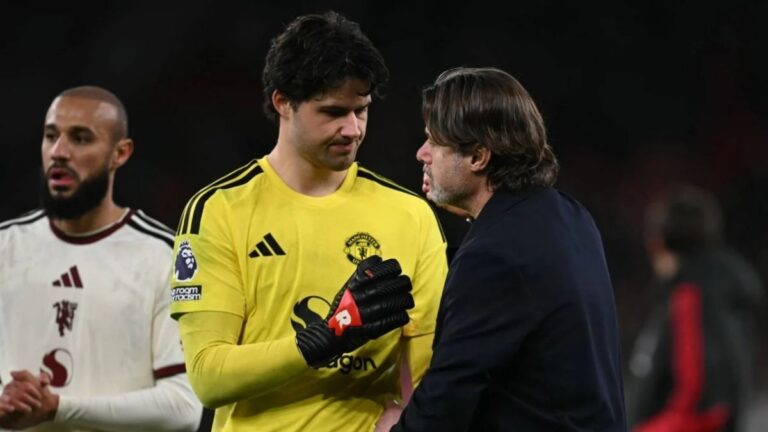
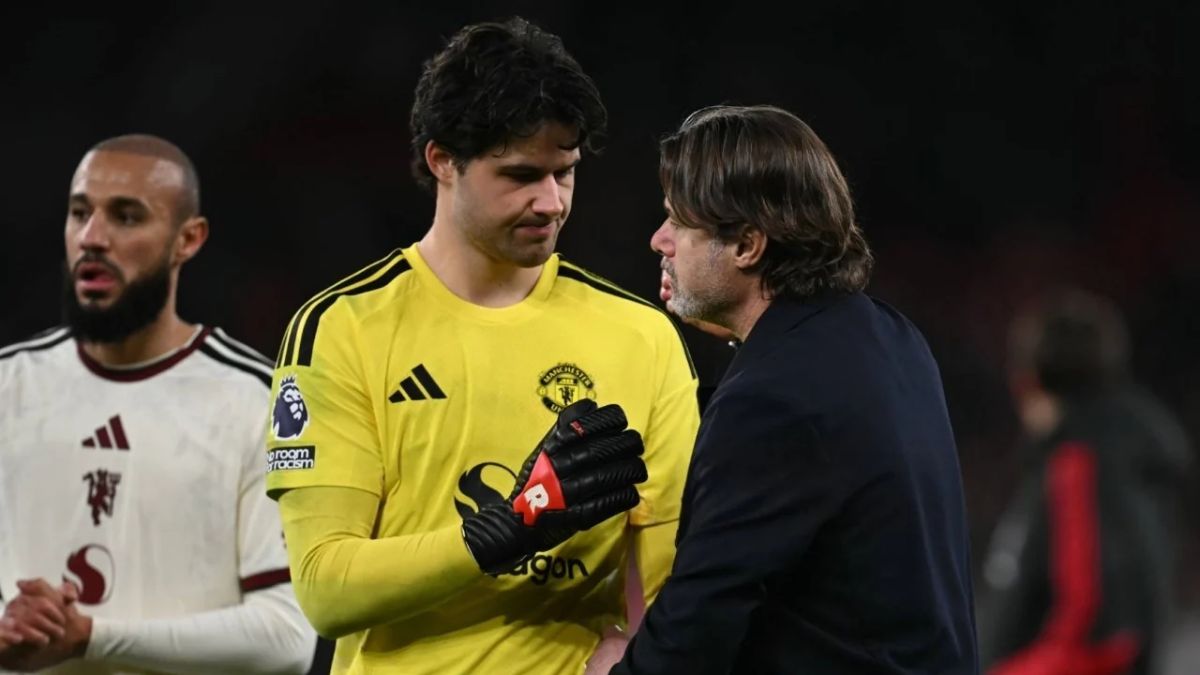
Manchester United’s 4-0 defeat against Liverpool at Anfield on November 22, 2026, exposed several tactical weaknesses that Mauricio Pochettino will need to address immediately. Following the disappointing result, Pochettino defended his side by pointing to the difficult circumstances they faced after an early red card, insisting that even the best team in the world could have conceded four goals in a similar situation.
“Even the best team in the world playing like this in this situation, in our circumstances, maybe concede the four goals or maybe more,” Pochettino said after the match.
The Manchester United manager’s comments reflected the difficulty of his first game in charge, which quickly turned into a nightmare after Leny Yoro was sent off in the eighth minute. Liverpool capitalised on their numerical advantage, scored twice within the opening 13 minutes and continued to exploit United’s defensive weaknesses throughout the contest.
While playing with 10 men at Anfield was always going to be challenging, Manchester United’s defeat was not simply a consequence of the red card. Three major tactical factors contributed to the heavy loss.
Three Reasons Why Manchester United Lost Against Liverpool
Leny Yoro’s Early Red Card
The biggest turning point came in the eighth minute when Leny Yoro received a red card following a foul on Alexander Isak outside the penalty area.
The early dismissal completely disrupted Pochettino’s tactical plans. Manchester United were forced to reorganise their defensive structure almost immediately, leaving them with little opportunity to establish control or build attacking momentum.
Playing with 10 men against a Liverpool side comfortable in possession created significant problems. United had to defend deeper, reduce the spaces between their defensive and midfield lines and sacrifice attacking options to maintain defensive stability.
However, Liverpool were quick to recognise the numerical advantage. Their midfielders and attacking players continuously moved into the spaces left behind by United’s reshuffled defensive unit.
The timing of the dismissal was particularly damaging, as Liverpool scored twice by the 13th minute. United never managed to recover from that disastrous opening period.
Defensive Errors
Manchester United’s defensive organisation was another major concern. Even before Liverpool established complete control, the visitors struggled to maintain their shape and deal with the opposition’s attacking movement.
The decision to start Matthijs de Ligt, who had not started a Premier League match in more than a year due to injury, also attracted attention. His lack of recent match sharpness became a talking point as United struggled to cope with Liverpool’s attacking pressure.
Liverpool repeatedly targeted spaces between United’s defensive and midfield lines. Their movement, quick passing combinations and ability to stretch the opposition forced United’s defenders into difficult situations.
The biggest issue was the lack of coordination across the backline. With one defender missing, the remaining players needed to communicate effectively, maintain compact distances and provide cover for one another. Instead, United repeatedly struggled to manage Liverpool’s attacking transitions.
Playing with 10 men certainly made defensive responsibilities more demanding, but the frequency of positional mistakes highlighted the work Pochettino must undertake to improve the team’s defensive structure.
Liverpool’s High-Intensity Attack
Liverpool’s attacking quality was the final piece that made Manchester United’s afternoon particularly difficult. Rather than simply relying on their numerical advantage, Liverpool used their possession intelligently, moved the ball quickly and constantly tested United’s defensive positioning.
Dominik Szoboszlai and Florian Wirtz played important roles in Liverpool’s attacking approach. Their movement between the lines created problems for United’s midfield, while their ability to combine in tight spaces made it difficult for the visitors to regain possession.
Wirtz was particularly influential, contributing a goal and an assist while creating numerous opportunities. Liverpool also registered 27 shots and enjoyed 63 per cent possession, underlining their dominance throughout the contest.
Their attacking intensity did not disappear after the opening two goals. Liverpool continued to press, stretch United’s defensive shape and exploit the spaces available in the second half, adding two more goals through Rio Ngumoha and Víctor Muñoz.
Manchester United struggled to find a way to slow Liverpool down or create meaningful attacking opportunities of their own. The difference in control, movement and attacking execution was evident throughout the match.
Is There Light At The End Of The Tunnel For Manchester United?
Pochettino acknowledged the difficulty of the situation after the match, suggesting that even the best team in the world could have conceded four goals under similar circumstances.
However, the defeat provides important lessons for the new manager. Manchester United need greater defensive discipline, improved communication across the backline and a more effective strategy for dealing with high-pressing opponents. The early red card undoubtedly changed the contest, but Liverpool’s ability to exploit United’s weaknesses demonstrated the scale of the challenge facing Pochettino.
For Manchester United, the priority now is to rebuild defensive confidence, improve tactical organisation and ensure that one difficult afternoon does not become the beginning of another disappointing run of results.
Story first published: Monday, November 23, 2026,
7:00 [IST]
About the Author